U.S. customs enforcement is kicking up a notch.
The Department of Homeland Security announced Friday that it’s rolling out an “enhanced strategy” to counter illegal trade and “level the playing field” for the American textile industry, whose 500,000 jobs it says are “critical for our national security.”
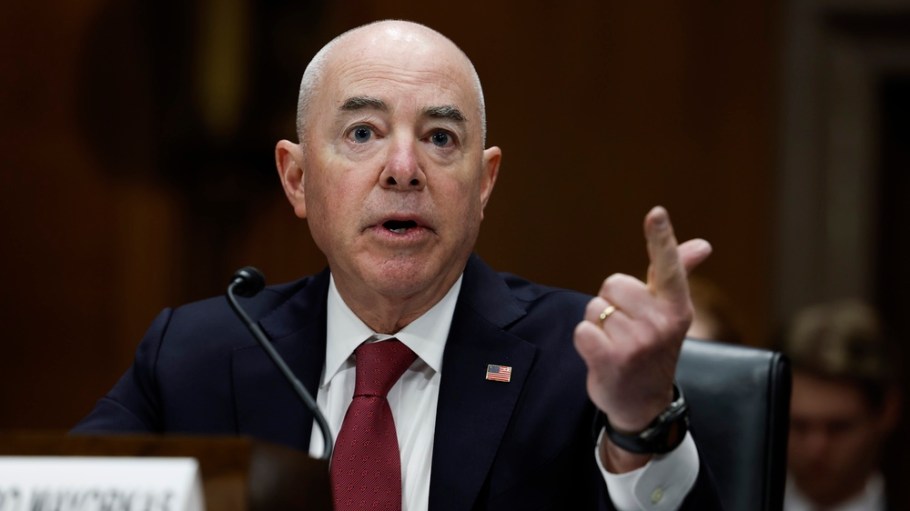
“We are dedicated to ensuring a fair and level playing field for American businesses,” said Homeland Security Secretary Alejandro N. Mayorkas. “The textile industry, like other industries, suffers when competitors use forced labor, violate customs laws and engage in other illegal practices to undercut U.S. businesses and drive prices unfairly low. Through strengthened enforcement measures, enhanced inspection and testing, and increased information sharing, this administration is protecting thousands of American workers and the U.S. textile industry.”
Related Stories
Efforts include sharpening the screening of small, sub-$800 package shipments that fall under the hotly contested Section 321 de minimis exception, including expanded targeting, laboratory and isotopic testing and “focused enforcement operations” that could mean greater scrutiny under the Uyghur Forced Labor Prevention Act, a critical modern-slavery-fighting tool from which they’ve been largely exempt due to the data they’re allowed to omit for customs review.
To ensure cargo compliance, Customs and Border Protection and Homeland Security Investigation will be further aligning on “special operations” that include physical inspections, in-depth documentation reviews and country-of-origin, isotopic and composition testing. Any violations of U.S. laws will result in civil penalties from CBP, which will work with HSI to conduct criminal investigations “when warranted.”
DHS personnel will also dispatch textile-specific production verification teams to audit high-risk foreign facilities to ensure that their products qualify under the U.S.-Mexico-Canada Agreement or the Central America-Dominican Republic Free Trade Agreement, both free trade deals meant to promote more balanced and reciprocal trade. CBP recently visited 31 facilities in Mexico, the organization’s first under the USMCA—along with 18 facilities in Honduras. Compared with last year, it’s poised to double the number of total foreign verification visits.
It’s equally important, DHS said, to build stakeholder awareness by educating importers and suppliers in the CAFTA-DR and USMCA region about compliance requirements and how CBP will be enforcing them. Leveraging U.S. and Central American industry partnerships in this way can improve “facilitation for legitimate trade,” it added.
And speaking of the UFLPA, DHS is working on growing the Entity List to identify additional “malign” suppliers in the high-priority textile sector, a development that both legislators and the trade community have been calling for.
“DHS is committed to expanding the UFLPA Entity List and sending a strong message to the importing community that the United States has zero tolerance for forced labor in our supply chains,” said Robert Silvers, undersecretary for policy at DHS and chair of the Forced Labor Enforcement Task Force. “Enforcing our forced labor laws protects human rights and businesses and workers who play by the rules and should not be undercut by predatory and abusive labor practice.”
Kim Glas, president and CEO of the National Council of Textile Organizations, which represents the U.S. textile industry, welcomed the announcement. Forced labor in western China, she’s testified previously, is an “economic and human rights fire” that needs to be extinguished immediately, including with an expanded Entity List and decisive de minimis reform.
“The essential and vital domestic textile supply chain has lost 14 plants in recent months,” she said. “The industry is facing severe economic harm due to a combination of factors, exacerbated by customs fraud and predatory trade practices by China and other countries, which has resulted in these devastating layoffs and plant closures. DHS immediately understood the economic harms facing the industry and deployed the development of a critical action plan.”
She noted that the so-called “loophole” in U.S. trade laws facilitates 4 million duty-free packages a day and puts considerable strain on CBP resources, making it “virtually impossible to enforce U.S. laws, and significantly hurting domestic manufacturers and retailers.”
“It’s critical these ongoing actions are backed up by strong civil and criminal penalties to act as a deterrent to bad actors who have been circumventing rules and trade laws and harming U.S. textile and apparel producers as well as our Western Hemisphere trade partners. Punishing the bad actors quickly and amplifying these penalties are essential measures to deterring the illegal trade that is undermining this essential sector,” Glas added.
Stakeholder involvement will also be vital to the plan’s success, said the American Apparel & Footwear Association, the National Retail Federation, the Retail Industry Leaders Association and the United States Fashion Industry Association, which urged DHS to partner with its associations and members to stop illicit shipments and ensure compliant trade.
“A successful enforcement plan must include input from all stakeholders, clear communication with the trade, and coordinated activities with importers, especially if DHS finds illicit activity happening in the supply chain.,” the trade groups said in a joint statement. “The results of any illicit activities must be shared so that our members and other importers can act quickly to address the issue. As our members look to diversify their supply chains, especially back to the Western Hemisphere, we must make sure efforts are included to incentivize and not deter new investments.”
Its members, they added, underpin 55 million—or more than one in four—American jobs and invest “considerable time and resources” in their customs compliance programs. As trusted traders that meet the high standards of programs such as the Customs-Trade Partnership Against Terrorism, they are on the “front lines for ensuring that they have safe and secure supply chains.”
Textiles enforcement has been and will continue to be a trade issue for the Biden administration, DHS said. In fiscal year 2023, CBP made 5,016 textile-related seizures, including smuggled and counterfeit clothing, with a domestic value of more than $129 million. It also clawed back $266.6 million in misclassified, undervalued or unsubstantiated free trade agreement claims; issued 1,859 penalties and liquidated damages against violators; and reviewed more than 780 forced-labor-related shipments valued at over $40 million, half of which were ultimately denied entry.
“We are pulling out all the stops to stay one step ahead of the bad actors that try to threaten this essential industry,” said Troy Miller, senior official performing the duties of the commissioner at CBP. “Trade cheats undercut American manufacturers as well as legitimate U.S. importers and trusted suppliers from our FTA partners who work hard to play by the rules. This plan ensures we are holding them accountable: violators will not qualify for preferential duty treatment under USMCA, CAFTA-DR or other trade agreements, and will be subject to payment of duties owed, penalties, seizures and criminal investigations.”