
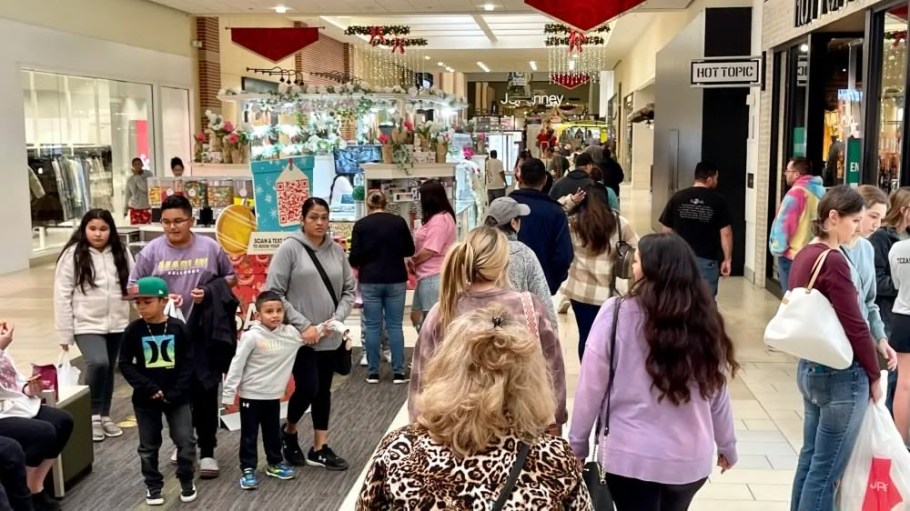
Shoppers are said to be footing the bill for the Trump administration’s sweeping tariff regime, and it’s going to take a toll on their holiday spending.
Deloitte’s 40th annual Holiday Shopping Confidence Index (HSCI), released Wednesday, showed that American consumers plan to “adopt a more restrained spending approach” during the season for giving. Consumers will shell out an average of $1,595 this season—a full 10 percent decrease from last year.
The biggest reason for the downshift in spending is economic uncertainty, with 77 percent of the 4,270 respondents surveyed saying they expect to see higher prices on holiday items. This will lead to a 14 percent pullback on purchases of products and a 6 percent reduction in spending on experiences.
Related Stories
More than half (57 percent) of shoppers said they’re worried about the state of the economy and they expect it to continue to weaken in 2026, a sobering response that Deloitte said was the “least optimistic outlook since 1997.” A near-equal number of respondents (56 percent) expressed anxiety about a potential recession in the next six months.
In order to extend their budgets, the vast majority (89 percent) said they will be looking for steals and deals, while 77 percent will trade down to cheaper brands and retailers. A surprisingly large contingent (73 percent) said they plan to reuse or recycle items as gifts, while almost half said they plan to craft their own DIY presents for loved ones.
Following a similar trend from the past two years, consumers are also prioritizing experiences, like holiday get togethers and parties. One-quarter of those surveyed said they plan to host a celebration, spending an average of $252.
The dampening of consumer sentiment has reached all generational cohorts, with only Gen X expected to increase spending by a small margin of 3 percent from last year. Gen Z consumers expressed particular anxiety about their finances, saying they will spend a whopping 34 percent less than they did last year, while millennials will spend 13 percent less.
Gen Z consumers are also worrying more about the higher prices they anticipate seeing at retail. Sixty-two percent said they’re prepared to see heftier MSRPs, while 56 percent of other shoppers said the same.
Rising prices and economic anxiety appear to be a great equalizer among consumers, as all income groups said they will rein in spending this year. That goes for higher income earners making more than $100,000 per year or more, who said they will scale back on retail purchases (though they may spend more on experiences).
In order to reserve more cash for gifts, all respondents said they plan to cut back by about 22 percent on non-gift buys like clothing and décor as well as other supplies for hosting. Meanwhile, 89 percent plan to search for steals and deals including shopping during holiday promotional weeks (75 percent) and waiting for items on their wish lists to drop in price (49 percent).
Savvy shoppers will compare prices on products, with 68 percent saying they plan to use digital tools to do so. Social media, too, will play a big role in 59 percent of consumers’ discovery journeys, while 33 percent said they’ll use AI to generate gift leads—double the number who said the same last year. Loyalty programs are also having a moment, with 26 percent saying they plan to leverage the rewards accrued with specific retailers to buy gifts (compared to 20 percent in 2024).
While the holiday season has again started earlier, pulling forward to the beginning of October, it’s expected to peak later. That’s because about half of surveyed shoppers plan to spread out purchases to manage their budgets. Notably, 24 percent of shoppers said they are expecting their budgets to be maxed out by the end of October, the highest number to say so in the past five years.
For most, holiday shopping will take place between late November and early December, with 70 percent of respondents saying Thanksgiving week will be a key time. While that response is similar to 2024, the number of consumers that plan to shop during the Thanksgiving shopping holidays has increased by 23 percentage points over the past five years, underscoring how pivotal these promotions are.
Survey takers said they’ll spend most of their holiday nest egg at big box retailers (39 percent) as well as online (36 percent), though more gifts (56 percent) are expected to be bought through e-commerce than in store (44 percent). While value is the most pressing proposition for most, 44 percent said they will consider purchasing luxury goods as gifts this holiday season, though 25 percent said they may buy pre-owned luxury items instead.
“While the upcoming holiday season is marked by economic uncertainty, the pull of tradition seems to have many consumers doing all they can to spread holiday cheer. This includes seeking out value and expanding the shopping window to ensure they capture the best deals to make their holiday dollars go further,” said Natalie Martini, Deloitte’s vice chair and U.S. Retail and Consumer Products sector leader. “To meet and engage shoppers where they are, retailers that provide value, not just the lowest price could be positioned for a more successful holiday season and 2026.”


