
As a fiber, hemp isn’t known for being particularly snuggly. Its traditionally coarse hand has been compared to burlap, its aesthetic something you’d find at a commune or Grateful Dead concert.
But the world’s oldest fabric has been quietly making a comeback. And it has smooth new moves to show off.
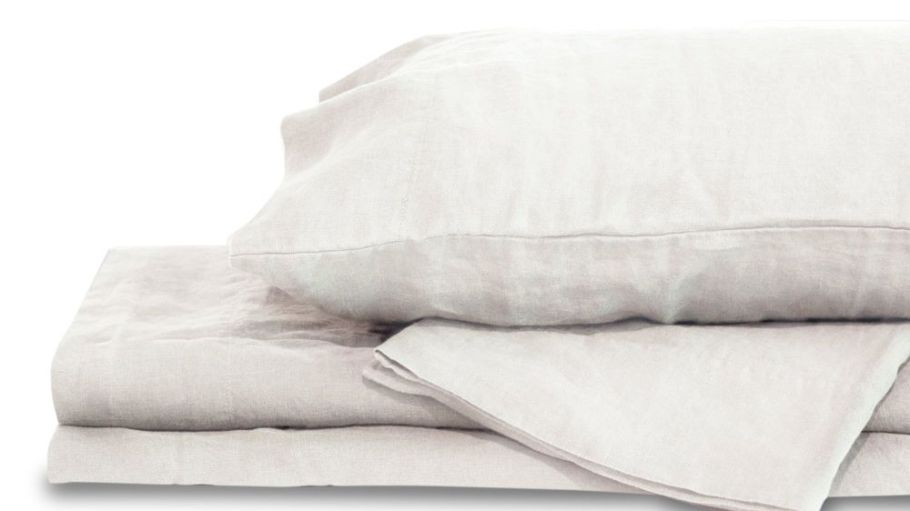
Case in point? Charlotte, N.C.-based textiles firm Delilah Home, which recently launched an “extensive collection” of 100 percent hemp bedding, the first in the United States to do so.
There’s nothing scratchy about its sheets and duvets, according to Michael Twer, the company’s CEO. (He’s also chairman of the Organic Trade Association’s fiber council.) Softened using nontoxic enzymes in a Oeko-Tex-certified facility in Portugal, the fibers have been tamed to a “pleasing linen-like texture.” Eventually both the process and products will be certified organic by the Global Organic Textile Standard.
Related Stories
“We are excited to be the first company in the U.S. to offer such a deep collection of beautiful and luxurious hemp and organic cotton products for the home,” Twer said in a statement.
Delilah Home says it hopes to bring its hemp production and manufacturing stateside, especially because the 2018 Farm Bill takes hemp off the federal government’s list of controlled substances. The company is providentially placed to do so, too. Its home state of North Carolina is looking at hemp as its next cash crop, now that tobacco farming is struggling from declining consumer demand and retaliatory tariffs from China.
Still, hemp farming in the United States remains in its infancy. It was only in October that U.S. Secretary of Agriculture Sonny Perdue announced the establishment of the U.S. Domestic Hemp Production Program to create a consistent, nationwide regulatory framework around hemp production. Building up the capital investment and infrastructure necessary to scale up American hemp will take even more time.
All this is just a minor blip in hemp’s reinvention tour, however. Already Levi Strauss is ramping up production of its “cottonized hemp,” which it says is almost indistinguishable from cotton. Alkhemist, a James Jeans spinoff, is feting “hemp-incorporated” premium denim. Don’t be surprised by the idea of “stretch hemp,” either. Italy’s Opera Campi is blending hemp with Lycra and bioplastic to give it a futuristic sheen.
Environmentalists love hemp for myriad reasons. It uses about half as much water per season as cotton, requires no pesticides or herbicides and thrives just about anywhere. With consumers increasingly placing the environment at the forefront of their purchasing decisions, hemp makes sense all around—perhaps even more so since the old fiber can learn new tricks.
“Everyone in apparel is talking about how you can innovate with fabrics and differentiate yourself from the market,” Sue Welch, CEO at retail tech company Bamboo Rose, told Sourcing Journal earlier this year. “Hemp is going to play an increasingly important role there.”


