As global cotton demand drops to historic lows, possibly due to rising synthetic fiber use, the Secondary Materials and Recycled Textiles Association (SMART) urges brands and designers to recognize and leverage cotton’s unique role in supporting circularity.
“Cotton remains the backbone of the circular textile economy,” said Brian Rubin, board treasurer of SMART. “It’s durable, it resells well, it’s repairable, it biodegrades.”
Last month, the price of virgin cotton dropped to about 60.79 cents per pound—its lowest point in more than 30 years. Prices reached a low of 48.35 cents per pound during April 2020, but the last time annual average prices stayed this low was in the early 2000s. Cotton’s yearly average was 38 cents per pound in 2002, the same year polyester officially overtook cotton as the most widely produced fiber, according to Textile Exchange.
Related Stories
“As recyclers, we see firsthand which fibers hold value,” Ruben said. “Right now, the economics and the environmental logic both point in the same direction: cotton is the smart fiber for a circular future.”
The global body, representing the used textiles and circular trade sector, urges fashion to listen, as textile recyclers say the industry has “forgotten one critical truth: cotton keeps paying dividends long after its first wear.”
“When a garment reaches the end of its wearable life, cotton still has strong value,” Ruben said. “Cotton is simple; it’s smart and circular by nature.”
Cotton garments remain among the most durable and repairable pieces on the resale market, SMART said. A study on clothing durability by Leeds University Institute of Textiles and Colour (LITAC) with the Waste and Resources Action Program (WRAP) found no correlation between price and longevity.
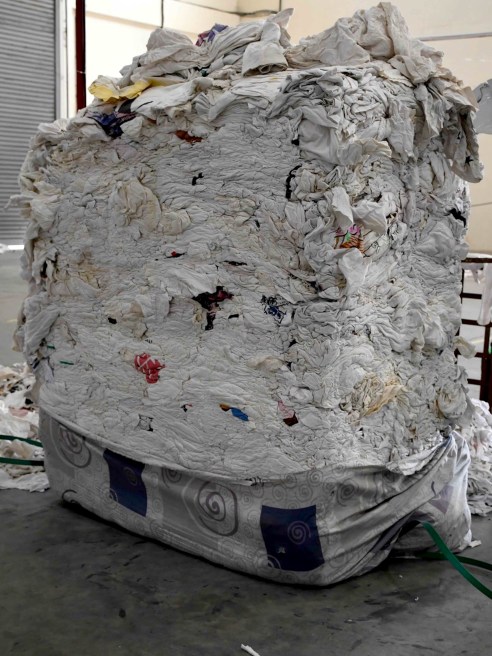
According to SMART, secondhand cotton apparel consistently sells faster and retains value better than many synthetic alternatives. Even when garments can no longer be worn, “cotton shines,” per the group, as recyclers can convert it into wipers, industrial rags, shoddy fiber—use it as feedstock for next-gen recycling technologies.
“These second and third lives are precisely what make cotton exceptional,” said Ruben. “If brands want to meet real circularity goals—resale, repair, recycling—cotton remains their smartest design choice.”
The global body said its message arrives during “a point of pride” for U.S. agriculture: cotton harvest season.
During the marketing year August 2019–July 2020, the United States produced nearly 20 million bales of cotton, representing about $7 billion in total (lint plus seed) value, according to the U.S. Department of Agriculture’s Economic Research Service. In recent years, the United States supplied about 35 percent of global cotton exports—though this season looks about half a percentage point less fruitful. The department’s latest cotton projections for 2025/26 (August–July) forecast that global mill use will decrease by 320,000 bales from the previous year to 118.8 million bales.
Regardless, the U.S. is the fourth-largest cotton-producing country in the world, according to SMART, supplying a fiber “deeply rooted in American history and innovation,” the organization said. At present, cotton prices are low and opportunities are high. With the raw material price of cotton having “fallen dramatically,” per last October’s International Monetary Fund (IMF) World Economic Outlook, brands have an opening to re-embrace the fiber at a moment of “exceptional affordability.”
Representing more than 150 companies in the global recycling supply chain, SMART emphasized that true circularity starts with design. Fiber choices like cotton today affect tomorrow’s waste, value and recyclability.
“Don’t ditch cotton,” Ruben said. “If anything, the fashion industry should be leaning into it more than ever.”