Technology continues to be a top-of-mind concern for leaders throughout the fashion and apparel industries, particularly as legislation mandating stronger compliance mechanisms continues to come into force.
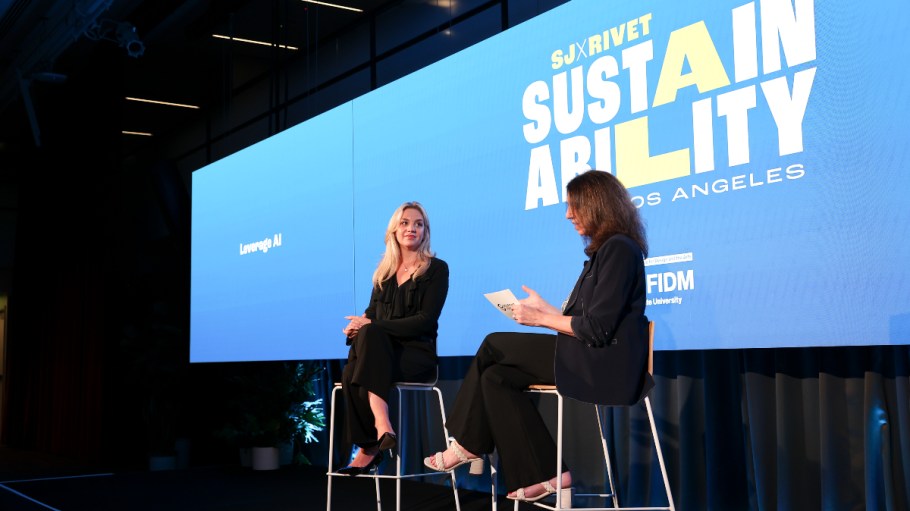
Hayley Blatte, senior business consultant at Centric Software, spoke with Lauren Parker, director of Fairchild Studio, about the importance of technology’s role in companies’ sustainability strategy.
Centric is most well known for its product lifecycle management (PLM) software and capabilities, which allow brands to track information about their products from start to end—from ideation and development, all the way to eventual disposal.
Related Stories
“You need to be able to pivot very quickly. If you have a PFAs regulation coming up, you need technology that is going to support being able to track and manage that information in a system. You need to be able to report on that in one click; you don’t want to be in a situation where you’re looking for that needle in the haystack and you’re not able to find it simply because technology doesn’t allow you to report on it,” Blatte said.
Having a clear-cut, centralized system for reporting and storing data can also make it easier to track down data relevant to decisions needed to connect with suppliers—whether Tier 1 or Tier 4—and with retailers and wholesalers, once the finished product is ready for sale.
“PLM is a data repository, but really, we want to enable you to pull data from multiple different places so you have full traceability, and you’re able to expose that to your consumers,” Blatte told Parker.
Blatte said Centric’s clients seem particularly interested in tracking the bills of materials for their products, which enables them to understand the fibers that went into a garment material, how that material can be used and more. Tracking that information in a PLM, she said, can cut down the amount of time it takes to find out more about products across a brand’s entire portfolio.
For instance, if a planner needs information about how many SKUs already use cotton coming from one specific farm—or about what color the garments run in—they can access that information quickly and easily, rather than digging through old emails, spreadsheets and documents, which could lead to human error.
“We all know we’re working on multiple different seasons at once, and we don’t want that data to contradict itself, because that and the end of the day, is going to impact the cost of our products,” she said. “That also could lead to you being very wasteful, because you just don’t have the data at your fingertips to have a good strategy to analyze and to [use to] make a better, more cost-effective product at the end of the day.”
PLM will only continue to be bolstered by the rapid upgrades being made to emerging technologies, like 3D rendering and artificial intelligence; Centric itself released a new generative AI-powered tool called Fashion Inspiration, linked directly to its PLM platform, in September.
Blatte said AI has a wide variety of use cases in the fashion, apparel and retail industries—from accessing historical data and trends, to analyzing inventory, to ideating for design and more. Perhaps some of its most valuable capabilities are around helping brands decrease their overstock percentages.
“We could be the most sustainable brands on Earth.…We could be completely vertical, having exactly the cotton plant that our cotton is coming from. But at the end of the day, if you are over producing materials or over producing products, where do those end up? Is that true sustainability? So it’s not just in your materials, it’s in your whole business process, and really understanding at a granularity how much you actually need to produce and where it’s going to end up, and are consumers actually going to buy it,” Blatte said.
As brands consider how to make their products more circular, they may also benefit from the insights AI systems can bring throughout the decision-making and design processes. While it can prove difficult to convince top leaders to buy in on unproven technology, Blatte said if companies want to truly move the needle on sustainability—whether working with suppliers to decarbonize factories or identifying more eco-friendly materials—it can make all the difference.
“Technology is our friend. We really need to embrace it, because that’s what’s going to drive a more profitable, sustainable brand,” she said.