That the White House lowered Cambodia’s so-called “reciprocal” tariff figure from a “Liberation Day” high of 49 percent to a potential 35 percent this week will come as little comfort for the Southeast Asian nation, which has less than three weeks to secure a deal that could lower customs duties for the clothing and footwear that make up more than half of its $26 billion in annual exports, a sizable portion of which is destined for the United States.
In Prime Minister Hun Manet’s version of what has essentially been a boilerplate letter, President Donald Trump said that the tariff rate would redress what he described as an “unfair” and “persistent” trade imbalance between the two countries.
Related Stories
“Our trading relationship with Cambodia has been far from reciprocal,” he wrote, citing, by way of evidence, a $12.3 billion trade deficit in 2024. “These tariffs are necessary to correct many years of Cambodia’s tariff and non-tariff policies and trade barriers.”
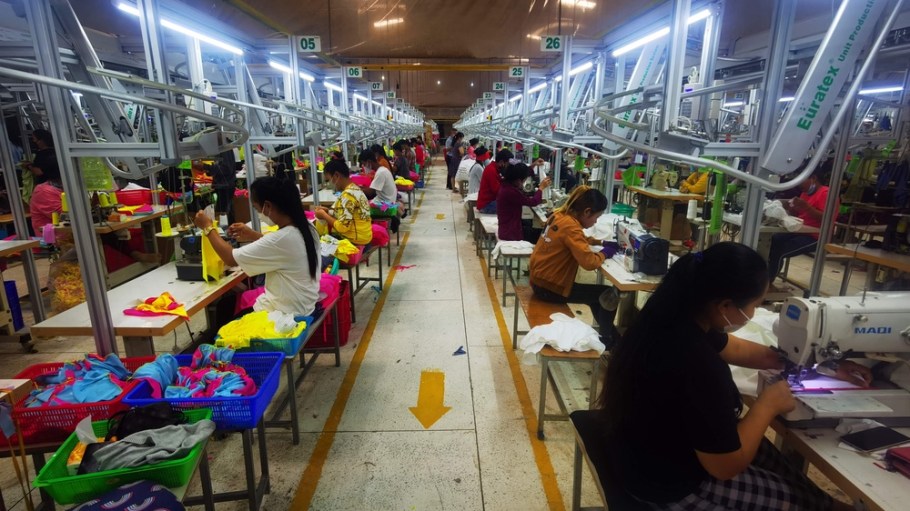
The implications of this are only beginning to hit Cambodia’s roughly 900,000 apparel, footwear and travel goods workers, most of them women, because they’ve been clocking overtime hours to hurry out orders before the duty hike’s original July 9 deadline, said Tharo Khun, program manager at the Center of Alliance of Labor and Human Rights, the workers’ rights group better known as CENTRAL.
But how major U.S. buyers such as Adidas, Nike, Gap Inc., Levi Strauss & Co., Puma, Under Armour, Calvin Klein owner PVH Corp. and The North Face parent VF Corp. react over the next few months, even weeks, could shift the fate of an entire country. All the brands either declined to comment, with some citing a quiet period before earnings results, or did not respond to requests.
“Surely having a 16 percent difference with Vietnam will pose huge challenges for us going forward vis a vis our competitiveness compared to Vietnam,” Ken Loo, secretary general of the Textile, Apparel, Footwear and Travel Goods Association of Cambodia, said of Vietnam’s 20 percent tariff rate, which saw a marked reduction from the originally imposed 46 percent in April.
Loo said there was still plenty to recommend Cambodia over Vietnam, such as what he said was a more abundant supply of labor and “certainly” higher levels of compliance with mandatory International Labor Organization monitoring in all exporting apparel, footwear and travel goods factories.
“We hope there is a breakthrough in the next three weeks,” he added.
Whether companies selling into the European Union will pick up the slack is also questionable, if not downright doubtful, following the trading bloc’s partial withdrawal of Cambodia’s Everything But Arms trade preferences in 2020 due to human rights concerns, including violations of freedom of expression. And the fact remains that the United States is the world’s largest consumer market.
“I can’t predict what will happen, but it’s very, very concerning,” Khun said. “This will affect the job security and livelihoods of workers.”
Sun Chanthol, deputy prime minister and first vice president of the Council for the Development of Cambodia, moved to reassure factory owners and investors on Tuesday, spinning the rate as a “success” because it involved the highest tariff reduction among the first tranche of 14 countries to which it belonged. Others, like Malaysia and Japan, saw their numbers tick up.
“I would like to take this opportunity to call on companies with factories in Cambodia to stay calm,” he said. “The Royal Government has the full capability to protect employers, employees and Cambodia’s national interests. We have both the capacity and the conditions to attract more investors, which in turn will help create more jobs for Cambodians.”
But suppliers, facing a murky future beyond the short-term crunch, are already rattled. Nearly half (44 percent) of the more than 750 apparel, footwear and travel goods factories surveyed in May by Better Factories Cambodia, an International Labour Organization-backed program designed to improve working conditions in the country’s garment sector, are uncertain if they will be able to sustain current operations beyond three months because that’s when orders run out. Some 15 percent say they currently have no confirmed orders, or orders only for the next few weeks.
More than one-quarter (27 percent) also reported that their buyers have requested reduced pricing for orders placed during the year, which Better Factories Cambodia said provided some indication of the “willingness” of buyers to shift costs to suppliers in the case of a tariff-driven upswing. Among the respondents, 91 percent said that their factory exports at least a portion of their production to the United States.
As with the “demand shock” triggered by the Covid-19 pandemic, the report noted, sudden order disruptions could potentially result in negative repercussions that include worker retrenchments, suspensions and dismissals. While most factories are looking to expand their customer base, only 26 percent have secured new buyers or opportunities.
All this comes at a time of growing concern about a skilled labor shortage, especially sewing and technical staff, because of increasing competition from new factories in provincial areas and a reluctance among workers to return after their relocation. This has resulted in high turnover, reduced production efficiency and greater operational instability that changing sourcing behavior will only exacerbate, Better Factories Cambodia said.
“While we don’t currently have a formal projection on the consequences of the announced tariffs, a sustained increase in tariffs could place additional pressure on the sector, with potential implications for factories and workers,” said Froukje Boele, program manager at Better Factories Cambodia. “We’re continuing to engage with global brands under the Better Work program to better understand how the current trade developments may affect sourcing decisions and supplier operations.”
Part of the reason why so much uncertainty looms over suppliers is because the vast majority of fashion’s social and environmental initiatives have been voluntary, unilateral and top-down, which has allowed brands and retailers to rack up PR brownie points without requiring them to put any real “skin in the game,” Christina Hajagos-Clausen, IndustriALL Global Union’s director for the textile, garment, shoe and leather sector, told the audience at the Global Fashion Summit in Copenhagen last year.
It was also at the summit that PVH Corp., together with Asos, H&M Group and Primark, announced that they had signed binding “support” commitments with IndustriALL that obligated them to, among other things, ring-fence labor costs, guarantee specific volumes and pay into a skills development fund for workers.
The idea—as channeled through the international union federation’s global framework agreement on living wages, dubbed Action, Collaboration, Transformation, or ACT—was to incentivize or otherwise assure suppliers that signing collective bargaining agreements with trade unions to increase wages wouldn’t result in price-sensitive buyers cutting and running whenever the stakes grew too high. One caveat was that the volume pledges would only kick into effect once a certain threshold of factories—as determined by the specific brand or retailer achievement—was achieved.
PVH Corp. and a few other firms have conveyed to IndustriALL and its Cambodian affiliates that they will continue to place orders in the country, said Athit Kong, president of the Coalition of Cambodian Apparel Workers Democratic Union, which was involved in ACT’s negotiations. While he hasn’t heard from members about whether U.S. brands have paused or canceled orders, it’s early days yet for that information to filter down, he added.
Jason Judd, executive director of Cornell University’s ILR Global Labor Institute, isn’t holding his breath. Working in Phnom Penh as country director for the Solidarity Center and then for the International Labour Organization, he witnessed “a decade of fierce wage suppression, fake unions, violence against workers, followed by climate brinksmanship and more” because trade and basic protections for workers are not connected.
That applies to the United States, too, he said.
“A less stupid trade policy would connect U.S. tariffs and market access with outcomes for workers, not outcomes for Trump and, as we’ve seen in Vietnam, his family,” Judd added.