Byte-Sized AI is a bi-weekly column that covers all things artificial intelligence—from startup funding, to newly inked partnerships, to just-launched, AI-powered capabilities from major retailers, software providers and supply chain players.
Sam’s Club relies on AI for receipt checks
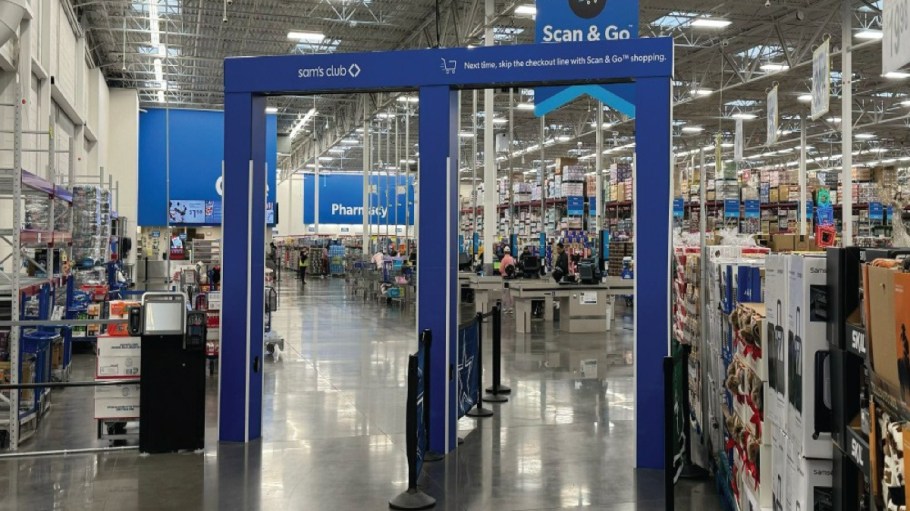
Walmart-owned Sam’s Club announced Tuesday it would ramp up the rollout of its computer vision and AI-powered exit technology, which it has already deployed in 120 stores nationwide. By the end of 2024, the company said, all of its U.S. stores will be equipped with the technology.
Related Stories
The systems work by using computer vision and AI to scan items in a customer’s basket or cart and confirm that the member has paid for all of the items. In the test stores, the technology integration resulted in all members being able to exit the stores 23 percent faster than they did previously, the company said.
The retailer expects those time savings will only increase, especially as an increasing number of consumers also interact with its Scan & Go systems, which allow customers to use their smartphone to scan their items as they shop, then pay in the app and leave the store.
Todd Garner, chief product officer of Sam’s Club said he knows the technology has already aided busy customers in stores.
“I’m incredibly proud of the innovation and dedication of our team to deploy this member experience technology at scale,” Garner said in a statement. “Both exit technology and Scan & Go are driving new levels of convenience and raising member satisfaction among members. What distinguishes Sam’s Club from our competitors is our ability to seamlessly deploy this technology at scale across our nearly 600 clubs nationwide. Whether it’s a single item or a cartful, we’re revolutionizing the checkout experience.”
TradeBeyond integrates supply chain with AI
Hong Kong-based TradeBeyond announced late last month that it had bolstered its traceability solutions for brands with AI.
The supply chain management company now uses AI to scan orders, invoices, shipping paperwork and other important supply chain documents. It can also create a chain of custody that cross-checks clients’ documents with outside data sources to determine whether a company faces compliance risks in its supply chain.
While the technology can detect issues with suppliers and their adherence to regulations like the Uyghur Forced Labor Prevention Act (UFLPA), it can also identify when a user has omitted important documentation that could—if left undone—alter the course of a shipment.
Eric Linxwiler, senior vice president at TradeBeyond said the company decided to launch the solution to aid brands with compliance, especially in the fashion and apparel industries as UFLPA implications become stricter.
“The U.S. has made it clear that forced labor is now a top compliance issue. In keeping with those priorities, U.S. Customs and Border Protection has significantly broadened its enforcement of the UFLPA over the last year, expanding its targeted entities list while increasing its scrutiny of industries not previously prioritized under the law, such as biotech and battery manufacturing,” Linxwiler told Sourcing Journal.
“This list will only continue to grow as the government works with NGOs to identify other high-risk sectors in the supply chain. Meanwhile, lawmakers are advocating for new requirements that would close loopholes in the UFLPA and encourage greater inspection of smaller shipments. As a result, brands and retailers should brace for even greater scrutiny of their shipments going forward. They need smart systems in place to safeguard against compliance risks and prevent significant fines and lengthy port detainments,” he added.
Retraced bolsters factory auditing with AI
TradeBeyond isn’t the only company upping the ante at the intersection of AI and supply chain.
Retraced, a Düsseldorf, Germany-based technology company, announced last week it had released a beta version of a tool meant to streamline factory auditing processes to help management focus more on tasks that can improve the business.
The tool, currently available to brands Retraced already partners with, will become more widely available on its official launch date, May 15.
The tool has three major capabilities: pulling helpful data points from audit documentation; sharing real-time insights about that data with users and making recommendations on how a company should proceed based on the data and information outlined in audit-related paperwork.
The company said it hopes those capabilities free up time among human employees to focus on sustainability and social governance goals inside the organization, noting that creating Corrective and Preventative Action Plans (CAPAs) based on audits can currently require a lot of human capital.
Peter Merkert, chief technology officer and co-founder of Retraced, said this announcement reflects the beginning of the company’s plans to leverage AI to help fashion, apparel and textile clients globally.
“Adopting AI to intelligently process and distill insights from audits represents the logical first step in Retraced’s journey towards transforming supply chain compliance and sustainability practices, highlighting the importance of AI and supply chain integration,” Merkert said in a statement.
Estée Lauder announces generative AI partnership with Microsoft
The Estée Lauder Companies (ELC) shared that it has extended its partnership with Microsoft late last month. The two have plans to build out ELC’s generative AI capabilities for over 20 brands in its portfolio.
Already, the two companies have worked together to build systems that level up ELC brands’ marketing capabilities, simplifying product data for internal employees working on campaigns. ELC also has plans to use generative AI to more rapidly develop new products for its consumers, especially when considering trends.
This latest announcement formalizes an AI Innovation Lab that the two companies will continue to work on, testing use cases for generative AI in ELC’s markets.
Shelley Bransten, corporate vice president of global industry solutions at Microsoft, said in an industry that requires deep customer care and high levels of personalization, incorporating generative AI makes strong business sense.
“Generative AI represents a significant opportunity for the beauty industry—creating more engaging customer experiences, getting products into the hands of consumers faster, developing new products more efficiently and sustainably, and much more,” Bransten said in a statement. “We’re proud to collaborate with The Estée Lauder Companies to provide not only a platform for AI innovation, but also deep partnership to bring these new innovations to life.”