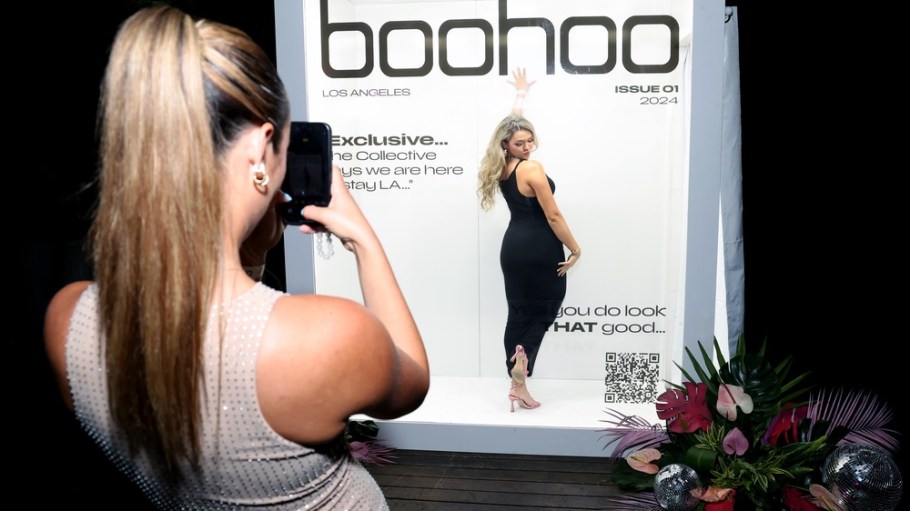
Boohoo Group is facing the possibility of backlash after revelations emerged that it has rekindled ties with a manufacturer it had jettisoned in the aftermath of its so-called “sweatshop scandal” four years ago.
The British e-tail juggernaut had nixed G.N. Euro, which bills itself as Leicester’s largest privately owned women’s clothing manufacturer, during a culling of hundreds of suppliers linked to worker exploitation in the East Midlands city in 2021, nearly a year after allegations of poverty pay and unsafe conditions amid a life-threatening global pandemic roiled the Nasty Gal and PrettyLittleThing owner’s reputation.
Related Stories
But a Telegraph investigation revealed last week that G.N. Euro is resupplying Boohoo, albeit from a different site in Morocco under the moniker of Euro Touch. While there is no evidence of labor malfeasance from the new factory, the news comes amid a fervid power struggle between Boohoo co-founder Mahmud Kaman and Frasers Group billionaire Mike Ashley, who could have further justification for his demands for Kaman’s ouster as a director, following a demotion from board chairman to executive vice-chair, for a “sustained track record of governance failures.” Ashley himself has been gunning for the top spot of CEO.
Alison Levitt, the former Crown Prosecution Service legal advisor who led a monthslong independent investigation into Boohoo’s domestic operations, also cited “weak corporate governance” for the “many failings in the Leicester supply chain,” including flagrant infringement of health, safety and minimum wage rules. She also said that the Debenhams parent claimed “no responsibility for the consequences for those who made the clothes they sold.”
The imbroglio led to the sourcing and compliance overhaul that Boohoo dubbed its Agenda for Change, as overseen by accountancy giant KPMG and retired judge Brian Leveson. Changes included the publication of its supplier list, participation in the International Accord for Health and Safety in the Textile and Garment Industry, and a new “forensic audit” procedure meant to root out hidden exploitation and potential fraud, though many labor activists continued to question if its transformation was more than a whitewash. A model factory that Boohoo opened to great fanfare in Leicester in 2022 has since closed.
Alena Ivanova, campaigns and activism lead at Labour Behind the Label, a Bristol-based worker rights group, said that Boohoo’s revival of a relationship with a previous supplier isn’t “cause for criticism per se” because it wants to see brands working with manufacturers to improve working conditions and raise wages through long-term commitments that uplift purchasing practices.
“But sadly, in this case, it seems that old habits die hard,” she said. “No lessons have been learned, no guarantees have been made either for the workers in Leicester left behind nor for the workers at the new site in Morocco, and it’s business as usual for those who care little about ethical practices.”
Certainly, that appears to be the case for the 1,200 garment workers who have been illegally underpaid over the past five years, according to data from HM Revenue & Customs that BBC obtained last week.
Figures show that a total of 177,678 pounds ($223,275) in national minimum wage arrears were identified from 2019 to 2024, resulting in penalties of 338,504 pounds ($425,374) issued to the offending companies during the same period. At its height, Boohoo made up to 60-70 percent of the 2 million garments that Leicester factories pumped out every week. All of that diminished following Covid-19 and Leicester’s high-profile tarring in its aftermath, however.
“The reality is that we need brands to step up and commit to working with suppliers to prevent underpayment in the first place—without the security of orders and better purchasing practices that prioritize and ring-fence a living wage for the workers, suppliers are left competing on price and squeezing workers. Or else, they shut shop,” Ivanova said. “Currently in Leicester, the choice seems to be between underpayment or no payment at all. Workers rely on these jobs and so are often forced to accept lower pay or poor conditions even when they know they are owed more.”
Boohoo, which received lender consent on Monday to raise up to 39.3 million pounds ($49.4 million) to prop up recent losses, said that it remains “open and transparent” about its entire supplier base and that it doesn’t work with suppliers that “cannot adhere to our highest standards.”
“We only onboard a supplier or factory that goes through our strict onboarding process and due diligence checks, no exceptions,” a spokesperson said, characterizing this as a non-story. Every supplier signs our code of conduct, has a valid third-party social compliance audit and is visited regularly by our ethical teams on the ground for an audit.”
G.N. Euro said it’s “fully committed to maintaining the highest ethical and legal standards of labor rights, workplace conditions and business integrity” at its facilities in the United Kingdom and Morocco and that it “categorically rejects any claims to the contrary.” During the “time in question,” meaning the pandemic period, G.N. Euro was the subject of multiple third-party audits, none of which, a representative said, identified compliance violations or concerns.
Meanwhile, Labour Behind the Label has been campaigning Britain’s biggest names, including Marks & Spencer, Matalan and Next, to commit to manufacturing at least 1 percent of their production in Leicester.
“Ultimately, a more sustainable industry will require long-term commitment,” Ivanova said. “We need brands to plan not just for responsible exit strategies, but responsible staying strategies to ensure better outcomes for workers.”