It’s crunch time for Bangladesh.
The South Asian nation, which is facing an additional 35 percent tariff on all imports to the United States come Aug. 1., has requested that the office of the U.S. Trade Representative schedule a third and final round of negotiations to potentially strike a better deal.
It comes as Muhammad Yunus’s interim government delivered a position to the USTR outlining a robust package of concessions to narrow the $6.2 billion deficit and ease trade tensions. Besides promises to reduce duties on several U.S. goods, such as gas turbines and semiconductors, officials in Dhaka have agreed to buy an annual 700,000 metric tons of American wheat over the next five years and 14 Boeing aircraft.
Related Stories
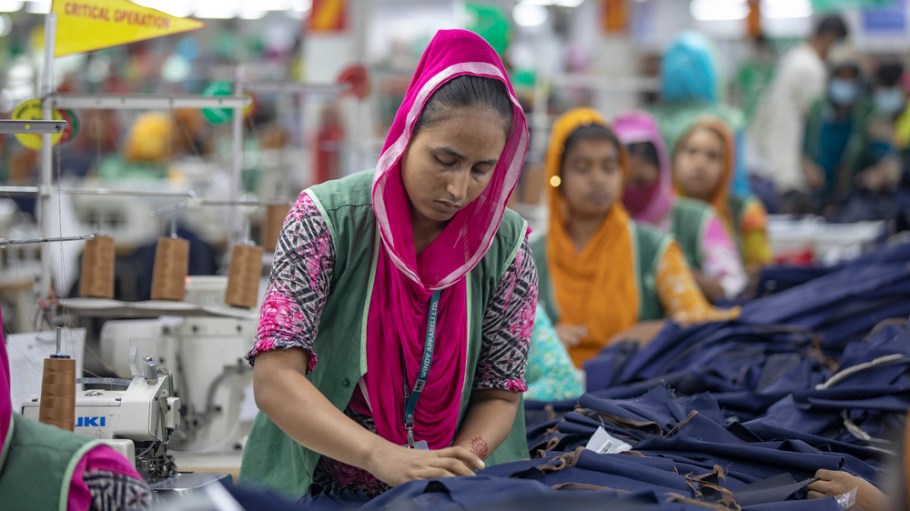
It’s Bangladesh’s hope that these measures will result in more favorable terms for critical products such as apparel, which makes up 85 percent of the country’s exports and accounts for the majority of shipments to the United States, its largest trading partner after the European Union. Of the 1,300 cut-and-sew facilities affiliated with the Bangladesh Garment Manufacturers and Exporters Association, the trade group better known as the BGMEA, 100 are entirely dependent on U.S. orders. But more than half face differing, if often significant, degrees of exposure through brands such as Calvin Klein, Gap Inc., JCPenney, Kohl’s and Walmart.
With Vietnam facing a low 20 percent tariff rate, the sector fears ceding its competitiveness to an opponent with which it has long battled for the title of the world’s second-largest clothing exporter after China. But Bangladesh’s reliance on garment exports could also result in knock-on effects for the country’s broader economy. Moody’s predicts that the tariff shock could exacerbate problems facing an already brittle banking system, such as poor asset quality and low capital buffers. Bangladesh’s sovereign credit rating could also be downgraded as a consequence.
“We have requested them to schedule the next meeting within the coming week, any day from Sunday onward,” Commerce Secretary Mahbubur Rahman told New Age. “If the USTR confirms a date, a delegation led by Commerce Adviser Sheikh Bashir Uddin will leave for Washington.”
The BGMEA has also ramped up efforts to hire U.S. lobbyists to plead Bangladesh’s case in Washington, following criticism that the interim government isn’t doing enough to secure a better rate. Even so, progress has been slow because the most influential firms are already representing other countries, said BGMEA president Mahmud Hasan Khan.
“Those directly involved in negotiations were, informally, very confident, but [then] we began hearing whispers that the USTR is not the ultimate decision-maker. It is, in fact, the Trump administration that holds the authority. Why did it take us so long to realize this?” he told the Financial Express. “Now, we are facing resistance even within our board. Many members are discouraging us from getting involved at this late stage, fearing the negotiations will fail. Why should we bear the burden of failure?”
Bangladesh could still leverage a number of strategies, according to a report that the Centre for Policy Dialogue published Wednesday. It could, for instance, consider signing a bilateral free trade agreement with the United States, though this is something that will need to be approached with “due caution and care,” the Dhaka-based think tank said. It could also strengthen its intellectual property rights to assuage American concerns, allow dedicated warehouses for storage of U.S. cotton or assist in financing U.S. cotton imports with deferred payment facilities. No less than everything is currently at stake.
“The telltale signs of the adverse impacts of US-RTs are already visible,” the report said, referring to the United States’ so-called “retaliatory” tariffs. “Work orders have started to be stalled and some major apparel brands and buyers are taking a wait-and-see stance in view of the emergent uncertainties and in anticipation of what transpires over the coming weeks.”
Many enterprises will find it difficult to bear the additional burden at a time when energy, gas and other input costs have “been on the rise” in Bangladesh, hiking up the general cost of doing business in the country, the Centre for Policy Dialogue said. “Particularly, small-size exporters to the U.S. could find the situation unsustainable. Many exporters will likely try to shift to the EU and other traditional markets, resulting in more intense competition in those markets and a downward pressure on export prices.”
And while a shift to new, non-traditional markets is possible, this will take time, it added. In all likelihood, the report said, exporters linked with the U.S. market “are in for a very rough ride in the near to mid-term future.”
A.K. Azad, managing director of Ha-Meem Group, which owns more than two dozen garment factories, echoed the desperation. He said that a major client told him that the Bangladeshi government’s stance is “weak” and “unlikely to yield favorable results.” Another buyer said that if the 35 percent tariff figure goes through, suppliers like him would be expected to absorb it—a tall order for companies that run, at most, at profit margins of between 1.2 and 1.5 percent.
“In my 40 years in business, I’ve never seen such a crisis in the export sector,” he told the Financial Express. “We, the business community, have brought this sector to an honorable position, but now we are disappointed and frustrated.”