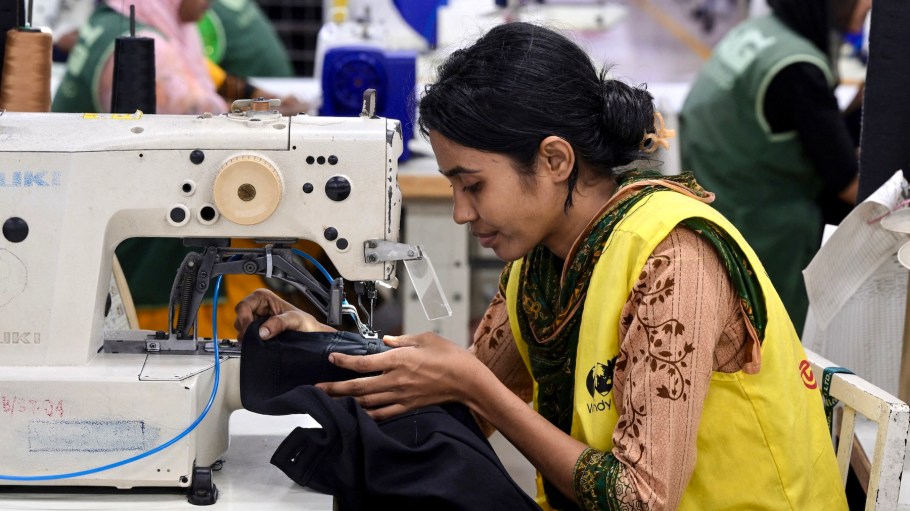
Creating sharp rifts across the sector, and raising fears of disruption, a labor law change published in Bangladesh earlier this week has triggered a wave of concern in the country’s $40 billion apparel export industry.
While the move appears to support freedom of association, the revised multitiered approach to forming trade unions replaces the longstanding requirement of signatures from 20 percent of a factory’s workforce.
In a significant shift, the Bangladesh Labour Act Amendment (Ordinance) 2025 introduces a sliding scale based on factory size and lowers the threshold for union formation to a minimum of 20 workers. For labor groups, the change expands access to unionization.
Related Stories
Factories with up to 300 workers will need at least 20 workers to form a union. The requirement increases to 40 members for factories with 301–500 workers, 100 members for those with 501–1,500, and 300 members for workplaces employing 1,501–3,000.
For employers, it raises fundamental questions about stability on factory floors.
Whether the measure will lead to greater disruption or ultimately create stronger, more accountable workplaces lies at the center of the debate—one that some labor leaders say they are still assessing.
“This can create far more chaos in the future,” Fazlee Shamim Ehsan, president of the Bangladesh Employers’ Federation (BEF) told Sourcing Journal. “Exporters associations have raised their voices about how this can impact factories, cause disruptions and even damage unions themselves. Our concern is that despite discussions finalized at the tripartite council, the government has twisted some of the wording—and this can make the situation at factories much more problematic by creating divisive situations.”
Manufacturers expressed strong frustration, warning that the amendment could weaken the industry at a fragile moment and noting that the new numbers diverge from the consensus reached at the Tripartite Consultative Council (TCC).
Explaining the industry’s position, Ehsan said a key issue was the need to balance rights with responsibilities.
“We asked several times for the government to make clear that with rights there must also be responsibility. In our culture that needs to be emphasized—without awareness of responsibility, the situation becomes difficult. Even workers don’t want an ordinance that creates division or paralyzes a factory.”
He added that several other elements of the gazette raise concerns, particularly the broader definition of “worker.”
“Everyone other than the owner—even officers and staff—is now classified as a worker,” he said, warning that such a sweeping definition could cause confusion.
“Other points we made have also been ignored,” he added. “We asked for four months of maternity leave, which workers could take at their discretion. But the gazette mandates a fixed schedule: two months before and two months after childbirth, leaving workers with far less flexibility.”
The shift in thresholds will recalibrate power dynamics within factories and could disrupt established systems of management at a time when the sector is already under pressure from political uncertainty ahead of national elections and a rapidly shifting geopolitical landscape. Manufacturers warn that the change could lead to fragmentation, mirroring the experience of Cambodia, where a single factory can host several unions, often resulting in competing demands and conflict.
Some labor leaders agree that this could be damaging.
Others, however, have welcomed the gazette describing it as a “long-awaited step in the right direction,” and a “necessary move to strengthen collective bargaining, ensure safer workplaces and protect workers’ rights.” While acknowledging the risks of this changed approach, they say the broader principle of expanded association rights is non-negotiable.
The ordinance also recognizes domestic workers as formal workers and extends protections to employees of non-profit organizations, including eligibility for provident fund and pension schemes. Another provision prohibits blacklisting practices that have historically prevented dismissed workers from securing new employment.
Practical implementation is now a major concern for both unions and employers.
Labor ministry officials, while supporting the intent of the reform, admitted in private that implementation would be a challenge, including the way forward to process a surge of new union registrations, deploy enough labor inspectors and scale dispute-resolution mechanisms.
Even so, officials say the changes will strengthen Bangladesh’s position with key trading partners by addressing longstanding labor rights concerns raised by the European Union, the International Labour Organisation (ILO) and the U.S.
They argue the shift will ultimately support economic growth and bolster exports, especially in the apparel sector, which accounts for more than 80 percent of the country’s total export earnings.
The reforms follow commitments made at the ninth session of the EU-Bangladesh Joint Economic Commission in October 2019 to improve workplace safety and labor standards.
The National Action Plan (NAP) that followed laid out the administrative reforms required to achieve those goals, and the government subsequently created a Tripartite Implementation and Monitoring Committee (TIMC), which held its 10th meeting on Oct. 26 and produced the draft amendments that have now been formalized.
Despite the controversy surrounding the gazette, the window for reversing it appears narrow.
“Once a gazette is issued, it is essentially on track to take effect,” said Professor Mustafizur Rahman, economist and distinguished fellow at the Centre for Policy Dialogue (CPD) in Dhaka. “The apprehension in the industry is that it will slow things down,” he said, noting that comparisons with other countries are inevitable—from West Bengal in India, where strong union activity paralyzed an industrialized state, to Cambodia, where extensive unionization has not helped.
“In Cambodia, for example, per capita wages are higher than in Bangladesh, the stronger bargaining power can have results, too,” he observed. “There are various repercussions, some positive and some negative — but this is undeniably a major shift.”
Manufacturers noted that it was important to keep in mind that Bangladesh, the world’s second-largest apparel exporter (after China), has been navigating an increasingly volatile global market shaped by geopolitical realignments, supply-chain restructuring, U.S. tariff negotiations and a huge domestic shift over the last year, with political uncertainty under an interim government and looming elections that are expected to take place in early 2026.
Even as logistics, and fears come into play, there appears to be agreement that this new layer of complexity is one more balancing act while managing the expectations of global buyers and the demands of a vast, predominantly female workforce.
“We continue to find the way forward, despite the concerns and the fact that the industry is battling on many fronts,” said Ehsan.