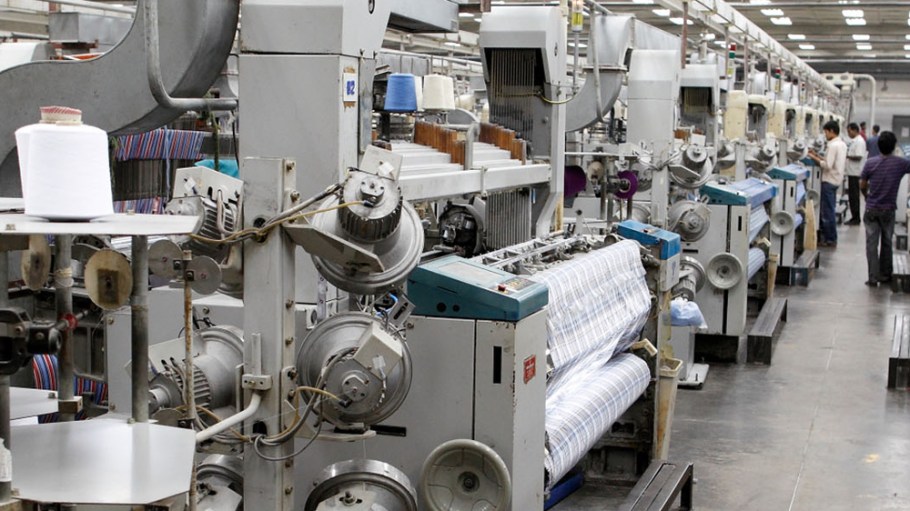
One of Bangladesh’s largest vertically integrated textile and garment manufacturers has axed tens of thousands of its employees, calling its future into further question as a once vast and impressive empire continues to crumble in the wake of its co-founder and vice chairperson’s arrest in August, first for his alleged role in the death of a shop owner, then on charges of money laundering, embezzlement and other fiscal misconduct.
At a meeting of a government-formed advisory council committee to review business conditions at Beximco Industrial Park on Sunday, managing director Osman Quader Chowdhury said that 40,000 garment workers across 16 apparel factories, including Beximco Fashions, Crescent Fashion and Design, Shinepukur Garments and Yellow Apparels, would be laid off beginning Dec. 16. As per the Bangladesh Labour Act, they will receive half of their basic salary and allowances for 45 days.
Related Stories
Beximco Group, which owns a sprawling portfolio across several other industries, including pharmaceuticals, real estate, communications, financial services, energy and media, said it has struggled financially over the past four months because it has been unable to open new lines of credit for importing raw materials, hampering its ability to fulfill orders or take on new ones amid severe liquidity challenges, a demand downturn, ongoing labor unrest and a contested receivership by the central bank to oversee its outstanding loans and liabilities.
“We were initially assured by the interim government that our businesses would be supported. Based on this, we kept the factories operational for four months,” Chowdhury said in a statement. “However, no support materialized.”
He said that the conglomerate, whose clients have included Marks & Spencer, Target, Calvin Klein owner PVH Corp. and Zara owner Inditex, has spent 300 crore taka ($25.1 million), including 100 crore taka ($8.4 million) it financed through bank loans, since August, largely to meet employee wages that can cost 60 crore taka ($50 million) each month. The 5-6 crore taka ($419,000-$502,000) that Beximco generates in monthly revenue from subcontracting with other factories has also been “far from sufficient,” Chowdhury said. Inditex declined to comment, and the other brands did not respond to emails seeking the same.
But Miran Ali, a member of the Bangladesh Garment Manufacturers and Exporters Association’s interim board as the trade group works through plans for new elections, said that the caretaker government led by Nobel Peace Prize laureate Muhammad Yunus has been helping cover Beximco’s salaries through state-owned Janata Bank but that there are limits to its ability to do so.
“The government of Bangladesh cannot indefinitely go on to pay the wages of the workers of a company whose owners are absconding and who have been involved in the looting of our country,” he told Sourcing Journal. “Layoffs are permitted in Bangladesh labor law if a company cannot run and Beximco in textiles will not be able to run, so therefore, legally, layoffs are the only recourse that they have at this point.”
Ali said, however, that the government is still determining if it can revive parts of Beximco’s textiles and garment manufacturing business as “independent, viable companies” and “without the ownership of the former owners: the people who were involved in the looting and all of that.” Foreign investors have already expressed interest in snapping up certain divisions.
Salman F. Rahman, who founded Beximco with his brother Sohail F. Rahman in 1970 and was once one of former prime minister Sheikh Hasina’s most trusted advisors, remains behind bars. He’s now derided as the “father of default culture” for using his political influence to stave off repayment of his company’s bank loans and liabilities, estimated at a breathtaking 50,098 crore Bangladeshi taka, or roughly $4.2 billion. It’s because of “crony capitalists,” the Centre for Policy Dialogue in Dhaka recently declared, that several domestic banks are “clinically dead” with little to no credit to speak of, not even to allow customers’ withdrawals.
Last month, workers from several Beximco Industrial Park factories blocked the Chandra-Nabinagar Highway in Gazipur for weeks to protest unpaid October wages, causing traffic disruptions and the temporary closures of several nearby facilities due to safety concerns. They dispersed only after receiving messages that their deposits had cleared with the assistance of the Ministry of Labour and Employment and the Ministry of Finance’s Finance Division.
As of Friday, the Google listing for Beximco (Textiles & Apparels Division) was marked with a red bar and the words “temporarily closed.”