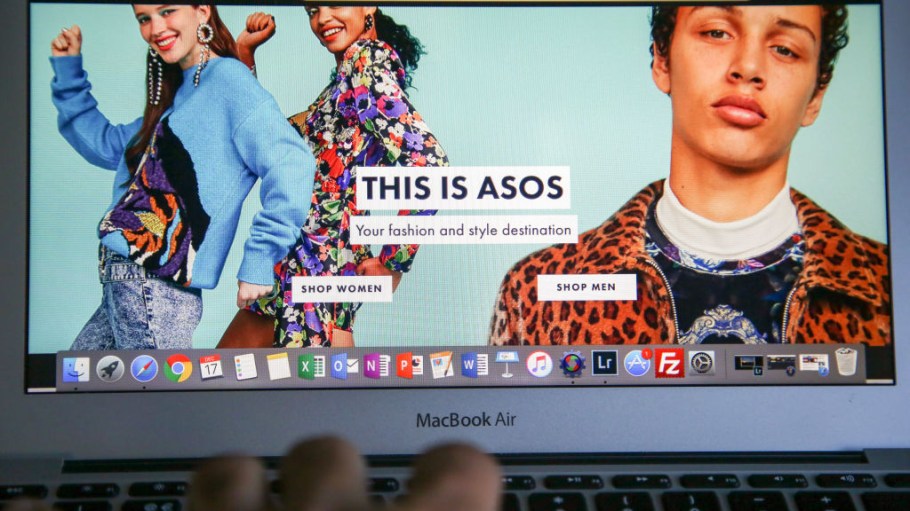
Fast-fashion e-tailer Asos is giving itself 12 months get profitable again.
CEO José Ramos Calamonte said that fiscal 2023 was a year of “good progress” for Asos as it reduced inventory by 30 percent and and got the business moving in the right direction.
“Encouragingly, stock that was brought in under our new commercial model over the summer months has performed strongly and this gives us the confidence to accelerate the rollout of our new processes,” Ramos Calamonte said. Part of that acceleration includes a focus on speed-to-market, and a piloting of its “best-in-class Test & React model for our highest fashion product, which moves from design to site within two weeks,” he added.
Related Stories
During the fiscal year ended Sept. 3, Asos squeezed out 300 million pounds ($320 million) in profit improvement and cost saving measures to manage inflation and deal with higher customer returns. It also improved core order profitability by ditching unprofitable brands, customers and activities.
“The cost savings are particularly evident in our outbound supply chain with distribution costs as a percentage of sales improving by 120 basis points,” he said. With over 23 million active customers and a collection of company-owned brands operating at scale, Ramos Calamonte said Asos will focus on building up cash and setting the company up for the long term in fiscal 2024.
“The benefits of the new model will become clearly visible in our profitability and growth in FY 25 and beyond,” he added.
The CEO said Asos will “improve our product and double-down on our unique style” to “reignite our brand heat and remind consumers we are first and foremost about fashion, not convenience or discounting.”
Asos plans even deeper inventory cuts, another 16 percent over the next 12 months. It’s also closing its second U.K. fulfillment center in Lichfield next year. “The decision to open and automate Lichfield was taken in 2019 without the ability to break the contract. Mothballing the site provides an annual cost saving of 20 million pounds ($24.3 million) and provides the flexibility to either sell the facility or re-open it, depending on our capacity needs,” Ramos Calamonte said.
Another area of focus is returns. “While we continue to believe that free returns are a core part of our customer proposition, there are good returns and bad returns,” he said. The good ones help Asos acquire new customers and increase basket size, while the bad ones come from unprofitable customers or serial returners, or for poor quality or inaccurate sizing. Asos is working to improve product size, fit, and quality. It’s also using AI forecasting to drive better decision-making.
Asos said its pre-tax loss for the year widened to 296.7 million pounds ($360.6 million) versus a loss of 264.8 million pounds ($317.8 million) a year ago. Revenues fell 11 percent to 3.54 billion pounds ($4.3 billion) from 3.94 billion pounds ($4.72 billion) in the same year-ago period.
For fiscal 2024, Asos is forecasting a sales decline of 5 percent to 15 percent for the first half, with a return to growth in the final quarter of the year.
Whether Asos can deliver on its projected outlook remains to be seen. But selling assets could give it room for key investments, such as 30 million pounds ($36.5 million) in planned marketing spend and the 45 million pounds ($54.7 million) needed for automation prior to closing Lichfield.
Sky News reported Saturday that Asos is looking at selling Topshop. Authentic Brands Group has been mentioned as a possible suitor. Authentic’s name has also popped up as an interested buyer for Champion, the activewear brand owned by Hanesbrands. A spokeswoman at Authentic declined to comment on Topshop and Champion.
Asos acquired Topshop and Topman in a deal with Sir Philip Green’s bankrupt Arcadia Group. It paid 265 million pounds ($363.2 million) to acquire the brands’ intellectual property, goodwill and inventory in a transaction that also included the Miss Selfridge and HIIT brands. Including the assumption of certain liabilities, the total value of the transaction was pegged at 330 million pounds ($452.3 million). The transaction did not include any of the Topman and Topshop stores.
There’s also the possibility that the Mike Ashley, through his control of Frasers Group, might get in on the action. He’s been on a tear acquiring shares of both Asos and its fast-fashion competitor Boohoo, of which he is now the largest shareholder. Ashley’s company with a nearly 12.6 percent stake is the third largest Asos shareholder, behind Aktieselskabet AF 5/5/2010, a wholly-owned subsidiary of Danish fashion group Bestseller, and Camelot Capital Partners.
What hasn’t been made clear yet is why Frasers continues building up a position in both e-tailers.