Byte-Sized AI is a bi-weekly column that covers all things artificial intelligence—from startup funding, to newly inked partnerships, to just-launched, AI-powered capabilities from major retailers, software providers and supply chain players.
JD Sports Fashion partners with o9
JD Sports Fashion, a subsidiary of JD Sports, announced this week that it had partnered with AI-powered planning company o9. JD Sports Fashion will use the technology to plan its assortments, with the hope that it can increase its profitability while also being more sustainable.
Related Stories
The company plans to integrate o9’s solution across the JD Sports Fashion, HIP and Size? brands. In all such cases, it will look to decrease the number of markdowns it has to do, while providing a strong experience for customers by having optimal inventory levels. O9’s platform uses existing data to help map out future allocations and inventory management processes.
Wim van Aalst, chief supply chain officer for JD Sports Fashion, said partnering with o9 will enable the company to keep current with the needs of customers—not just in general, but at a specific level.
“In today’s ever-changing business environment, building an agile customer offering tailored to local needs, that is delivered with speed and accuracy, is critical to keeping a competitive edge,” he said in a statement.
And o9 believes it’s suited to deliver those results. Chakri Gottemukkala, co-founder and CEO of o9, said the partnership will help optimize JD’s supply chain as it looks to grow and acquire new customers.
“As retailers continue to seek ways to build greater resiliency to mitigate potential risks and pursue emerging opportunities, we’re pleased to work with JD Sports Fashion to provide planning solutions that further enhance agility as the company continues to expand its global footprint,” Gottemukkala said in a statement.
Lowe’s links with OpenAI for employee tech
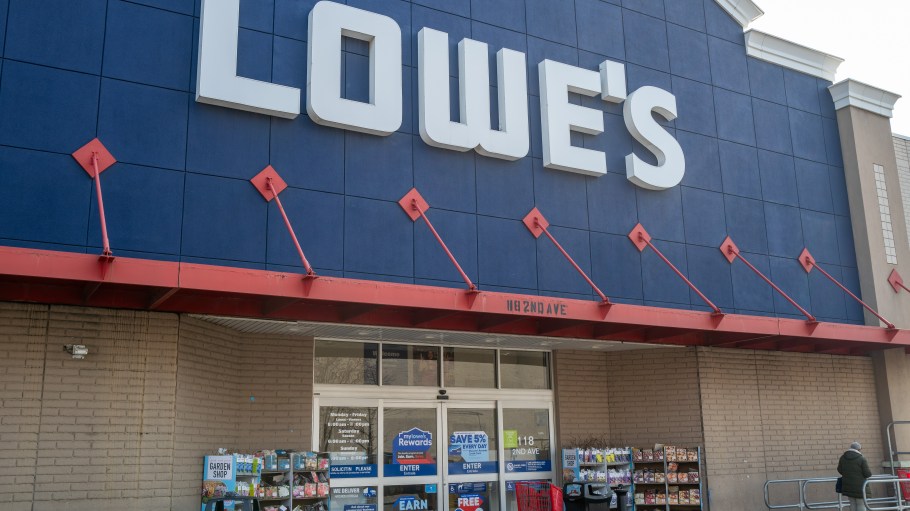
Lowe’s announced early this month that it had partnered with OpenAI to deploy an employee-facing tool called Mylow Companion, which allows associates to answer in-store customers’ queries with the help of generative AI. The company said the technology has been launched to all associates at more than 1,700 stores.
Seemantini Godbole, Lowe’s chief digital and information officer, said the launch will aid Lowe’s customers as they try to discover products to help their home improvement journeys along.
“Whether associates have been on the job for five weeks or five years, they can be confident they’re delivering expert-level advice and assistance, and customers can trust they’re getting the best service and experience of any retailer,” Godbole said in a statement.
The announcement comes just two months after the company announced that it had launched a similar tool, called Mylow, for e-commerce customers.
The in-store technology operates via an employee’s handheld device and can process conversation, text-based prompts or voice-to-text prompts. The idea is that, even if a customer’s particular home improvement project is outside an associate’s scope of expertise, they can still provide an answer.
So, for instance, if a customer asks an associate versed in woodworking what kind of caulk they should use to seal their shower, the associate might ask Mylow Companion for assistance. The technology seems to be another example of ways retailers are looking to bridge the gap between digital and in-store experiences with AI.
Lowe’s is far from the first retailer to integrate such technology. Target announced last summer that it had launched a similar tool, which it calls Store Companion; Walmart’s My Assistant and Tractor Supply Company’s Hey Gura! tools are other examples of in-store technology at work.
Brad Lightcap, chief operating officer at OpenAI, said the collaboration is another example of how the technology company is supporting retailers’ outcomes.
“Through our collaboration with Lowe’s, AI is making it faster and easier for their associates to help customers find exactly what they need for their most important projects,” Lightcap said in a statement. “We’re excited to support Lowe’s transformation of retail by merging their industry-leading expertise in home improvement with our advanced AI capabilities.”
Algolia facilitates easier agentic experiences with Adobe, Salesforce
Algolia’s newest announcement is helping agentic AI assistants—particularly Salesforce’s Agentforce—become smarter. Many AI agents today act based on outdated information, rendering their results or actions less useful than they could be.
Algolia is helping to upgrade those by connecting those assistants to real-time data, product information and more; it effectively is an intermediary that can identify the intent behind a user’s query, then pulling relevant information to make sure the response the agent gives the user is both accurate and relevant.
So, for instance, if a consumer asks an agent for a pair of gold heels to wear with a summer wedding guest dress, the agent might be able to infer that they would like an open-toed shoe, in their shoe size. From there, the agent can query backend systems powered by Salesforce and Adobe on what’s in stock, the descriptions associated with specific items and more to give the user the best answer possible. That way, the agent isn’t returning unhelpful results, like a pair of shoes the consumer loves but are out of stock.
Algolia pulls the relevant data from platforms like Adobe Experience Manager and Salesforce Commerce Cloud, among others.
Bernadette Nixon, CEO of Algolia, said Salesforce’s AI agent already has a great deal of promise, but Algolia’s technology helps make it real.
“Salesforce’s Agentforce is a compelling vision for how enterprise agents should operate. With Algolia in the mix, it becomes actionable. Agents can understand a customer’s intent and instantly pull from Adobe, Salesforce, and other systems to deliver real answers—not guesses.”