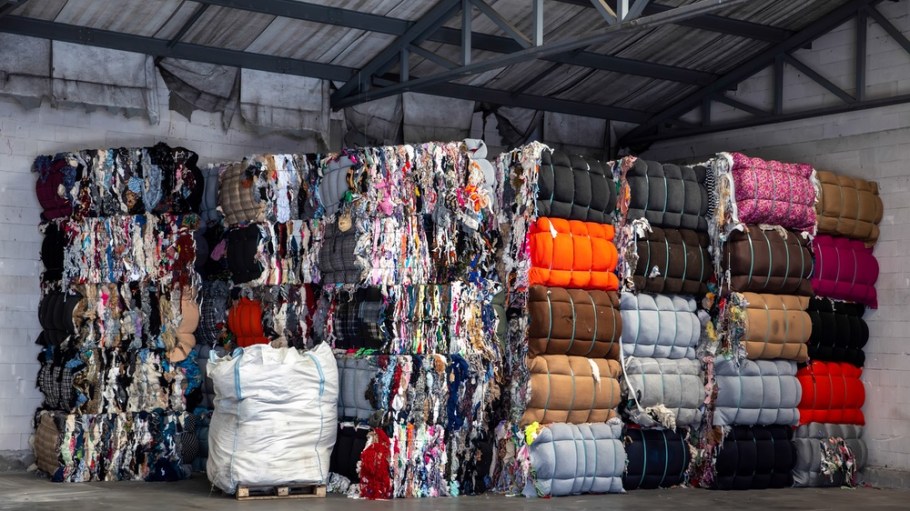
The U.S. is the largest consumer of fashion in the world, and the largest used clothing exporter.
This is both a challenge and an opportunity, because it means we have the majority of the feedstock for clothing recycling in the world. If we don’t capture this next wave of the Industrial Revolution, someone else will.
President-elect Donald Trump’s promises for new tariffs, coming on top of the current administration’s executive order aimed at de minimis tax loophole reform, makes clear that both sides of the aisle are serious about re-prioritizing domestic business and manufacturing. But if the U.S. doesn’t think strategically about how additional funds can be utilized to spur domestic business, we risk making the cost of goods more expensive while falling even further behind in terms of domestic manufacturing competitiveness.
Related Stories
To answer this inevitable risk, we offer a solution: to redirect some of those billions in additional funds from increased tariffs and de minimis reform to the U.S. circular textile industry. This is a crucial window of opportunity to support U.S. jobs, supply chains, and national security.
The next wave of innovation in manufacturing will be around maximizing the value of the resources already in circulation. Any major economy that ignores this fact will face supply chain issues, threats to national security, and will ultimately fail to capture a huge economic advantage. In fact, I recently learned that if the U.S. went to war today, it would take us three years to ramp up to the capacity needed to uniform our defense forces. This isn’t a challenge, it’s a problem.
While lowering or removing the de minimis tax exemption may temporarily slow the flow of billions of dollars of cheap, duty-free goods through U.S. ports, foreign companies are likely to find a way around tariffs and pass the costs on to customers.
Further, closing the de minimis loophole won’t be enough to address the root of the problem. American retailers, brands and producers—particularly those in the apparel and footwear industry—can’t compete with the manufacturing prowess of foreign entities, particularly those in Asia based on a variety of market forces like lax environmental and workforce standards. And they certainly cannot make the majority of products in the U.S. and stay competitive. In the days after Trump was elected, retailer Steve Madden said it would produce fewer goods in China to avoid potential tariffs, but, unsurprisingly, it will focus its manufacturing efforts in Cambodia, Vietnam, Mexico, and Brazil, not the U.S.
Tariffs are a blunt tool that treats the symptom rather than the disease: we’ve given away all our manufacturing capabilities in exchange for cheap goods.
Tariffs will raise the cost of goods for American consumers and raw materials for domestic manufacturers. As with any stick, a carrot is also needed. De minimis reform is what some might call a once-in-a-lifetime opportunity to redirect funds and inject tens of billions of dollars into U.S. manufacturers and circular textile organizations—the companies who are leading the charge to keep and bring domestic jobs back to our sector. Those funds could address the issue of U.S. competitiveness and fuel a manufacturing renaissance that is already occurring in other parts of the world.
By investing in the nascent circular fashion and textile economy, we have a rare but narrow opportunity to lead the world in manufacturing once again. Textiles were left out of both the Inflation Reduction Act and the Infrastructure Investment and Jobs Act. It would be a failed opportunity for the U.S. to not earmark substantial funds for circular textiles, the next era of industrial manufacturing.
Rachel Kibbe is the founder and CEO of American Circular Textiles (ACT), a leading industry association dedicated to advancing circularity and sustainability within the U.S. textile and fashion sector. ACT’s mission is to promote policies and initiatives that reduce waste, increase textile recycling, and support domestic manufacturing, all while fostering collaboration across the supply chain.