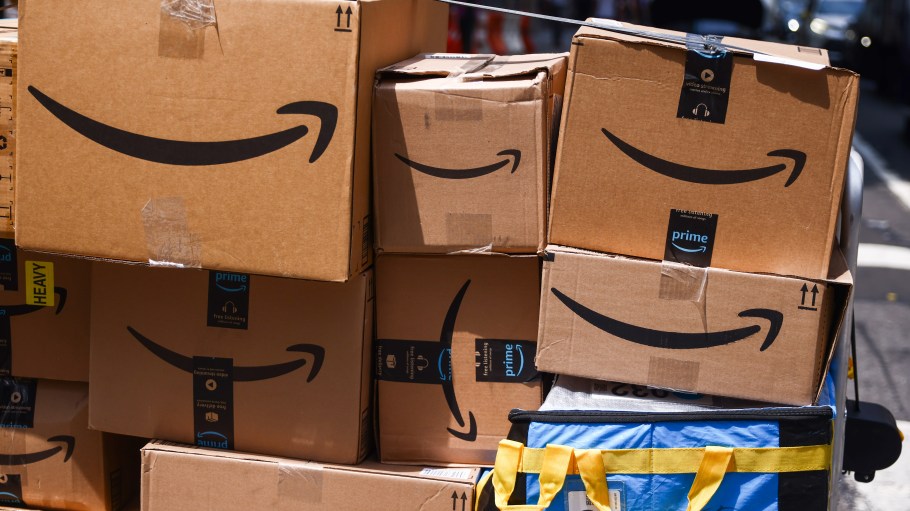
Amazon wants the EU to stop the VLOP.
That is to say, the e-commerce giant went before a European court to ask that its status as a very large online provider (VLOP) under the Digital Services Act (DSA) be rescinded.
The DSA went into general effect in 2024, and it’s aimed at creating better transparency, tamping illegal digital activity and creating a safer internet for citizens of the European Union. Under the law, platforms and service engines can be designated as VLOPs, subjecting them to more stringent provisions of the DSA. For that reason, DSA regulations began in 2023 for companies designated that way.
Related Stories
EU regulators designated Amazon as a VLOP in April 2023; the DSA states that platforms that accrue at least 45 million monthly users are eligible to be designated as such. Other VLOPs include Google, Meta, Shein, Temu and Zalando.
These companies, among more than a dozen others, are required to “have user-friendly terms and conditions,” “be transparent as regards advertising, recommender systems or content moderation decisions” and more. They also must look deeper into their business models to identify risks surrounding illegal content, minors’ protection and the mental and physical wellbeing of consumers.
Not long after its designation, Amazon made it clear that it would appeal its status as a VLOP, primarily with the argument that retail platforms should be exempt from such a categorization because they don’t pose the same risk as, for instance, social media platforms. Zalando has made a similar argument.
According to Reuters, Amazon’s lawyer Robert Spano appeared in Luxembourg-based General Court to continue arguing with that same principle on Thursday.
“Online marketplaces like the Amazon Store do not pose systemic risks. Second, the VLOP rules do not and cannot rationally assist in preventing the dissemination of illegal or counterfeit goods,” Spano reportedly said. “The VLOP rules therefore make no sense when applied to online marketplaces.”
An Amazon spokesperson told Sourcing Journal via email that it believes the VLOP designation is meant for companies “with advertising as their primary revenue and that distribute speech and information.”
With that framework, the spokesperson said, Amazon “doesn’t fit the description of…a VLOP under the DSA and should not have been designated as such.”
“The Amazon Store, as an online marketplace, does not pose any such systemic risks; it only sells goods, and it doesn’t disseminate or amplify information, views or opinions,” the spokesperson said via email.
According to Reuters, Spano argued in Luxembourg that risk is not pervasive but rather isolated to individual customers and noted that the company already complies with existing product safety regulations.
He went on to say that regulators should not cast further scrutiny on companies like Amazon solely because of the number of users or consumers they have managed to amass. Zalando has made a similar argument, noting that each company calculates the number of users it has differently.
“When it comes to marketplaces like the Amazon Store, size does not multiply risk. It is an arbitrary, disproportionate and discriminatory metric,” Spano said, according to Reuters.
The Amazon spokesperson said it believes its designation as a VLOP doesn’t provide any tangible upside for its consumers.
“The VLOP designation also forces Amazon to meet onerous administrative obligations that don’t provide any benefit for EU consumers,” they said in the email.
The court that heard Amazon’s arguments is expected to rule about the company’s VLOP status in the coming months.