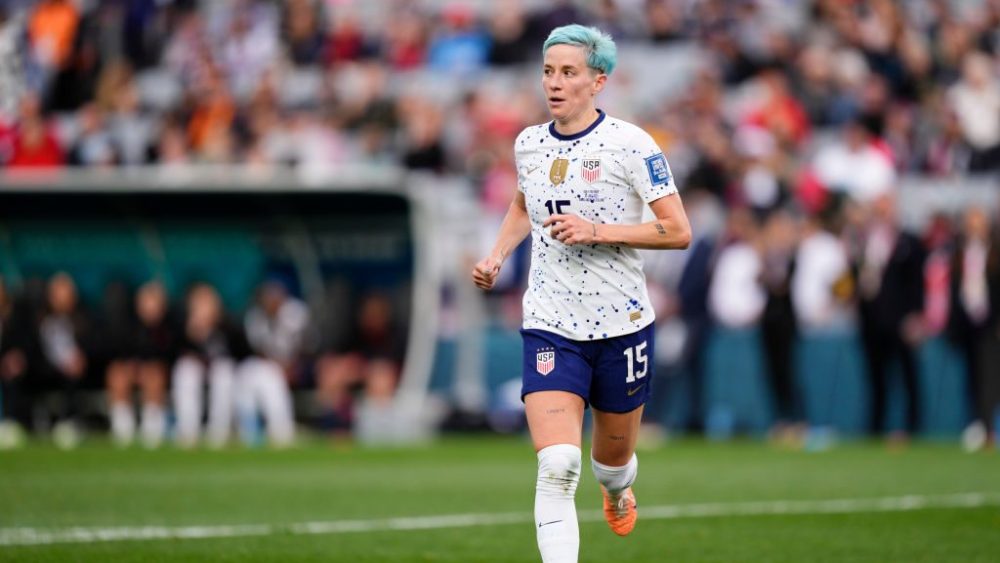
The FIFA World Cup is soccer’s greatest spectacle. Every four years, fans from around the globe flock to see their favorite teams, while millions more tune in on television.
Today, men and women have their own FIFA World Cups, but this wasn’t always the case. While the rules of soccer are the same across both genders, the events do have some key differences.
As the 2023 FIFA Women’s World Cup continues until Aug. 20, learn more about how it varies from the men’s tournament.
You May Also Like
The Men’s World Cup Came First

The first World Cup took place in 1930, more than 70 years before the Women’s World Cup began. There were unofficial women’s world cups as early as the ’70s, but FIFA didn’t get involved until 1988, when it held a global women’s tournament in China. Three years later, the federation officially established the Women’s World Cup.
The Men’s World Cup Typically Has More Teams
For years, only the men’s tournament had 32 teams, while the Women’s World Cup had 24. This year, though, things have changed, and the women’s tournament now has the same amount of teams. Before the ’70s, women’s soccer was banned in several countries, which may also explain why national teams took longer to proliferate.
Related Articles
The Amount of Prize Money Differs
During the last Women’s World Cup in 2019, the prize pool was $30 million. This paled in comparison to the money offered during the men’s tournament in 2018, which totaled $400 million.
In 2023, the prize money for the Women’s World Cup quintupled to $150 million. This is still lower than the men’s World Cup, however. For the 2022 championship in Qatar, the winning team received $440 million.
Women’s Teams Are Smaller
In 2022, men’s teams upped their rosters from 23 to 26 players. This year, women’s teams are still comprised of only 23 players.
Men and Women Used to Play on Different Terrain
Men’s matches during the World Cup are played on real grass, while women played on artificial turf until 2023. Before this change, players including Alex Morgan spoke about how artificial turf affects athletes differently.
“Not only are there long-lasting injuries, but there are long-term effects of playing on turf,” Morgan, who plays for the U.S., told USA Today in 2014. “Tendons and ligaments are more sore after turf. It takes longer to recover from a turf field than natural grass.”