
The investment by Ermenegildo Zegna and Reliance Brands in Indian men’s wear designer Raghavendra Rathore marks a series of firsts for all the companies involved — and could signal a major turning point in global companies’ attitude toward Indian fashion.
The investment is the first in an Indian brand by both Zegna and Reliance, while for Rathore it represents another milestone in his career that could help turn him into a designer name recognized worldwide.
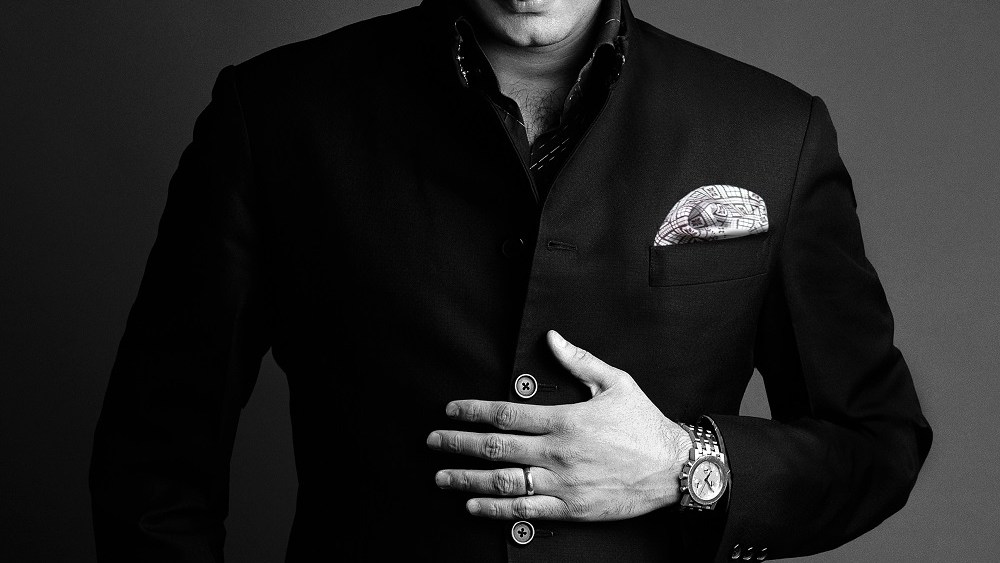
Rathore is well-known in the luxury men’s space in India for his tailoring and interpretation of the traditional men’s formalwear bandhgala, breeches and tapered waist coats — with a focus on both sophistication and style. (A bandhgala, which is said to have originated from Jodhpur, is part of Indian formalwear with its high collar, front buttons, and formfitting style.) Designers — many of whom are strongly independent and resist any steering by investors — are interested to see how the growth of his brand pans out with the new investors.
Related Articles
Rathore currently sells his Jodhpur brand in seven stores in India and also has a lower priced line, Imperial India Company. But it is the luxury aspect that the Zegna-Reliance brands’ investment will fuel, focusing on the fast-growing men’s luxury segment.
You May Also Like
Although luxury remains a small part of India’s $700 billion retail market, with many global brands continuing to be uncertain about when the sector will really mature, there is a sense of optimism about it.
“After the initial euphoria regarding the promise of the Indian market around 2010 following expansion in China, the sentiment of many early luxury entrants in India quickly swung to the opposite direction,” Gildo Zegna, the Italian company’s chief executive officer, noted. “Over the last two years, however, I have witnessed a reenergized and more optimistic ‘chatter’ among the international luxury fashion fraternity about India and its potential. While the numbers are still different than our early expectations, there is now a positive movement in the right direction. The increasing potential of Millennials is certainly very positive for the country and we are investing heavily to meet the specific needs of Millennial customers,” he said, citing 410 million Millennials in India, according to an estimate by Morgan Stanley. This is second only to China, and the generation is likely to spend $330 billion annually in India by 2020.
“So, we’re talking about a huge and very interesting market,” he said, adding that, in addition to building a decent base of loyal luxury consumers and capturing the trust of India’s Millennials, he felt that “the rationalization of the tax structure and the newly implemented GST (goods and service tax) have also increased India’s market appeal.”
Gildo Zegna counted the choice as part of his company’s DNA, to focus on “a new location, a new country or a new a value creation opportunity,” the early mover advantage.
“I’ve felt for a while now that together with the growing luxury spending power of the Asian consumer, design sensibilities emerging from and catering to Asian tastes will take center stage on the global market. We are seeing this on several fronts, including a strong demand for formal and ceremonial attire as contemporary style merges with more traditional customs,” he said. “Weddings are a fundamental part of Indian culture and can last several days, with various levels of formality. Investing in Raghavendra Rathore, which is a specialized and well-established brand in this segment, allows us to expand our own formalwear offering within India, and this intrigues me.”
But why India, when Zegna has a choice of investments worldwide?
“We have been present in this country for over a decade and strongly believe in its potential. Our made-to-measure business in India is quite significant, for example, and over the years we’ve built a very loyal customer base,” the ceo said. “I am very optimistic and believe this investment opens the way for accelerated growth for luxury fashion. India is a well-segmented market that is highly service-oriented with a strong appreciation for quality. Our family values, the quality of the raw materials we use and our attention to personalized services are strong assets here. It is possible, therefore, that there exist other opportunities within India of strategic interest and we will evaluate these on a case-by-case basis if and when they present themselves.”
The deal brings Reliance into a new area of fashion, an Indian brand. Until now, the subsidiary of one of India’s largest conglomerates, Reliance Ltd., has been focused mainly on bringing global labels into India. In 2017, Reliance Brands acquired a 40 percent stake in rival company Genesis, which has a similar strategy.
But the Rathore investment indicates that Reliance may now be taking a different approach to fashion. Darshan Mehta, ceo of Reliance Brands, has long had a clear perspective on the market.
“As confidence in Indian sensibilities, and of Indian-ness in a global context, increases, you think of the vistas of possibilities of what all we can do with this knowledge and history,” he told WWD, pointing to the strength of the Rathore brand and the ability of Reliance and Zegna to give it greater market access.
He noted in particular the virtue of patience in brand-building. “We are not a mutual fund who has to exit in three or five years. We are willing to wait and make it happen,” he said. “The box that I sit in is a bit of a magical box as well. Who has the freedom to have the golden tap called Reliance behind you and yet have the freedom to get into exciting uncharted territories?”
Yet Mehta has brought more than 15 global brands to India, with a rapidly expanding retail network. These include Zegna itself, Diesel, BCBG, Brooks Brothers, and others. “The greatest caution has to be to not run ahead of the person who is in the driver’s seat — the designer himself,” he remarked.
The choice of Raghavendra Rathore out of the many brands that are growing fast in India was based on several factors.
“First, Raghu has worked with a ceo who has been there for eight years, so there’s a clear yin and a yang. We like the fact that people who are most successful are bears, and they have that equation set,” Mehta explained. “Then there is the truth and belief to the craft. If you don’t have someone preserving the soul, the rest is packaging, and then it becomes transient, instead of timeless. You may sell in quantitative terms, but it will not endure. Third is the individual himself. Raghu’s disarmingness, and his ability to take a leap of faith quicker than the others — I could say this for some of the other clever designers but somewhere they fall short. Life is about taking leaps of faith. It is about getting out of your comfort zone and having the tenacity to ride it out. As we embark on this practical journey of partnership there will be times when we will look out of the same window and not see the same picture. But we must have that confidence and that maturity to work our way past that.”
Rathore himself is a quiet, unostentatious man, despite his royal lineage.
His grandfather was the King of Jodhpur, and he has inherited that flair for style, an intimate window into the world of luxury, and a treasure trove of history. He also studied at Parsons School of Design, and interned and worked with DKNY and Oscar de la Renta.
“When I met Oscar de la Renta and later became his assistant, I was hoping to learn about clothes and fabric,” Rathore reminisced. “But I learnt about people instead, about the system, taking fur coats around and giving them as gifts, the luncheon ladies. I found that fashion was not about the runway so much as about the emotion and the connection with people. It was that emotion which led me to start something more unique when I got back here.”
That was 24 years ago, when Rathore launched his own label.
He described the beginning, starting out with three tailors and him sitting on the floor making the designs. “I began with women’s wear, and I did the bandhgala for women. Most of my colleagues were doing embroideries and traditional silhouettes. We have not tampered with what we invented sitting on the floor — but we say leave the first two buttons of the bandhgala open — over 20 years people just thought they should button up all the way. Now it’s far more comfortable.
“To me, starting with no business plan and having the option to have people like Darshan and Gildo in the journey going forward will just have a value that I could not have dreamt of. It’s a lot of excitement. And also a lot of hard work ahead,” he said thoughtfully.