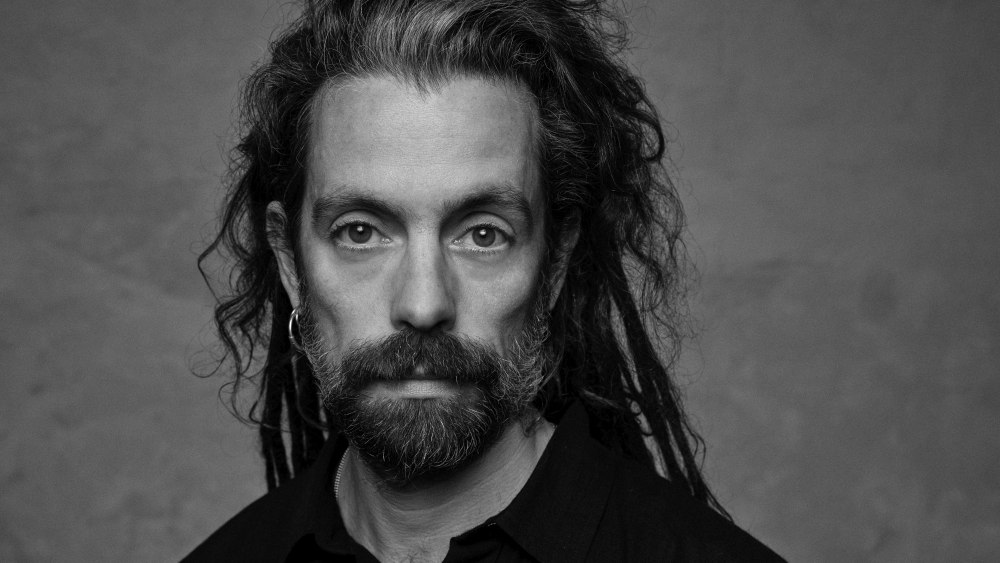
MILAN – Jan-Jan Van Essche’s fashion needs to be examined up close to understand where the designer’s creativity is channeled from.
By his own admission, at first sight many of his soft tailored pieces, deconstructed silhouettes, and handwoven garments look exactly like classical menswear tropes, except they are not only that.
“I’m not going to reinvent the wheel; in menswear there are lots of classic elements that you can work around and that communicate very clearly… I try to reshape, literally reshape, these things by putting certain subtleties in the construction, pleating elements and make them kind of more sober, more minimalistic, one could say, although it’s more like a concentration of an idea,” Van Essche said over Zoom.
You May Also Like
Related Articles
“I try to make them more open, freer, to emphasize the kind of natural elegance that every person has, and I think that that’s my main focus, to try not to force somebody into something but just [allow them to] integrate the garment into their life,” he added.
Van Essche is to show his fall 2023 collection on Wednesday at Santa Maria Novella, the striking 13th-century complex in Florence’s city center, as the designer project of this season’s Pitti Uomo.
The fair is known for being a catalyzer and aggregator of the latest menswear trends and talents, but Van Essche’s invitation came as a surprise. The designer has been in business for 12 years but as an independent company, his brand has been somewhat niche and off-the-radar, his work and creativity not immediate or flashy.

Based in Antwerp, he has showcased his collections in Paris during men’s week over the past few seasons. The Pitti call came at a time of evolution for the company, especially business-wise.
“We’ve always been quite deliberately slow, let’s say step by step, we’ve had a very cautious, let’s-learn-to-walk-before-we-run kind of approach but we felt we are ready,” Van Essche noted.
He had already started working on the collection and was thinking about new presentation formats (no more static showroom appointments or pandemic-induced fashion movies) before the Pitti Uomo folks came knocking at the door.
“It was a very nice coincidence,” Van Essche said.
He didn’t reveal much of the presentation beyond saying it will combine a catwalk aspect with live performance elements. The result, he said, is “close to ourselves and also very far away.”
The subject of authenticity came up frequently during the conversation as the designer has dodged trends throughout his career, pursuing the enhancement of his subtle and soigné lexicon, embedded with textile and dyeing research and craftsmanship.
“I don’t feel like a black sheep, but I don’t know if I feel like a fashion designer [either], in the sense that I’m not that busy with the relevance or strength of a certain thing. I sometimes feel more like an architect; I think more about clothing construction and how we live in them and the personal relationship,” Van Essche explained.
“I know I’m not doing things that many are doing, it’s not a big stream but I don’t feel lonely; there are enough people pushing the same kind of stories, or philosophy,” he said, humbly citing the late Issey Miyake as among his fashion heroes.
For his first big display, the collection, largely developed before the Pitti call, comprises re-editions and revisited silhouettes drawn from the archives, “things that I wanted to emphasize,” as Van Essche put it.
“There are some new shapes but in terms of techniques it is more like refining what is already there, rather than reinventing. The last three, four seasons I kind of have the feeling that there was an extra layer, deeper into the collection, there’s a level of maturity in the work that wasn’t there before; I feel there are many subtle details and I’m very happy for how it’s coming together,” Van Essche said.
Built on his “open shape” approach geared toward ease and comfort, the designer added new layers via handweaving made in the Antwerp atelier, the shibori tie-dye technique, and use of metal dyes. The resulting color palette is earthy and occasionally spiced up with flashes of sunflower yellow, deep purple and reddish tones.
They “blend so nicely with the frescos on the wall” at Santa Maria Novella, a location that immediately clicked when he first visited it. “The framework of the collection was set before but the way I colored it it’s really kind of anchored to this location,” Van Essche said.
The lineup will include a couple of collaborations, with Mühlbauer, a felt hat maker based in Vienna, Austria, and with longtime Japanese shoe partner Petrosolaum.
The designer has big expectations for showing at Pitti Uomo, which he characterized as a “gigantic platform,” and although he has ambitions to grow his company’s scope and size, he doesn’t want to compromise his vision.
“I value my creative freedom and my independence a lot,” he said.