North Carolina’s Feetures is steeped in the state’s sock and hosiery heritage. Founded 21 years ago, the brand has been passed down through two generations of family leadership. Now, with an eye toward innovation, the company is pushing for breakthroughs in material technology, design and development—and exploring new markets for domestic manufacturing.
CEO John Gaither, who assumed the role of chief executive earlier this year, said founder Hugh Gaither perceived a gap in the market for a premium sock brand focused on performance. “He knew it was possible to make a product with a seamless toe, and that wasn’t really being done at the time,” Gaither said. Advancements were starting to take place around moisture-managing fibers and compression apparel during the early 2000s, but those features weren’t seen as much in socks. “So he launched the brand around products that that featured some of those innovations, and started taking it to the specialty retail market in the U.S.”
You May Also Like
Related Stories

Debuting at a time when running was exploding in popularity as both a pastime and a serious hobby, running retailers latched onto the product and converted consumers with ease. “You had more and more consumers that were getting into running and signing up for events, and more running stores popping up around the country,” Gaither said. “It was fortunate that we were able to grow the brand while that industry was really taking off.”
In 2011, the group patented a targeted compression construction designed to support the arch of the foot. Pinpointing those anatomical pressure points meant that the socks had to be made specifically for the right foot and left foot. “That has been the most important innovation that we’ve had in our company’s history—it was a game-changer for us.” During the 2010s, Feetures became the No. 1 running sock brand by market share in the U.S. Today, 80 percent of the brand’s offerings feature targeted compression technology.
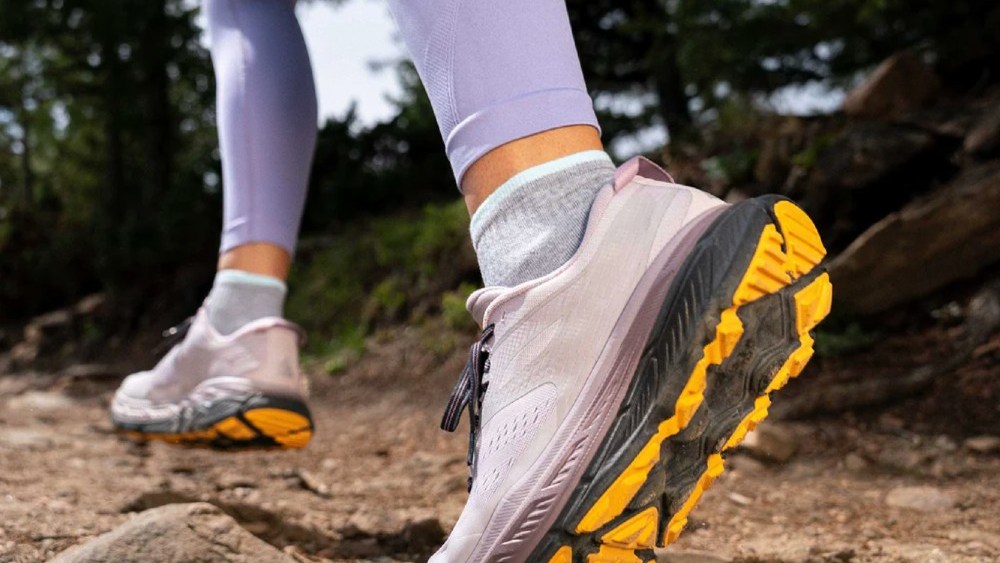
Over the ensuing years, the brand continued to iterate on its initial innovation and expand into new categories, from running and active styles to socks made for relief and recovery. It developed styles centered around specific sports, like golf, featuring a signature pull tab on the heel for easy wear and cushioning. Styles made for trail running and hiking are characterized by targeted compression, moisture wicking, nylon reinforced hot spots on the toe, ball of foot, heel and boot, with a crew length designed to protect the ankle from rocks, dirt and mud.
Some socks integrate several materials, from naturally anti-microbial and temperature-regulating merino wool to recycled polyester and Tencel. “We recognized after a few years that even though we’d developed this really great product, in order to continue to stay relevant, we would have to find ways to continue to innovate and extend the product line,” Gaither said.
“There have also been advances in circular knitting machines over the past 20 years since we started the company, there’s innovations on the yarn and the fiber side, and innovation on the design side, like being able to print on socks, so we’re certainly working to stay abreast and take advantage of those types of things,” he added.
While it’s based in what was once the hosiery capital of the U.S., Feetures works with both domestic and offshore suppliers, including three Asia-based producers and a factory in North Carolina. It’s also in the process of onboarding a manufacturer in Tennessee, aiming to source yarns for onshore operations from the U.S. and Canada, like yarn partner Unifi, also based in the brand’s home state. “It’s a truly global supply chain and we’re working with yarn suppliers that operate in multiple places across the world,” he said. “We try to source as close to the manufacturer as we can, because that’s as good from all aspects—environmentally and from a transportation standpoint.”
Gaither said the brand’s domestic supply chain is integral to its future. “It’s evolved as our business has grown and become bigger and more complex, and as we’ve gone through the challenges of Covid,” he said. “Our goal is to establish long-term relationships with a handful of a suppliers, because we think it is important to have a presence here in the U.S. and to have domestic supply.”
Those relationships will be crucial as Feetures looks to expand beyond the traditional performance space. Earlier this year, the company launched an “invisible” sock—a super-low-profile silhouette designed to be hidden below the shoe’s topline, held in place by its signature compression technology and a silicone strip on the heel. According to Gaither, the style opens up the brand to a new audience of casual wearers.
“What we’ve noticed is that more and more consumers are wearing running or athletic shoes in their everyday life—to work or in the city or around the house—and they like that no-sock look,” he said. But the product can also be worn with casual styles like cup-soles and slip-ons, or even loafers and other flat silhouettes. The product has already demonstrated strong appeal, and Gaither said the company is expanding its retail audience to comfort footwear specialty stores and premium footwear boutiques.
Despite decades of history in the running space, the brand tries to stay tuned into the ways consumers are behaving in their daily lives. Their appetites are continually evolving, and right now, they’re looking to products that straddle the line between performance and everyday casual wear. “Innovation can be challenging in our category,” the CEO said, “but we try to stay abreast of what’s new, because you never know when you might find something that can lead to a really meaningful product.”