Footwear manufacturer Crocs maintains one of the lowest solid waste per-pair in the footwear industry, according to the company’s recently released 2014 sustainability report. Based on the Global Reporting Initiative (GRI) reporting framework, Crocs examined its sustainability-related objectives in the areas of workplace and supply chain, environment, and community and employee engagement.
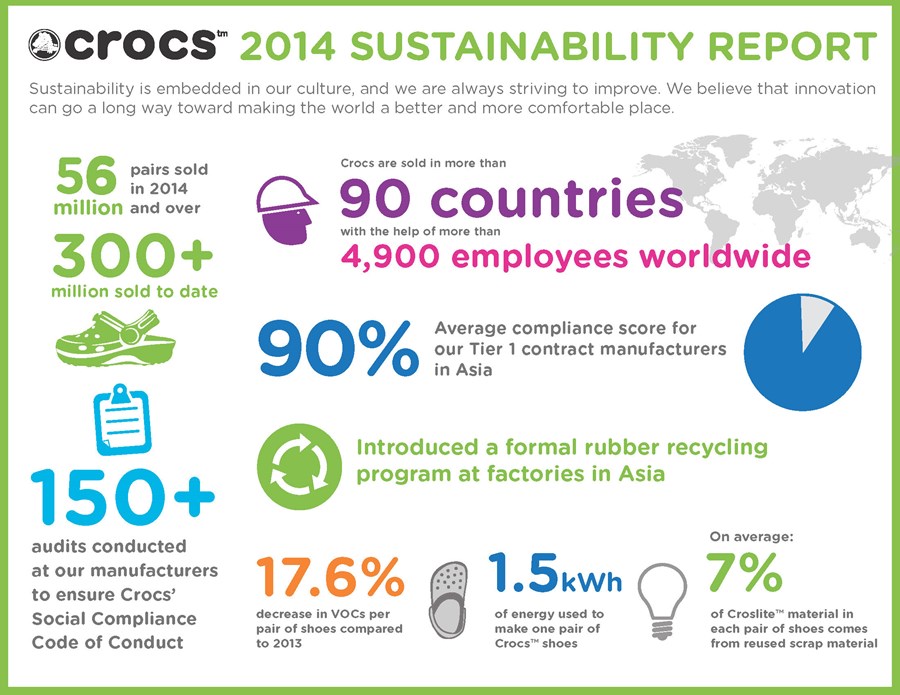
Crocs reported that one of its key achievements within the workplace and supply chain arena was the completion of 138 social compliance audits in Asia and nine audits by the company-owned Mexico manufacturer. As a result of these audits, the company’s Asia tier-one contract manufacturers scored an average of approximately 90 percent.
Related Stories

In the environmental sector, the brand reduced their use of Volatile Organic Compounds (VOCs) by an average of 17.5 percent per pair of shoes and expanded the use of water-based adhesives in place of solvent-based cleaners, primers, and cements. Crocs also increased efforts toward reuse, increasing the amount of Croslite scrap used in new products to seven percent, and starting a rubber recycling program at two of their largest facilities in Asia.
You May Also Like
To engage with the employees and community, Crocs partnered with There with Care, an organization that supports low-income families with children who are critically ill. Crocs donated shoes to every family member in the program and sponsored fundraisers including a diaper and formula drive. Crocs Malaysia supported Breast Cancer Welfare Association Malaysia (BCWA) in raising awareness and donated pink Crocs to the cause.
“Sustainability is a core priority at Crocs,” said Scott Crutchfield, chief operating officer at Crocs. “This means that we are always looking for ways to lessen our environmental impact, ensure our people are safe and cared for and that our partners and our communities are supported to the best of our ability.”
GRI “third-generation” sustainability-reporting guidelines are used by more than 3,000 organizations worldwide to provide a common standard for producing sustainability reports.