The 2025 Cannes Film Festival is in full swing, and its updated dress code is generating some buzz. This year, organizers introduced new rules that prohibit nudity and a ban on dresses with oversized trains. In fact, Halle Berry recently revealed that she had to find an alternative outfit after learning about it.
Now, the official black-tie dress code is prominently displayed on the festival website and shared with guests when they collect tickets for their screenings. Security guards enforce the policy on the festival grounds at the Palais des Festivals. The updated dress code reads: “For the Grand Théâtre Lumière gala screenings… evening wear (long dress, tuxedo) is required. Alternatively, you may also wear ‘a little black dress,’ a cocktail dress, a dark-colored pantsuit, a dressy top with black pants.”
You May Also Like
Related Stories

For footwear and accessories, the code specifies: “Elegant shoes and sandals with or without a heel (no sneakers); a black or navy-blue suit with bow-tie or dark-colored tie. Tote bags, backpacks, or large bags are prohibited during gala screenings.” It also notes, “The Festival welcoming teams will be obligated to prohibit Red Carpet access to anyone not respecting these rules. For all other screenings, proper attire is sufficient.”
The inclusion of footwear guidelines in Cannes’ updated dress code marks a significant shift from previous years, as it now explicitly defines acceptable styles and prohibits certain types of shoes. Historically, the festival has faced backlash over reports of female guests being denied entry for wearing flat shoes or shoes without heels.
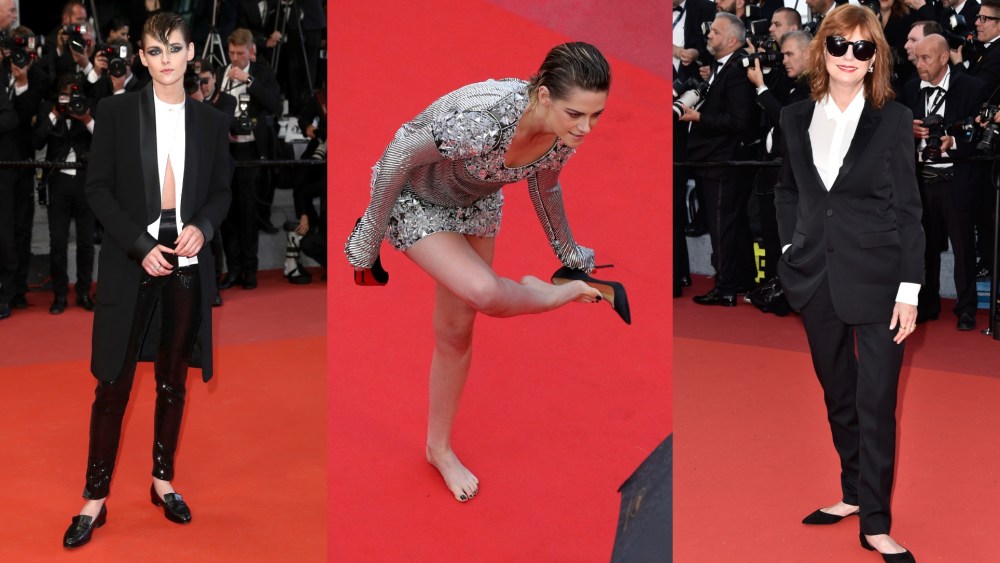
A notable controversy erupted a decade ago in 2015, when the festival came under fire after a group of women in their 50s claimed they were turned away from the screening of Todd Haynes’ “Carol” for not wearing high heels, sparking criticism and some protests from A-List celebrities like Kristen Stewart.
More incidents that year followed. Asif Kapadia, director of the Amy Winehouse documentary “Amy,” also shared on social media that his wife had initially been denied entry to a screening due to her flat shoes. In response to a tweet about the issue, Kapadia wrote, “Happened to my wife (eventually let in).”
The festival found itself embroiled in controversy again when Valeria Richter, a film producer and scriptwriter who had been attending the festival since 1998, claimed that she was turned away on the red carpet for also wearing flat shoes. Richter, who had undergone an amputation of part of her left foot, opted for flats. Speaking to The Telegraph, she said that she was stopped four times by officials at the premiere of “The Sea of Trees” before eventually being allowed entry.
“We put on the dress and make an effort to be formal and festive, but to demand heels is not right,” Richter said at the time. “It is ridiculous. We are all working women who walk up and down the streets of Cannes all day doing business. They cannot force us to wear heels.”
The incident sparked a broader conversation about gender equality and fashion standards, with A-list celebrities joining the debate.
Emily Blunt, attending the festival in 2015 for the premiere of her film “Sicario”, expressed her disappointment over the reported incidents. “Everyone should wear flats, to be honest. We shouldn’t wear high heels,” she said, calling the reports “very disappointing, just when you kind of think there are these new waves of equality.”
In an official statement released that year, the festival clarified that there was no requirement for women to wear heels, adding that staff members were made aware that there was no mandate in place. “Regarding the dress code for the red carpet screenings, rules have not changed throughout the years (Tuxedo, formal dress for Gala screenings) and there is no specific mention about the height of the women’s heels as well as for men’s. Thus, in order to make sure that this rule is respected, the festival’s hosts and hostesses were reminded of it.”
The following year, Stewart made headlines when she wore checkered Vans to the opening gala dinner of the 69th Cannes Film Festival, later switching to heels for the premiere of Woody Allen’s “Café Society,” in which she starred. During a roundtable discussion with Indiewire, Stewart explained her choice to switch footwear. “I was not making a statement,” she said. “I thought the heels looked better with the dress and that flats look better with a skirt, and they’re easier to wear for several hours.” However, she also voiced her opposition over restrictive footwear policies.
“Things have to change immediately,” Stewart said. “It has become really obvious that if [a man and I] were walking the red carpet together and someone stopped me and said, ‘Excuse me, young lady, you’re not wearing heels. You cannot come in.’ Then [I’m going to say], ‘Neither is my friend. Does he have to wear heels?’ It can work both ways. It’s just like you simply cannot ask me to do something that you are not asking him. I get the black-tie thing but you should be able to do either version—flats or heels.”
Other stars also added visibility to the high heels controversy. Julia Roberts made her Cannes debut in 2016 for her film “Money Monster,” arriving on the red carpet in towering platform black sandals. When it came time to ascend the iconic Palais steps, she removed her shoes entirely and walked barefoot, pairing the bold move with an off-the-shoulder black gown. Susan Sarandon also walked the opening night red carpet for “Café Society” in pointed black flats that year.
Fast forward to today. The current dress code welcomes “elegant” flat shoes and sandals. However, one restriction remains: sneakers are strictly prohibited. While sneakers have become commonplace at other high profile red carpet events like the Met Gala, the Oscars and the Grammys, Cannes maintains its stance against them.