
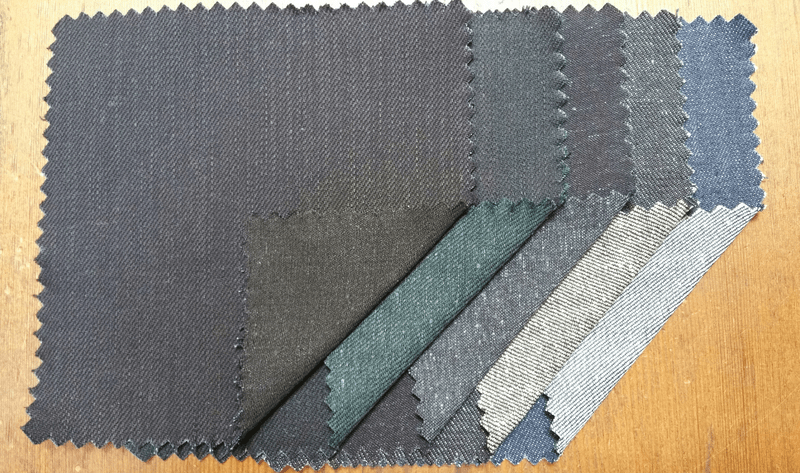
Amid a concerted effort in the denim sector to become more environmentally conscious, Denim North America, a division of DNA Textile Group, will introduce R3 Denim, a sustainable collection, next week.
R3 Denim utilizes certified Eco2cotton yarn made from the recycling of new, pre-consumer or post-industrial cotton knit cuttings that have been discarded during the apparel cut-and-sew process.
“We are taking recycled a step further with the added benefit of performance to offer a sustainable yet functional modern denim,” said Lisa A. Harris, creative and marketing director at DNA. “Each pair of jeans made with R3 Denim contains the equivalent of two recycled T-shirts.”
Related Articles
Harris said the fabric will be available for fall 2018 and come in BlueRidge (blue/green), Blackwater (blue/black), Flint River (dark stained blue with flecks of white), Chattahoochee (Pure Indigo with linen colored weft) and Piedmont (bright blue with white background). Weights range from eight to 12 ounces in rigid and stretch versions.
You May Also Like
Denim North America, based in Columbus, Ga., teamed with another Georgia company, Jimtex Yarns, a division of Martex Fiber Southern Corp., to produce the environmentally responsible denim that also conserves water and reduces energy used in manufacturing.
The end result is a modern performance denim manufactured entirely in Georgia. DNA and Martex Fiber will jointly introduce R3 Denim to existing clients and promote Martex’s “No Fiber Left Behind” campaign that stresses the importance of Zero Landfill.
In April, Martex said it was expanding its Brownsville, Tex., facility with a new fiber reclamation line. The new line in Brownsville is part of a continued commitment to preventing textile waste from going to landfill and developing innovative new sustainable products. Martex said the expansion strengthens its goal of bringing more recycled products mainstream to consumer and industrial markets.
Martex is known for its collection of textile waste clippings and selvages from apparel and upholstery manufacturers in the U.S. and Central America. With large collection and processing facilities in Central America; Spartanburg, and Brownsville, S.C., fabrics are deconstructed and fibers blended into a variety of custom fiber mixes that can be put back into industrial processes.
Many of the recycled fiber applications serve as inputs for manufacturers throughout the Americas, supporting automotive, bedding, nonwoven and furniture markets. Another use for cotton apparel waste is refiberization for yarn spinning. Martex takes the fiber full circle, creating Eco2cotton yarns that are spun domestically in its Jimtex Yarns facility in Lincolnton, Ga., for many apparel applications, as well as home furnishings.
The Martex Fiber Zero Landfill Pledge states that all of the textile waste it purchase will be recycled. Recycled Eco2Fiber is made entirely from post-industrial waste.