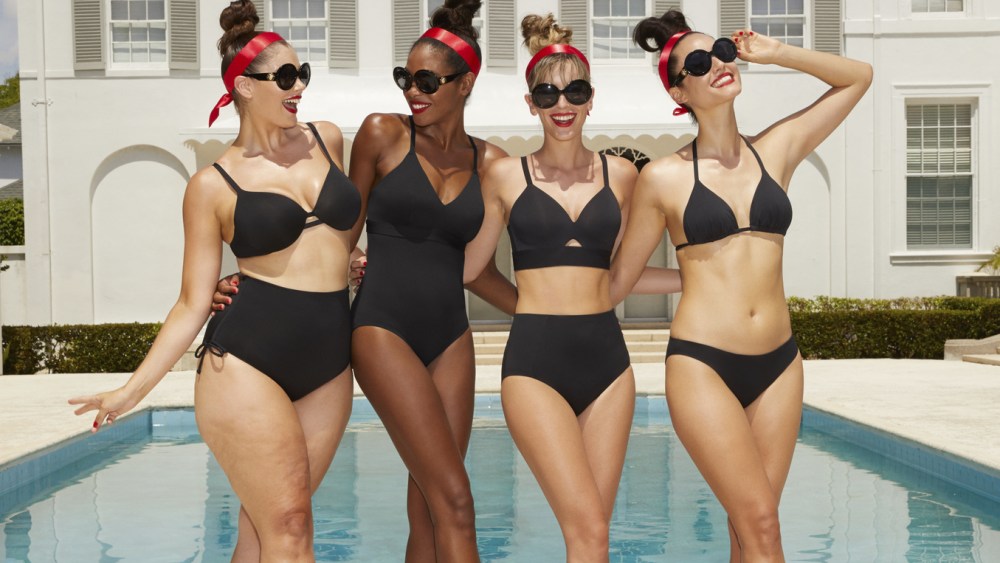
Shapewear is coming back into fashion.
After nearly two years in quarantine, shoppers and investors are talking about occasion-based innerwear threads. Earlier this week, asset management firm Blackstone said it was buying a majority stake in shapewear brand Spanx for an undisclosed amount.
Blackstone valued the private company at $1.2 billion, raising eyebrows among the investment community. Spanx, which was founded in 2000 by Sara Blakely, is the leader in the shapewear market. Given Spanx’s market leader’s position, a $1.2 billion valuation may seem low, compared with, say, Rent the Runway’s recent $1.5 billion valuation or those of other digital darlings over the last few months.
Related Articles
This leads to some questions, such as: Is Spanx losing market share and revenues in the fight for shapewear consumers? And is the sale an indication that Spanx is losing ground to many new, smaller shapewear brands entering the market?
You May Also Like
Spanx, and Goldman Sachs, one of the banks involved in the deal, would not comment, except to say in a statement that the acquisition will allow “Spanx to accelerate its already rapid digital transformation and strong online presence in the e-commerce channel, expand its global footprint and fuel its commitment to creating innovative, ground-breaking products for its customers across even more categories.”
Ann Chung, global head of consumer for Blackstone Growth, who led the deal, said: “Our team at Blackstone saw in Spanx an iconic, women-led business that pioneered the shapewear category and has grown into a leading apparel business and a symbol for empowering women through product. Sara was looking for a majority investment from a strategic business partner who would help take what she’s built and supercharge it while staying true to what’s worked well. This includes bolstering the already high-growth spanx.com platform that now accounts for two-thirds of Spanx’s sales. In that vein, Sara will continue building and amplifying the brand in her new role as executive chairwoman of Spanx’s new board of directors.”
While not much is known about the reasons for the valuation, what is known is that shapewear is once again in the spotlight.
“Shapewear is recovering,” Kristen Classi-Zummo, director of market insights in apparel at market research firm The NPD Group, told WWD. “The pandemic changed so many aspects of our lives. Even our relationship with clothes, especially shapewear.
“Where we’re really seeing a lot of growth from now is shapewear items that offer versatility: shaping tanks and camis,” she continued. “Women can wear them under a dress to work, or they can pair them with sweatpants. We see growth in moisture wicking; we see growth in antimicrobial [shapewear with built-in] SPF. Apparel that offers features and benefits is growing and going a long way.”
Consumers began ditching the body-shaping garments at the start of the pandemic as they hunkered down at home and canceled events. U.S. product arrivals of shapewear fell 42 percent in April 2020, the start of the pandemic, compared with April 2019, according to retail analytics company Edited, after retailers began canceling shapewear orders in anticipation of more relaxed evenings at home.
But shoppers are once again seeking shapewear pieces. Sales of shapewear were up 27 percent in the third quarter, or the three-month period ending the week of Oct. 3, compared with the same time in 2020, according to The NPD Group’s Consumer Tracking Survey.
Compared with pre-pandemic times, or two years ago, sales of the shapewear category are down just 2 percent.
“So that category in the industry is almost back to where it was in 2019,” Classi-Zummo said.
In addition, Classi-Zummo pointed out that Gen Z is the fastest-growing cohort of consumers adopting the frocks. There’s also the proliferation of new, smaller brands — or sometimes even legacy brands — trying to squeeze into the shapewear space. In addition to Spanx, there’s Kim Kardashian West’s Skims, Yummie, Smart & Sexy, Hanesbrands’ Bali and Maidenform, Commando and even luxury line La Perla, all of which have expanded their assortment in the last two years.

In January 2020, lingerie giant Victoria’s Secret started selling shapewear on its website, a partnership with Colombian intimates brand Leonisa. Canadian innerwear brand Knix launched shapewear in January.
“We felt a really strong conviction that customers still wanted shapewear, whether or not they had nowhere to wear it, and that there was white space in the market,” Knix founder and chief executive officer Joanna Griffiths told WWD at the time, also mentioning the softer fabrics used in the garments. “They want shapewear that is comfortable.”
Classi-Zummo added that it’s easier than ever to purchase shapewear.
“It’s not just about buying shapewear in different department stores anymore, as that may have been the case 10, 20 years ago,” she said. “Now there are so many different channels offering shapewear. You can go to mass [retailers], online.”
It’s little surprise then that the global compression wear and shapewear market is expected to reach $6.95 billion by 2030, according to Allied Market Research.
Still, there hasn’t been a lot of innovation in the shapewear market since Blakely arrived on the scene more than two decades ago.
“This acquisition really puts Spanx in a good position to continue to innovate and keep up with consumer needs,” Classi-Zummo said. “They have a lot of opportunity because they’re also broadening their categories. They are still offering shapewear, but now they’re getting into other categories, offering the shaping benefits in activewear, in denim.
“With the return of the shapewear category, with these new [investment] opportunities, this is a great opportunity, a great time for Spanx, and really for all of the shapewear industry,” she said.