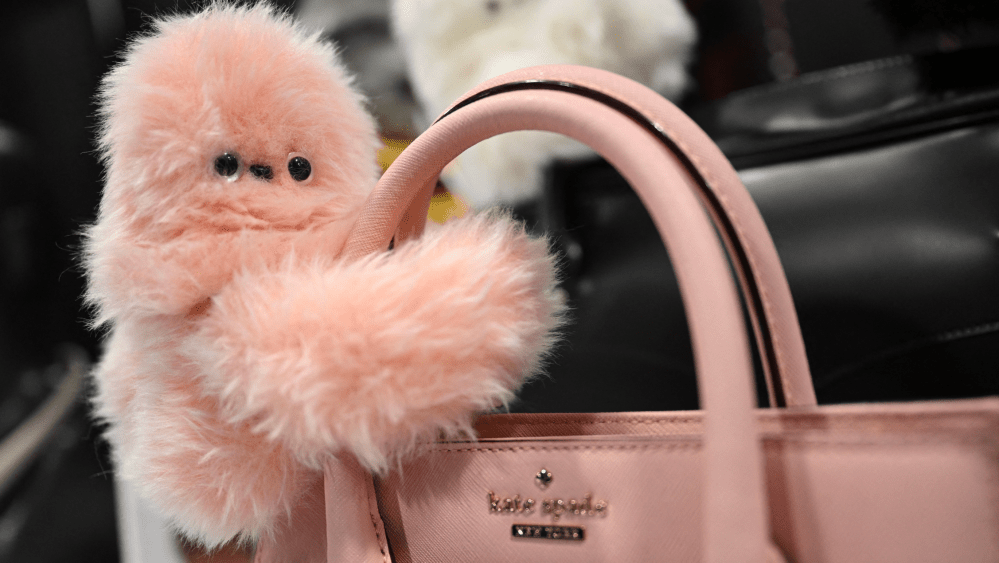
The Labubu fever was fashion’s unexpected blockbuster in 2025. Designer bags, from a Loewe Puzzle to a vintage Prada, seemed naked without PopMart’s furry, nine-toothed monster dangling from its handle. The craze, also embraced by celebrities like Madonna, Rihanna, Lisa and Dua Lipa, was such a hit that the character created by Kasing Lung is now getting its own live-action film by Sony Pictures. But as often happens in the fashion world, the trend has lost traction, creating space for a new viral mania to emerge and raising the question: which will be fashion’s next Labubu?
Related Articles
PopMart is pushing to continue its legacy. The Beijing-based company has built an entire universe of characters, from the wide-eyed Molly and the mischievous Skull Panda to the pastel-toned Crybaby and the alien-like Dimoo, each with its own devoted following. But none has crossed over into fashion’s mainstream quite like Labubu, whose feral grin and furry silhouette turned it from a blind-box staple into a full-blown cultural symbol.
You May Also Like
Tokyo-based Yukai Engineering appears to be one of the front-runners in this race. Last December, the company unveiled Mirumi, a bag charm that stares back at you. Equipped with a sound-sensing system, Mirumi gently turns its head in response to nearby noise; pat it, and a touch sensor triggers a reaction randomly selected by the company’s algorithm. It is, in short, a robotic companion designed to live on your bag.
The charm has one significant obstacle, however. While a Labubu blind box averages $20, a Mirumi keychain retails for around $125 in Japan, where it is currently sold alongside Thailand, with a U.S. launch expected soon. Affordability was core to Labubu’s mass appeal, and Mirumi, for all its personality, doesn’t have it.
Beauty brands have moved into the space with a different proposition: function. Marc Jacobs — himself a vocal Labubu fan — launched a leather lipstick case finished with charm accents, while The Ordinary has leaned into the format with two keychain-sized releases: The Lip & Lash Set, a dual-ended treatment for lips and brows, and the Mini Soothing and Barrier Support Serum, packaged in a reusable keychain pouch.

Then there is the customization upgrade. Message charms — stamped, beaded, engraved or embossed with names, phrases and personal affirmations — tap into the same desire for self-expression that fueled Labubu, minus the collectible element. At the luxury end, Bottega Veneta sells woven-leather individual letters for $490 apiece, while Anya Hindmarch takes a wittier route with leather miniatures of Diet Coke cans and Pez dispensers. Both approaches share the same underlying logic: that what hangs from your bag should say something about who you are.
That, ultimately, may be Labubu’s most durable legacy. The bag charm is no longer a novelty. It has become one of fashion’s most democratic accessories, with a price range that stretches from a $20 blind box to a four-figure monogram and an expressive range to match. The next viral moment may look nothing like a nine-toothed monster, but fashion has already learned its lesson: the smallest accessory can make the loudest statement.