GUCCI X CRYPTO: Gucci began accepting cryptocurrency in a few U.S. stores in May, and now it’s going all-in on the blockchain-based payments.
As BitPay — the Italian luxury house’s chosen crypto payments platform — announced new support for two more coins on Tuesday, ApeCoin and Euro Coin, Gucci stepped up as the first major brand to accept one of these options through the platform.
With the addition of ApeCoin, its clientele will have a dozen or so options to pay for goods with tokenized digital money, rounding out a lineup that includes Bitcoin, Bitcoin Cash, Ethereum, Wrapped Bitcoin, Litecoin, Dogecoin, Shiba Inu and 5 USD-pegged stablecoins (GUSD, USDC, USDP, DAI and BUSD).
Related Articles
The Italian luxury brand dipped its toe in crypto with just five stores initially, but saw fit to expand support. Today, more than two-thirds of Gucci’s U.S.-based stores accept the alternative payments, representing 70 percent of its full, directly operated network in this market. The remaining ones won’t be left out of the loop for long, though: The company plans to make those locations crypto-ready by this week, amounting to full support across its own U.S. retail operation.
You May Also Like
According to Stephen Pair, BitPay’s chief executive officer, the platform was simply responding to demand. “We added ApeCoin and Euro Coin because customers of our luxury merchant partners asked for it,” he said in a statement.
ApeCoin is a token of the well-hyped Bored Ape Yacht Club NFT collection, a subsidiary of Yuga Labs. Bored Ape Yacht Club is much sought-after by celebrities and other well-heeled individuals, and ApeCoin will be the main token used across the Ape ecosystem, Web3 games, experiences and communities. ApeCoin holders can shop with BitPay merchants — which include premium brands and retailers, as well as popular services like UberEats and DoorDash — turn the tokens in for cash with a BitPay Card, swap them or simply hold them.
The volatile world of crypto investments is an adventure sport unto itself, with heart-thumping swings. Bitcoin and Ethereum, for instance, are energetically bouncing back after a major crash in June set off nerves. But the fascination with blockchain-based currency endures, and its die-hard fan base remain undeterred.
As for Gucci, the logical assumption is that it must be responding to its customers. After all, if BitPay’s Pair is right, then demand must be surging among luxury consumers. But this scenario is not a given, and the company declined a WWD request for comment, so it is not known how many of its customers actually use Bitcoin or Dogecoin.
Another, perhaps more likely possibility, is that its embrace of crypto allows the brand to meet future initiatives.
The tech and fashion worlds seem obsessed with the notion of blending brick-and-mortar stores with the virtual world and digital products. If Gucci — which has been active in digital collectibles, avatar wearables and NFTs, as well as partnerships with virtual worlds like Roblox and The Sandbox — wanted to connect or even embed metaverse experiences and Web 3.0 transactions in its physical boutiques, preparing every store in a high-value market to accept crypto is a great place to start. — Adriana Lee

MOVING ON UP: H&M has a few new moves up its sleeve.
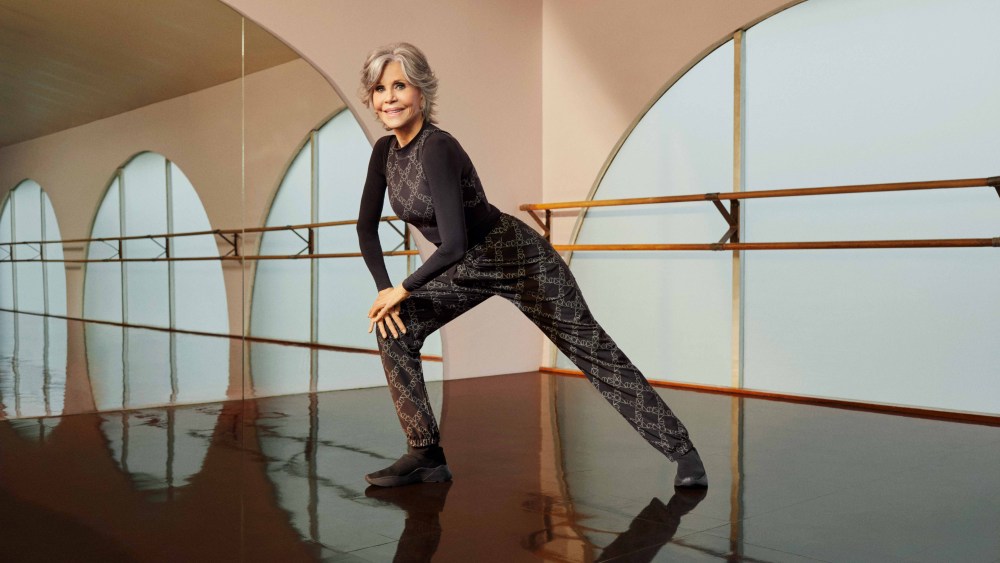
The global fast-fashion retailer is launching an accessible sport line, Move, and has tapped Jane Fonda and choreographer JaQuel Knight to front its first campaign across digital and social.
The line will launch on Thursday with the mission to “democratize sports apparel” and reframe athletics with a more accessible language of “movement.”
“Removing barriers to sport is very much at the heart of our purpose,” the company said in a statement.
Fonda, who revolutionized fitness four decades ago with her home video series, “Jane Fonda’s Workout,” is one of the first celebrity faces of the line.
“I’ve spent a lot of my own life getting people to move and was naturally drawn to the mission of H&M Move to get the whole world moving. I also really liked their philosophy of ‘move wear’ over ‘sportswear,’” she said. “To me, it’s not about sports or being the most athletic. It’s about giving your body the kind of movement it needs to stay healthy so it can take care of you.”
Fonda recreates some of her signature moves as an instructor, and also dances alongside Beyoncé and Megan thee Stallion choreographer Knight in video clips.
“Collaborating with H&M Move felt like a great opportunity to further my personal mission to break down the barriers to movement and get the world moving and dancing. Together, we’re creating a new precedent when it comes to sport and showing that there’s no subscription needed to move,” added Knight.
The Move line features a range from tights and bras to activewear designed for training and running, while Fonda and Knight model items from the Monogram capsule, which features logoed tracksuits. Specialty pieces are designed for support, quick drying and all-weather elements.
H&M says 99 percent of the Move line polyester is recycled, and the cotton is “more sustainably sourced.” The brand has been under fire recently from the Norwegian Consumer Authority for marketing outdoorwear as sustainable, and a class-action lawsuit was filed July 22 in the U.S. refuting the company’s sustainability and recycling claims. — Rhonda Richford
STRATEGIC SHIFT: Layoffs have ensued at Glossier as it refocuses its distribution strategy.
The brand, a previous direct-to-consumer darling that unveiled a retail partnership with Sephora last week, has laid off 24 employees as it streamlines to meet the needs of its omnichannel strategy under freshly minted chief executive officer Kyle Leahy.
“Glossier‘s first chapter was almost exclusively focused on a single channel of distribution. Now we’ve grown, the marketplace has evolved, and our consumers are looking for us to meet them where they are: in-store, online, at retail partners, and around the world,” Leahy in a statement. “We are reorganizing our company to align our structure, scale and talent with our refined omnichannel strategy. While these decisions are incredibly difficult, I am confident Glossier is positioned for success in its next chapter.”
In an internal memo obtained from an anonymous source by WWD, Leahy noted that the company is “reorganizing our company to align the structure, scale and talent with our refined strategy.”
The note also mentioned that the company is adding shy of 20 new employees “to support key areas and priority initiatives, including in wholesale, product, supply chain and operations.”
Down the line, the brand will be “elevating our product road map, launching our partnership with Sephora in early 2023, re-platforming our website in fall 2022, and opening an exciting pipeline of new stores across major cities in the U.S., culminating with our return to SoHo with our NYC flagship in early 2023,” Leahy said in the note.
According to 2021 year-end data from The NPD Group, “Instabrands” — the class of brands encompassing Glossier and Jeffree Star, among others — declined the most last year out of any other brand type in the U.S. prestige market. — James Manso