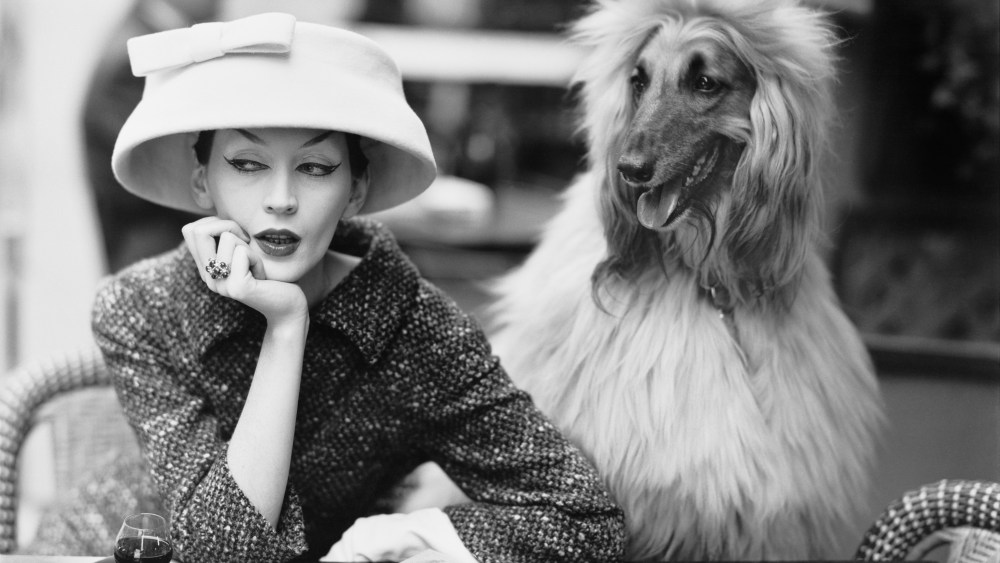
LONDON — “Not even the Bible has taught me as much as Balenciaga,” Hubert de Givenchy once said of the impact that Cristóbal Balenciaga had on his work.
He certainly wasn’t the only designer to be shaped by the Spaniard’s creations, as an upcoming show at the Victoria and Albert Museum plans to highlight.
Set to coincide with the centenary of the opening of the fashion house in San Sebastian, Spain, “Balenciaga: Shaping Fashion,” puts the spotlight on the vast array of labels whose work references Balenciaga’s original techniques and creations. They range from Emanuel Ungaro and Courrèges to Erdem and J.W. Anderson.
The show will run from May 27 until Feb. 18, 2018.
Related Articles
“His name is not as well-known as Dior or Chanel but his work is as influential,” said V&A curator Cassie Davies-Strodder during an introduction to the show. “I was struck by designers’ reverence of Cristóbal Balenciaga pieces.” She added that the show is timely given the increased attention around the brand since Demna Gvasalia became creative director last year.
You May Also Like
“The brand is back in the press and people know the name Balenciaga, but perhaps they don’t know the name Cristóbal Balenciaga. We wanted to take it back to the founder, because you can see his influence reflects on a lot of contemporary fashion so clearly. You can see it in particular with what Jonathan Anderson is doing at Loewe; all these shapes that have big balloon sleeves with volume in the back. Demna Gvasalia himself refers to original Balenciaga influences with his remodeled garments.”

Davies-Strodder also drew parallels between Cristóbal Balenciaga’s attitude and Gvasalia’s when it came to public perceptions. “Balenciaga always wanted to prove that he wasn’t in any way a puppet of the press,” she said.
One of the largest sections of the exhibition, “Balenciaga’s Legacy,” explores areas of the designer’s influence, namely his minimalist aesthetic which has been referenced by the likes of André Courreges, Emanuel Ungaro and modern-day brands such as Céline under Phoebe Philo. It also looks at Balenciaga’s perfectionism and attention to detail.
Davies-Strodder said that Givenchy recalled Balenciaga teaching him the precision with which he should place flowers on a dress. Erdem Moralioglu, a modern-day master of florals, is said to be a regular visitor of the V&A’s extensive Balenciaga archives, studying the intricate floral embroideries and appliqués on the dresses.
Davies-Strodder also pointed out that Balenciaga looked to non-Western dress to explore approaches to the body, producing innovative pattern-cutting techniques and silhouettes that played with volume. Many have followed in his footsteps, including Issey Miyake, Rei Kawakubo, Molly Goddard and Nicholas Ghesquière, who reinterpreted classic Balenciaga silhouettes using Neoprene and PVC during his time as the house’s creative director.
The “Legacy” section of the show features a quote from WWD’s 1972 obituary of Balenciaga: “Cristóbal Balenciaga, the father of contemporary fashion, is dead but his influence lives on.”
Davies-Strodder said “[WWD] refers to him as the father of contemporary fashion because he really set that modernist aesthetic that goes on.”
Other sections of the exhibition focus on the construction techniques and famous silhouettes that Balenciaga introduced, with most of the attention placed on his work during the Fifties and Sixties. The curator describes the period as his “most creative,” where he introduced signature shapes such as the sack, the baby-doll, and shift dresses.
“It’s that period that really has longevity in terms of what influences we see today; the very architectural shapes, looser fitting garments, and the exploration of the relationship between the body and clothing.”
The show aims to offer an insight into Balenciaga’s couture-making processes in order to showcase how the famous silhouettes came to life. A series of X-rays of Balenciaga garments is showcased alongside the actual pieces of clothing themselves, along with archival sketches, photographs by the likes of Richard Avedon and catwalk footage.
They reveal the hidden details such as the boning of dress bodices and the way the designer strategically placed dress weights to determine the hang of the skirt. The X-rays were produced by artist Nick Veasey using special technology.
The V&A teamed with pattern-cutting students at the London College of Fashion, who digitized and animated Balenciaga patterns in order to shed light on how a garment is pieced together.
“By looking inside the garments and revealing the process of construction, the audience will really understand the importance of Balenciaga’s work. At first sight, it can look very pared-back and minimal but the devil is in the details, so we wanted to get these pieces looked at closely and in a different way to show how conceptual they are.”