
Falling prices and an increased interest in fashion looks are perking up children’s wear sales.
In recent years, kids’ wear’s reputation for modest but dependable growth has mutated into one of a hot-and-cold business.
In general the kids’ market could be counted on to post limited annual sales increases of 2 to 3 percent, and 5 percent if things were really good. But today, sales rise and fall in alternating years, when you look at overall industry sales numbers, according to Marshal Cohen, chief industry analyst with NPD Group. Last year, children’s apparel sales increased 2 percent to $28.5 million, after falling 5.7 percent in 2004 and increasing 4 percent in 2003.
“It’s also been a seesaw effect: When the adult business goes down, the children’s business goes up,” Cohen said, largely blaming disposable income constricted by higher costs of living, leaving families room to buy either adult or children’s apparel in alternating years, but not both. Earlier, “the kids’ business always seemed to outperform the adults’.”
This year the brief zigzag sales pattern might be easing, as Cohen forecasts sales to increase 2.6 percent. However, he said growth largely will come in boys’ apparel, as competition is red hot among girls’ apparel vendors, which tends to lower prices and thus overall volume.
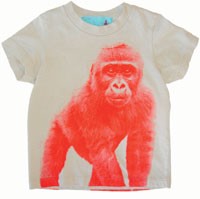
At the same time, other trends are emerging to redefine the children’s apparel marketplace and, in turn, buck up sales, according to vendors and retailers. Fashions for boys and girls are now more driven by adult trends. Fueling this segment are consumers with ample disposable income who increasingly want to buy kids’ fashions they don’t see everywhere else and that last for more than a season, which has created a growing niche business for things such as $50 organic cotton silk-screened T-shirts.
As a result, what’s called the “boutique” side of the business has “become faster, not always seasonally driven. We ship different items at different times of the year because of the demand for fashion,” said Ilene Oren, president of Ilene Oren and Co., a children’s wholesaler in New York representing 12 boutique labels, including Mo Bee, Scissor, Priorities and Betsy Bobs. She described her business as thriving, with wholesale sales to department and specialty stores reaching upward of $10 million.
Related Articles
You May Also Like
Oren said children’s trends move quickly and it’s easy to be blindsided by not having the latest hot thing. For example, kids are currently clamoring for denim miniskirts with frayed hems, to be matched with leggings, much like what’s happening in junior apparel. However, this fall and also in January, when Oren was showing her clients’ spring and summer trends, there were few takers for denim minis, he said.
“I called Tractor, our main denim resource, and asked how fast they could do it,” Oren said. With orders flowing quickly from China and Mexico, Oren’s company sold 5,000 of the skirts, which wholesale for $19 to $21. “This whole thing happened in two weeks,” she said.
Sharon Wax, vice president and divisional merchandise manager for Bloomingdale’s Young World children’s department, said her division’s boutique business of up-to-the-minute fashion is growing, and that includes high-end labels for kids that also are carried in the women’s and men’s departments. “We are having great success if we can emulate those trends,” said Wax, noting the crossover appeal of Seven and True Religion jeans. “Juicy has also been outstanding — the velour jacket, pant, the message Ts.”
In addition, Wax said Bloomingdale’s boutique business favors brands that have more limited distribution, such as the label Flowers by Zoe, known for its brightly colored silk-screened tank tops that retail for around $40 and tie-dyed sleeveless dress with a ruffled skirt for $83.
“We have really looked at brands that are less distributed and maximized our business at the upper end, which is in keeping with Bloomingdale’s strategy,” Wax said.
Are Aware, which sells organic cotton apparel colorfully printed and dyed, targets consumers in upper income levels, what the company calls “the new sophisticated urbanity crowd,” including foreign tourists who want to buy gifts with a design element.
“It’s for people who are looking for something different than what you buy at Old Navy for $12.99,” said Noel Wiggins, president of Are Aware, a division of gift purveyor Harmony Ball, based in New York. Wiggins said Are Aware apparel, including $50 organic cotton T-shirts, sells at specialty stores, including Barneys New York.
The two-year-old company posted sales of $4 million last year, but Wiggins said Are Aware is not looking to expand too quickly, and has so far declined doing business with discount chains that have approached the company, angling for a piece of their boutique business at a lower price. “We’re happy if we do 10,000 T-shirts,” said Wiggins. “We really believe in the artisanal touch of not cutting corners and making a quality garment,” he said of the Ts, which are designed in New York’s SoHo, produced in Los Angeles and trucked cross-country to Brooklyn, where one of the few remaining dyers in the borough finishes the garments. “We just don’t want to make cheap commodities people want to chuck out after a few months, so people are spending more on things they want to keep.”
Another factor driving the children’s apparel business is the children themselves. Continually influenced by movies, musicians, sports and general kids’ trends that NPD’s Cohen called “microscopic,” this customer is a moving target.
“The equation for connecting with kids is very different,” Cohen said. “Kids now want to wear their personality, with all these influences coming together.”
It helps when kids’ passions are shared by their parents. For example, Chicago children’s apparel vendor F.C. Verde Inc. is counting on American boys’ love of soccer — shared by their parents — to help promote its new European soccer-inspired line of T-shirts, fashion tops and jackets, which wholesale for $10, $13 and $25, respectively.
“In my research through the years, the boys market has always lacked fashionable clothes, particularly between the ages of two and seven,” said Mary Landaverde, a company principal, noting how the company has built collections tied to the big national teams playing in this summer’s World Cup matches in Germany. “Our target market is the 25- to 45-year-old parent who still buys their boys’ clothes, and they’re fashion-forward.”
Also affecting the children’s apparel business is a downward slide in retail prices, reflecting increased competition among retail channels. Nicole Shepler, senior apparel analyst with the federal Bureau of Labor Statistics, said prices for girls’ apparel have been declining since 1992, and for boys’ since the late Nineties. In addition, of all the apparel BLS tracks monthly for price fluctuations throughout all retail channels, the agency’s children’s apparel price index, “more than anything in our sample, has been really impacted by the discounters,” she said.
There have been recent price benefits from the importing side of the business, mostly from money importers once spent on complying with U.S. restrictions on shipments of foreign textiles. When quotas were lifted last year, so was the risk of quotas filling and shipments being blocked from entry into the U.S., putting an end to the costly game of chess importers played by placing orders in myriad countries to avoid problems.
“It’s a much simpler business,” said Julia Hughes, vice president of international trade with the U.S. Association of Importers of Textiles and Apparel, noting a side benefit of the savings is better overall design in children’s apparel. Hughes also noted, however, that all cotton knit tops, cotton pants and man-made fiber sweaters remain under quota, due to protests from the U.S. textile industry.