Updated 1:56 p.m. ET March 14
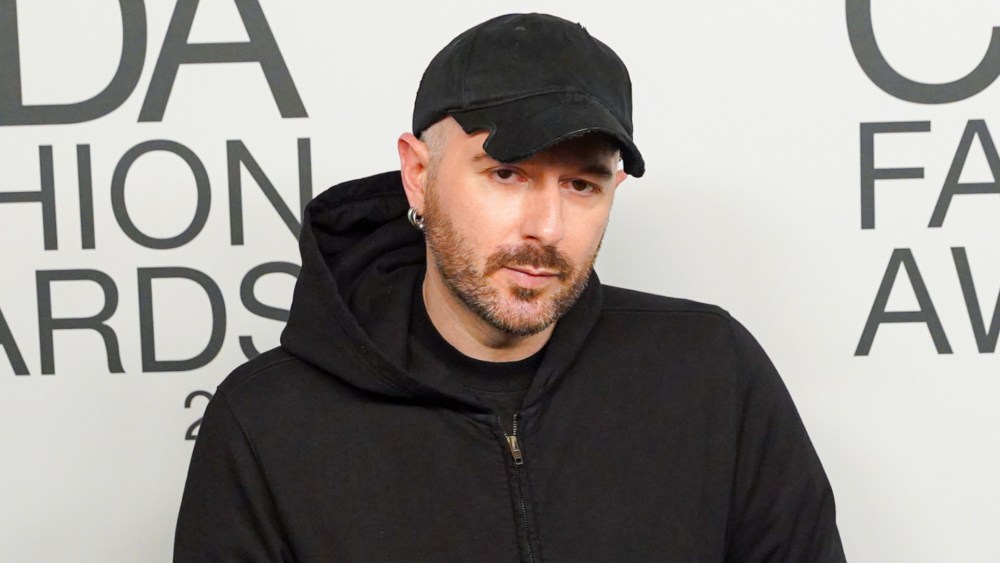
PARIS — Luxury analysts had been plumping for Gucci to name a high-profile creative director to reverse its declining business, but they seem lukewarm on the choice of Demna, who made Balenciaga a byword for underground, streetwise cool and hype collaborations.
“The choice of Demna came as a surprise to us considering his bold and sometimes controversial aesthetic. We think that at this stage, the announcement brings as much risks as opportunities,” Carole Madjo, analyst at Barclays, wrote in a research note Friday.
You May Also Like
Related Articles
Investors seem to agree, sending shares in Kering plunging 10.7 percent in trading on the Paris bourse on Friday.
Madjo questioned the Italian megabrand’s about-face after two years focusing on a “timeless” offering. “Gucci is now completely shifting gears to focus on being a fashion authority.”
A Georgian designer who logged 10 years at Balenciaga, Demna succeeds Sabato De Sarno, who exited Gucci in early February after a two-year collaboration that failed to spark a renaissance. Demna is to start at Gucci sometime after his Balenciaga couture show on July 9.
Madjo warned Demna’s aesthetic, which has skewed dystopian, gritty and underground, “may not resonate with Gucci’s consumers,” and that his “edgy and sometimes provocative” approach could spell trouble, as it did for Balenciaga in 2022 when it faced outrage over an advertising campaign seen to be exploiting children.
“This episode had a significant impact on the performance of the brand for more than a year due to some consumer boycotts, especially in the U.S.,” Barclays said. “We also note that since the designer will join in July, his products are unlikely to be available in stores before 2026.”
At Bernstein, analyst Luca Solca rated Demna’s appointment a five out of 10.
“He is iconoclast and ironic, which is good to attract attention toward a small brand like Balenciaga, which we estimate at around 2 billion euros,” Solca wrote in a research note. “However, we are not sure the strategy would work as well for a bigger brand: it defies the point of selling exclusivity by the million.”
What’s more, the analyst pointed out that “street-style — his bread and butter — also seems to be out of fashion. Between 2017 and 2022 Balenciaga stayed at the top of Lyst’s hottest brand index, but has since fallen from the top 10.
“We are not sure that Demna measures up to the task, nor that he is the right fit for Gucci at the moment, but we understand their risk minimization strategy: going for the well known,” Solca added.
Oliver Chen, analyst at TD Cowen, had a more positive view.
“Demna leading Gucci should drive commercial, cultural and artistic impact, which could support [long-term] growth,” he wrote in a research note Friday. “Demna has the potential to be a great leader for the next era of Gucci.”
Chen highlighted the designer’s long-term and loyal fan base; his ability to bring young and new customers to the brand with “contemporary sensibility” to style, and the “strong theatrics and sparkle” of his collections, “which tends to drive buzz, cultural relevance and drama.”
“We also note his latest show included tailored looks, underscoring his range across streetwear, suiting and women’s,” he added.

Erwan Rambourg, global head of consumer and retail research at HSBC, also accentuated that Demna “has the experience and gravitas for the role. There are also likely benefits of promoting internally as Demna will be familiar with Kering processes and culture.”
However, investors are likely to question why Kering initially went with an external hire, “losing two years, when they had the talent internally at hand? This might be another case of ‘Kering always takes the right decisions, but two [to] three years too late,’ as recently heard from luxury executives,” Rambourg wrote.
He also questioned why Kering did not communicate on the incoming internal designer when it announced De Sarno’s departure on Feb. 6. “This may have investors thinking Demna may not have been the first choice.”
According to JP Morgan analysts, the choice of Demna is “controversial, based on the early feedback on social media and fashion blogs so far.” The appointment raises “a question mark at this point on how the brand codes will be further evolved.”
According to Piral Dadhania and Richard Chamberlain of RBC Capital Markets, Gucci’s choice “can be surprising to investors who expected an external designer and with a higher profile, which this appointment does not seem to guarantee. We recognize Demna’s success at Balenciaga, but we fear that this appointment at Gucci will not be sufficient to meet the expectations of both consumers and investors.”
Analysts at Oddo BHF viewed the choice as “rather disruptive. We were in favor of a real new start for Gucci, with a certain amount of stylistic rupture.”
Equita Sim analysts questioned “if the new creative director will manage to reconcile in Gucci the necessary balance between timeless and elegance on the one hand and fashion and creativity on the other. We also think that several quarters will be needed to see a concrete impact on sales.”
Social-media monitoring firm ListenFirst analyzed more than 2,700 consumers across Gucci’s initial posts announcing the appointment and rated 24 percent of the commentary positive, 36 percent negative and 39 percent neutral.
Gucci has been losing steam since the 2022 exit of creative director Alessandro Michele, who ignited a renaissance at the brand that lifted it to nearly 10 billion euros in revenues — until the market grew fatigued with his exuberant, retro-tinged designs.
Gucci reported a 24 percent drop in organic revenues in the three months to Dec. 31, worse than the 23 percent decline forecast by analysts. In 2024, the brand accounted for 63 percent of parent Kering’s operating profit.