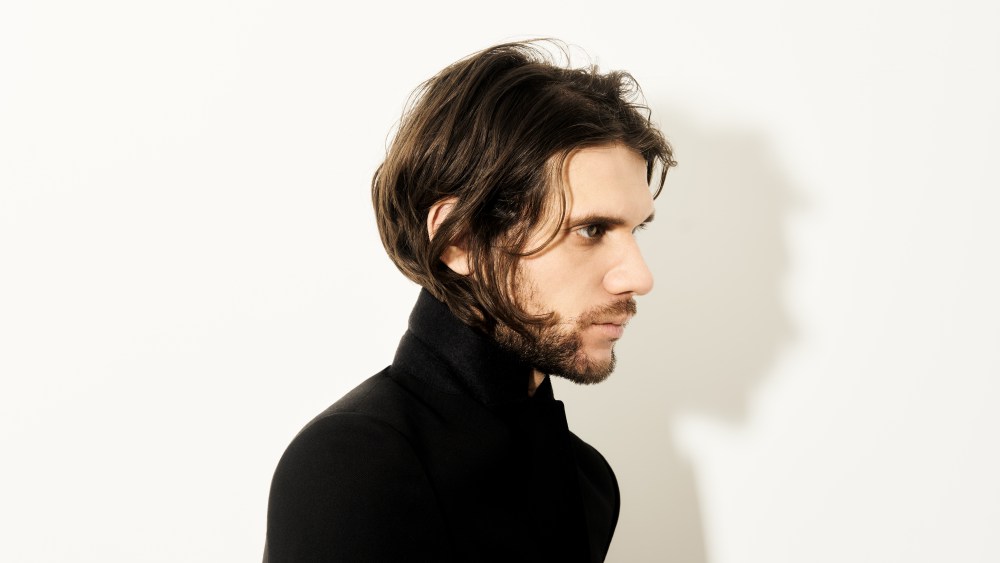
PARIS — When Burç Akyol initially applied for a spot on the Paris Fashion Week women’s schedule last year, he was turned down by the Fédération de la Haute Couture et de la Mode, French fashion’s governing body.
It turned out to be a blessing in disguise for the designer, who instead is making his debut on the official menswear calendar this season, fresh off reaching the finals of the LVMH Prize for Young Designers with his genderless label.
While Akyol left the ceremony empty-handed, he has gained visibility and forged precious relationships as he prepares to transition his business from a direct-to-consumer operation to a wholesale model, with plans to work with between five and seven retailers initially for the spring 2024 season.
You May Also Like
Related Articles
“My greatest fear was to let down our teams and the people who believe in us by losing the competition. I now realize it doesn’t work like that. When people believe in you, they believe in you, no matter what, and that gives me even more energy to keep doing what I do and to really push what I believe in,” he told WWD.
Akyol, who was born in France of Turkish parents, discovered fashion via his father, a tailor. He gave up a budding acting career to enroll at the École de la Chambre Syndicale de la Couture Parisienne and launched his label in 2019, following stints at Christian Dior, Balenciaga and Esteban Cortázar.
He’s known for creations that marry sexiness with austerity: think flawless tailoring with an Oriental panache, via flowing capes and split harem pants.

Akyol’s signature metal hands bustier, inspired by Janet Jackson’s infamous cover for Rolling Stone magazine in 1993, has been modeled for editorial shoots by celebrities including Cate Blanchett and Cardi B, while Kendall Jenner, Elizabeth Debicki and Gabrielle Union have worn his designs on the red carpet.
“I launched my brand at a time when everyone was in sweatshirts and sweatpants and I was very scared for our profession, for our know-how. I wanted something exceptional for myself and for my clients, too,” he explained. “It’s about being conscious of the role of clothing and how it should be a non-disposable luxury. That’s a priority in terms of sustainability, I think.”
He believes the “added soul” he puts into each garment transfers to the wearer. “A beautiful, well-made garment changes your posture, your mood and the way you face the world, and can help you become the best version of yourself,” he said.
The designer, who is represented by the Maison Pyramide showroom, believes he will benefit from switching to the men’s calendar, noting that it makes more sense to sell during the pre-collections season both in terms of buyers’ budgets and delivery schedules.
One thing that’s not changing is his homespun runway show. He plans to unveil his third collection, titled “Palm Gardens,” in front of 150 guests in the courtyard the building in the 8th arrondissement of Paris where he lives and works, marking his third “at-home” presentation.
“It’s an evocation, literal and emotional, of this year’s journey on so many levels, at times stormy,” he said of the collection, which he teased with a short clip of palm trees bending in a sandstorm.
In order to get permission for the events, he has to go door-to-door to garner signatures from his 70 neighbors, transforming the show into a community project.
“They see me working with my tiny team every single day, evenings and weekends included, and they were curious about what we were doing,” he said. “We started to gradually build a relationship, and people would bring food or do the washing up when they saw that we didn’t have time and were pulling an all-nighter.”
When show time comes around, the whole building mobilizes. “Everyone stands at their window to watch. One of my neighbors is such a sweetheart that she actually serves guests Champagne after the show, and others help us to do the setup backstage,” Akyol said.
The personal touch chimes with Akyol’s idea of what a fashion label should be. “I want to turn this brand into a ‘maison.’ Why? Because I grew up with Dior and all these other houses that shaped my imagination of what couture is,” he said.
“I’m French, but of Turkish origin. I was raised with this twin heritage and twin consciousness, and it’s in my work, because my father was a tailor. I learned from him. I have a huge respect for the people in our workshops. If you look at the big French houses, most of the people working in the ateliers are Turkish,” he said.
He credits his background with forging his character and desire to make France’s rather antiquated couture codes his own.
“In general, when you come from an immigrant community, survival instinct is super important,” he noted. “I can be comfortable in any situation and adapt to any environment. If you can do that, you can go beyond the workshop stage and become a designer.”
Akyol feels the momentum behind the brand is growing after winning the Guest Country Award for Turkey at the Fashion Trust Arabia Prize last year, and making it among the final nine contenders for the LVMH Prize. He hopes to translate this into sales, a prerequisite for growing his independent brand.
“We need money, so we need to sell. In order to sell, you need to fuel the dream,” said the designer, who longs to flesh out his solo operation so that he can focus on his collections.
“I need someone to oversee production because I want it to be flawless when it arrives in stores. I need people because I want to grow the categories for my clients. Right now, we’re focused on a very, very expensive portion of our offering, but that excludes some people. That’s not what I want at all. I want Burç Akyol to be available to everyone,” he said.