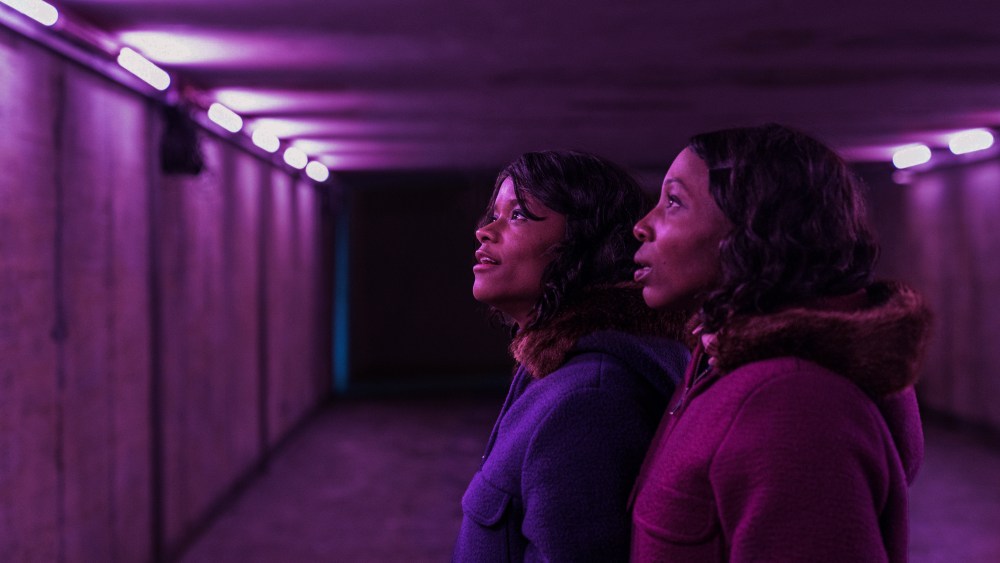
Tamara Lawrance missed her first Cannes Film Festival premiere — for good reason. Shortly before “The Silent Twins” debuted in Un Certain Regard at Cannes in May, the British actress left for Jamaica to begin working on her next project, “Get Millie Black.” Lawrance leads the forthcoming detective miniseries, which was created by novelist Marlon James and recently wrapped.
That project kept her away from home for several months, but now she’s back home in London, just in time for the wider release of “The Silent Twins.” The film recently debuted in U.S. theaters, with a British release to follow later this year. As the proverb goes, good things come in pairs.
Related Articles
Lawrance costars in the biopic with Letitia Wright. The film is based on journalist Marjorie Wallace’s biography “The Silent Twins,” which describes the story of identical twin sisters Jennifer and June Gibbons. The sisters spoke only to each other and spent 11 years at the high-security Broadmoor Hospital in the ’80s. One sister would die on the same day as their eventual release from the psychiatric hospital.
You May Also Like
“It’s a story that exists in people’s memory,” says Lawrance, adding that she’s particularly interested to see how the film resonates with Britain audiences.
Lawrance, who grew up in Britain, was born the year after her character Jennifer passed away. Still, she was familiar with the Gibbons twins, if only tangentially, before auditioning for the role. Wallace’s book was previously reflected as a TV drama in 1986, before Jennifer Gibbons’ death; a documentary followed in 1994. With the story cemented in mainstream media, Lawrance could recall a mugshot image of the twins in her mind. She didn’t know the details of their story but assumed the worst.
“I knew they went to Broadmoor, so I made that association and thought, OK, they must have done something really bad to end up there,” she says. “But then coming across the script and reading the book and watching the documentary, I realized how much of a gross injustice it was.”
Both leads felt compelled to bring nuance to the Gibbons’ experience and turned to the source material to better embody their characters. Along with Polish director Agnieszka Smoczyńska, they dissected journalist Wallace’s biography, which included diary entries from the girls’ time at Broadmoor. Lawrance credits the archive of Jennifer’s journal as integral to getting into her psyche and understanding how she felt about her sister.
Lawrance had strong chemistry with Wright from the start and describes their working relationship as highly collaborative. “Letitia’s a very detailed artist who cared a lot about this story and was hell-bent on not depicting them as freaks or mystical witchy-type beings, similar to how they’d been seen in the media before,” says Lawrance. “So we were on the same page in terms of wanting to make sure their eccentricity and creativity and their sense of humor, their style, was at the forefront of the audiences’ experience of them.”
Wright and Lawrance spent every day on set together and worked together each evening going through the next day’s scenes. “To play people who were not only siblings but twins, it meant that we had to become quite familiar with each other,” she says. “With this kind of story it was important to be able to go to some extremely sensitive spaces. And we provided a support network for each other to go to those places.”

Lawrance also served as an executive producer for the film, an involvement that Wright, who served as a producer, had negotiated from the outset. The film’s production team was primarily white and Polish, and they understood it was crucial to include the perspectives of their two leads.
“There was something about the lens and perspective we had as Black women playing Black women, and British Black women, that they understood that we could speak on with an authority that they couldn’t,” says Lawrance. She gave her feedback on actors up for supporting roles in the film and notes on various edits of the film. She also lent her opinions to the marketing campaign, offering ideas on how to represent the different themes in the film, from mental health to female creativity and the portrayal of twins in popular culture.
“To have seen this movie in so many iterations before the public has been really helpful for my nerves as well,” she adds.
The film was recently screened at the Gdynia Film Festival in Poland, where it won the top film award and accolades for cinematography and music. Lawrance recently attended a film screening at the British Film Institute and noted that audience response has been largely supportive and positive.
“A lot of people are quite touched by the story,” says Lawrance. “I had people say things like, oh, I knew the story before, but I got them all wrong; the film really humanized them for me.’ That’s the main thing that Letitia and I both wanted. Other people said things like it made them think about their experiences they’ve had with institutions and how that might have affected them,” adding that audiences have also praised the film’s cinematography, and depiction of two powerful Black female leads. (A point further underscored by the simultaneous release of “The Woman King.”)
“’The Silent Twins’ is not the type of film you see very often, especially not for Black women,” says Lawrance. “It’s a very quirky film that follows a very tragic story, but is also a feast of sound and color.”