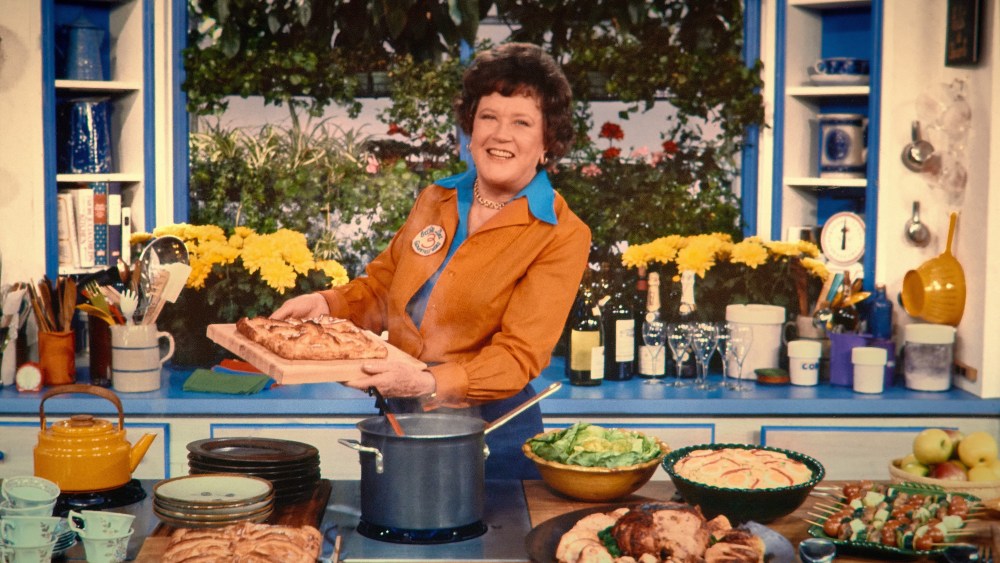
“We love telling stories of groundbreaking and glass-ceiling shattering women,” says Julie Cohen, who codirected the Julia Child documentary “Julia” with Betsy West. The directors filmed “Julia,” which premiered at the Telluride Film Festival in September, coming off the success of their first film together, the Oscar-nominated Ruth Bader Ginsberg documentary “RBG.”
“We certainly explored a lot of different possibilities after ‘RBG,’” Cohen adds. “Julia jumped to the fore as subject matter for us because it was such a different area than constitutional law.”
The pair admittedly weren’t deeply familiar with Child’s story before working on the film, although they were aware of her influence on food culture in America. “She changed the way Americans experience food, and she changed the norm for women on television and opened up opportunities for women in the culinary world. She was a transformative figure,” says West.
Related Articles
Like Ginsberg, Child’s ascent to success was aided by a supportive husband, Paul Child. He and Julia, a Smith College grad, met during World War II while both were posted overseas, and Paul supported her passion for cooking while the couple lived in France and subsequent years spent writing “Mastering the Art of French Cooking.”
You May Also Like
“It is not a coincidence that these two hugely successful women from the 20th century were very much supported and aided by fantastic feminist husbands,” says Cohen. “It does make you wonder how many other women could have accomplished great things that never got to because they didn’t have that level of support.”

“Paul Child and Marty Ginsburg were both emotionally supportive. They both liked the idea of a successful wife and didn’t feel like it was going to be a threat to their manhood for their wife to become a superstar,” Cohen adds. “That’s really rare to come across in a husband, even by today’s standards — even more rare in the era that these women were achieving. In our mind, that’s part of the romance of it all. And feminist love stories are something that we enjoy celebrating.”
The film weaves in archival footage and sound bites, as well as many photographs taken by Paul. The documentary weaves in interviews with chefs including José Andrés, Jacques Pepin and Danièle Mazet-Delpeuch, a friend and the first woman to be a chef for a French head of state. “Her expression when she is describing the dismissiveness of the men in the kitchen in France, that was worth a thousand words,” says West. They also were able to interview several of Child’s close friends from her time living in Boston and Russell Morash, who produced and created “The French Chef” with Child.
“[Morash] was able to help us understand what it took to put together the ‘French Chef’ in this makeshift kitchen with cumbersome equipment and back in the 1960s with no ability even to edit,” adds West; the show was first broadcast by Boston public television. “So Julia Child was doing a half-hour show without any breaks, no cuts, and if she made a mistake, then she had to just move on, which of course became part of the charm of Julia.”
“RBG” came out in early 2018 and was followed by “On the Basis of Sex,” a Ginsburg biopic later that year. Similarly, the release of “Julia” will be followed by an HBO Max miniseries of the same title, which is forthcoming.
“Because of Julia’s work and life, food culture — the whole idea of foodiness — is only growing. So that obviously is going to heighten the interest in Julia,” says West, when asked about Child’s continued resonance. “But also there are bigger things about her life, and there are messages that don’t have anything to do with food, that are a little bit more about joie de vivre and grabbing life by the horns. And not getting all obsessed with the old mistakes that you make here and there, and just loving life. We think the film makes that really clear: this is about a life of exuberance. And I think that’s a message that people like, especially in times that are not always so joyful or exuberant.”
“All of us on this project wanted to make something that felt immersive and cinematic and joyous and fun to watch,” says Cohen, describing “Julia” as a good “date night movie.” “We all believe that documentaries should be educational and enlightening, but even more than that, they should be a real experience to watch — the reason that people go to the movies in the first place.”