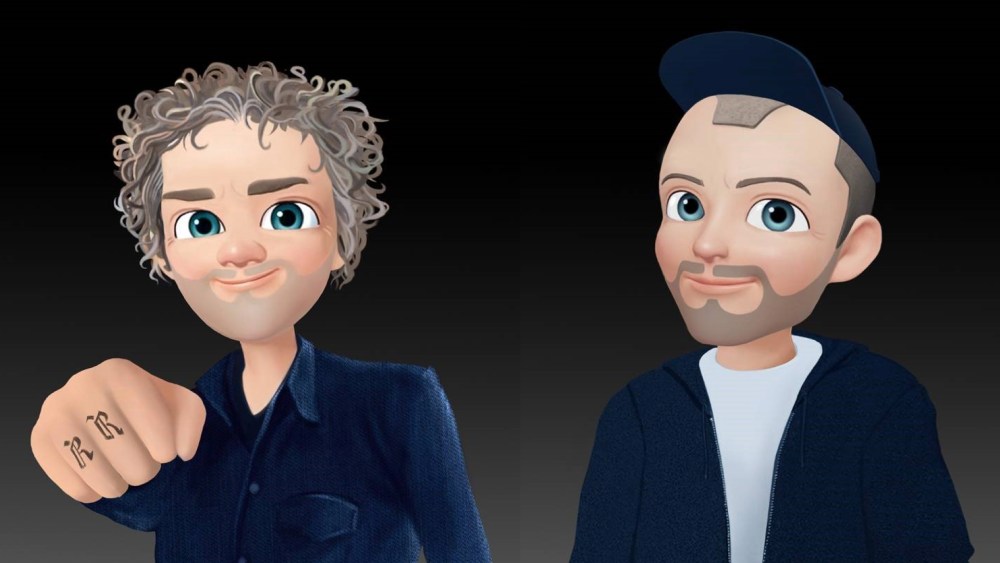
The metaverse craze may have waned slightly, but according to Stefano Rosso, the virtual experience is poised to reinvent the customer engagement journey.
Rosso cofounded D-Cave, which he describes as a “lifestyle hub and a space for the new Web3 audience,” in 2020. Speaking at WWD’s annual Technology Symposium, he contended that virtual experiences can result in a win-win for the luxury and fashion industry as well as the gaming and metaverse communities.
Yet it’s not always an easy feat.
You May Also Like
Related Articles
“A lot of times fashion brands have a hard time understanding how these new technologies are developing so it becomes very difficult for them to develop the knowledge and the competences in-house,” Rosso said.
In 2021, his enthusiasm for the space trickled down to the family company as he spearheaded the creation of Brave Virtual Xperience (BVX), a unit within the OTB Group dedicated to Web3 projects for the group’s fashion brands. The son of OTB Group founder Renzo Rosso and a former Diesel North America CEO, Stefano Rosso is also a board member at OTB Group and chairman of Maison Margiela.
“We always want to expand the opportunity to provide digital services and products to our fan base, develop new methods to interact with our consumers and fan base and of course try to grow our community engagement, even trying to get access to new communities. The Web3 crowd is still niche-y and it doesn’t necessarily know all of the luxury market, so for us it’s a great opportunity to talk and interact with consumers that may not know our brands,” Rosso, who is BVX’s chief executive officer, explained.
“Last but not least, it’s important, as we are a profitable business, to try and find new ways to develop new streams for the OTB companies,” he added.
Diesel has been among the most active brands in the space — within the OTB Group and overall — with three NFT-centered projects under its belt. D:verse launched in 2022, a collaboration with Hape and with Web3 music media company Public Pressure, all resulting in “phygital” activations.

Rosso sees at least three main opportunities provided by the Web3 space in the short term, one being the redefinition of customer engagement.
“Discord channels taught us how important and fundamental it is to have a continuous interaction with your fan base. If you’re not live 24/7 giving them feedback, they simply get tired of you and move on to somebody else,” he said. “These new ways of interaction, the fact that [people] are connected with you through digital assets, is really developing the foundation for a CRM 3.0 [customer relationship management], where the content of digital wallets will help us [forge] a stronger interaction with our fan base,” he added.
Forecasting an increasing interaction between digital and physical spaces by way of AR technology — “we’ve all seen the latest development from Apple, their newest device [the Apple Vision Pro],” he said — Rosso opined that today companies are “developing content that one day, very soon, we will see not only through our screen but also through these goggles in real life, and this will change forever the way we live and interact with our community or our families and of course our consumers and fan base, as well.”
The blockchain technology powering all things Web3 is also having core effects on the luxury sector. In 2021, OTB Group joined the Aura Blockchain Consortium, becoming its fourth founding member. The others are LVMH Moët Hennessy Louis Vuitton which initiated it in 2019, Prada Group and Compagnie Financière Richemont.
“It’s a huge revolution in the luxury industry,” Rosso said. “As of today, when you walk on the street [and see a luxury item] you don’t realize if the item is real or not. A lot of times even producers have a hard time understanding at first sight if a product is real or fake,” he opined.
Through the blockchain, OTB’s Maison Margiela has worked on providing authenticity certificates to some of its signature products, for example.
But that’s just the beginning, Rosso contended.
“It allows us also to trace and write in blockchain all the information regarding the history of that item, how it was made, but even further down the line, once it’s sold it will tell who owned that item and it’s developing also a huge opportunity that nowadays no fashion brand really has, such as the tracing of the secondary market. The impact is quite unique and very large,” he said.