
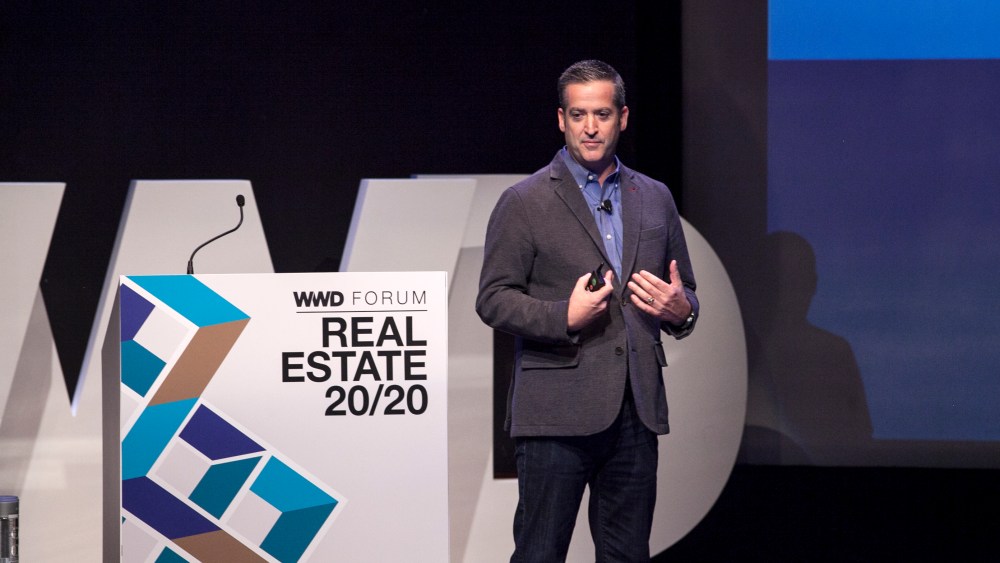
Brendan Sullivan, vice president of direct to consumer at VF Corp., thinks the in-store experience is critical to a brand’s success — on and off-line. Even though an average consumer can look at his or her smartphone as much as 1,500 times per week, the terrain has changed.
“[I’m going to] debunk the theory that brick-and-mortar isn’t relevant,” Sullivan said, noting that while e-commerce growth outpaces in-store sales growth, 94 percent of purchases are still happening in a physical store. At VF specifically, 80 percent of sales are brick-and-mortar, and a slew of immersive in-store experiences with brands from Vans to Lee to Seven For All Mankind have resulted in substantial gains for each. Of the combined portfolio’s projected $12 billion in revenue this year, 25 percent, or $3.4 billion, will come from VF’s direct retail channels.
Related Articles
A recent Vans collaboration with Disney, which saw Disney artists on-site at the Chicago store painting live murals, not only resulted in traffic increases to the Vans store, but made it the most successful collaboration to date. Sullivan maintained that the collection sold at a faster rate than another other collaboration. Similarly, a Lee activation in-store resulted in conversion increasing by 4 percent and a 20 percent higher sell through rate. An elevated fitting room experience that added lighting settings at Seven For All Mankind saw traffic to fitting rooms jump by 14 percent and average sales per shopper go up 20 percent.
You May Also Like
He called the evolving role of the store a “subtle change that has been a smarter experience” that has most definitely improved shopper engagement. He wants to overcome obstacles with brick-and-mortar experiences, citing a study that showed 50 percent of consumers feel that they are more knowledgeable than the sales associates in a store.
“Consumers have plenty of choices, and they aren’t going to be able to get revenue gains just by opening stores,” Sullivan said.