
International Council of Shopping Centers president Tom McGee has faith in the future of shopping centers, even if it rests in the wallets of fickle Millennials.
While the Internet dented the fortunes of some shopping centers — and fatally wounded others — industry experts said demographics play a more important role than the impact of the 800-pound gorilla called Amazon.
The heyday for shopping centers peaked in 2001 with the transition of the solidly, family-oriented cohort of Baby Boomers, from peak shopping stage to empty nest, with retirement looming on the horizon.
Related Articles
McGee acknowledged as much saying, “The composition of not just malls, but shopping centers, continues to evolve. The Baby Boomer population is transitioning out of their prime consumption years and Millennials haven’t yet moved into their prime consumption years.
You May Also Like
“The industry is starting to adapt to the changes,” McGee said. “There’s a disconnect with what the market [investors] are perceiving and what’s happening on the ground. Rents and occupancy rates continue to increase. I don’t see this glut of underperforming malls. The long-term fundamentals of shopping centers are quite strong. This is a very consumer-facing industry. The demographics over the next decade-plus are very positive.”
Generation X, born between 1965 to 1984, and the next cohort in line to follow the Baby Boomers, is smaller in population than the Boomers and Millennial groups. While the latter cohort is the biggest, its members haven’t yet transitioned into prime consumption mode in meaningful numbers.
“Life events like getting married and having children suggest that Millennials, those born between 1981 and 1996, will consume more, so they’re important to retail because they’ll drive consumption,” McGee said.
CoStar retail expert Suzanne Mulvee isn’t so sure. “Demographics have been a challenge for retail and shopping center industries,” she said. “The bread and butter of retail over the last couple decades was catering to families in the suburbs. If the average consumers spend is $1, what we call prime spenders, spend $1.40.”
Mulvee said prime spending growth had a nice, long run, from the Eighties through 2001. “It was robust since we added 2.1 million people a year to this cohort. Baby Boomers, born between 1946 and 1961, had a couple of kids and a big house. Now that they’re empty nesters and heading toward retirement, the backfill will come from Generation X.
“Spending is dictated by lifestyle,” Mulvee continued. “Millennials, ages 25 to 34 are spending 92 cents today versus the 98 cents spent by Baby Boomers in 2001, the peak of their spending. The average in 2007 was 97 cents. That doesn’t sound like a lot but retail is a marginal game. Those kinds of changes matter to bottom lines.”
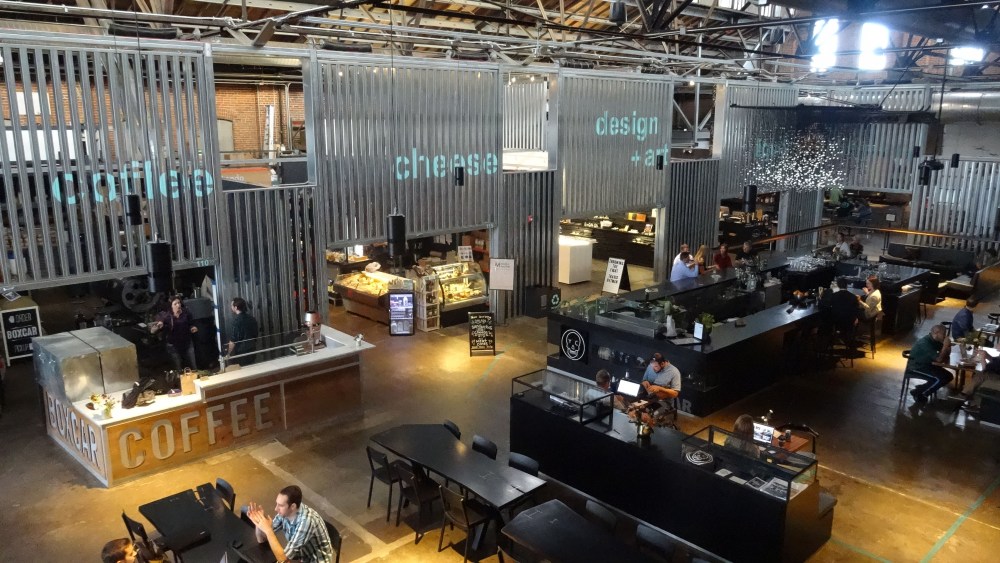
Changing life choices alter the makeup of the mall and dictate the categories on which shopping center operators will focus. McGee called out “more services and entertainment. You’re seeing shopping centers adjust their mix based on the community. Certainly, the percentage of square footage devoted to food and beverage has increased.”
It’s still unclear whether the new uses for mall space will ring up sales or fees on par with the Boomers’ 2001 high-water mark for retail productivity in terms of sales per square foot. “Coincidentally, that’s when the generations changed,” Mulvee said. “After that, spending declined until 2014, when it finally stabilized. If you look at the state of disruption in the retail industry, a lot of people point to e-commerce, but the seeds of disruption were sown decades ago. Baby Boomers drove impressive and aggressive amounts of consumption and that created an imbalance. We shut off that supply but still have a way to go to correct [the retail over-expansion].”
Millennials are said to eschew “stuff” in favor of experiences, and shun anything that’s not authentic. They’ve been a source of frustration for retailers because their actions don’t also meet assumptions. The housing-led recession that began in 2007 put a lot of pressure on members of the generation. “We still see a lot of Millennials — 36 percent — who haven’t left home yet,” Mulvee said.”You look at the demographics and say, ‘We should start to reverse course in two years,’ but the reality is, Millennials are doing things later in life. When they started that life cycle change it’s been delaying the relief for retailers.”
As a result, retailers are shifting their location strategy for stores “to chase the Millennials and densify. The type of retailers that malls are signing leases with are pushing toward food and fitness,” Mulvee said.
McGee agreed with the food and fitness assessment, but said there’s much more to the new shopping center strategy, including signing leases with digital native brands such as Untuckt, Warby Parker, Bonobos, Smart Luggage and Thursday Boot Company. Brands born online are also “bringing experiences to physical spaces,” McGee said, citing Scissors & Scotch, a men’s hair salon; Indochino, men’s made-to-measure shirts and suits that can be ordered online and picked up in stores, and Dyson experience centers.
Nor will pop-ups shops disappear because retailers are starting to sign leases, remaining relevant for young brands, start-ups and digital players.”Pop-ups offer a measure of creativity and differentiation to centers,” McGee said. “There will be a demand for that. Whether that will moderate over time, we’ll see. For example, Beltology is using the format to perfect their retail model and learn how to interact with customers.”
While Amazon is still looming over the physical retail world, McGee points out that “Amazon is making investments in physical retail. The two worlds are coming very close together. The economics of running a physical retailer are more attractive to online companies because they can leverage stores as a distribution network. I’m not surprised that they’re moving into the physical space and that physical retailers are moving online.”
However, building a network of stores is more capital-intensive and takes time. Walmart, for example, operates more than 4,000 stores in the U.S., which gives it an advantage since consumers can pick up online orders there, and ship and deliver orders from the stores.
“We’re living in an omnichannel environment,” McGee said. “Consumers expect consistency. The world’s largest physical retailer, Walmart, is investing in technology and trying to create world class properties on the digital channel.” McGee was referring to the retail giant’s partnership with Lord & Taylor, which will soon open a flagship store on walmart.com. The troubled department store recently sold its Fifth Avenue flagship to WeWork and plans to drastically downsize its retail presentation consolidating it to just a few floors. Lord & Taylor needs more traffic, whether it’s directed at stores or online.
“Department stores continue to have a role and will look at how much space they need,” McGee said. “The composition of retail will always change and evolve. They’ll look at their physical footprints and make decisions. Some are investing significantly in their store networks and modernizing stores. They’re in the process of finding the right balance. I don’t think the segment is going away. Its changing and evolving.
“Amazon is like a department store on the Internet,” McGee added. “Amazon, despite its enormous success and disruption to the industry, still accounts for a small percentage of sales in the United States. There’s a history of creation and disruption and constant evolution [in the shopping center industry]. There’s been a lot of it happening in a short period of time. Despite the challenges, a lot of new things are happening.”
Experts’ outlook on the mall’s future, may depend on the filter they’re looking through — glass half-full or half-empty. “The jobs report was positive,” McGee said. “Total employed in retail was up. With food and beverage as a proxy, the total number of jobs has increased by 1 million. Household net worth is [up], and the cost of debt is relatively low.”
“Jobs has been an indicator [of economic health] of late,” Mulvee said. “We have a historically low unemployment rate, but consumers aren’t spending. If wages are rising, why did 60 percent of retailers last year report negative same sales growth, and 45 percent this year.”