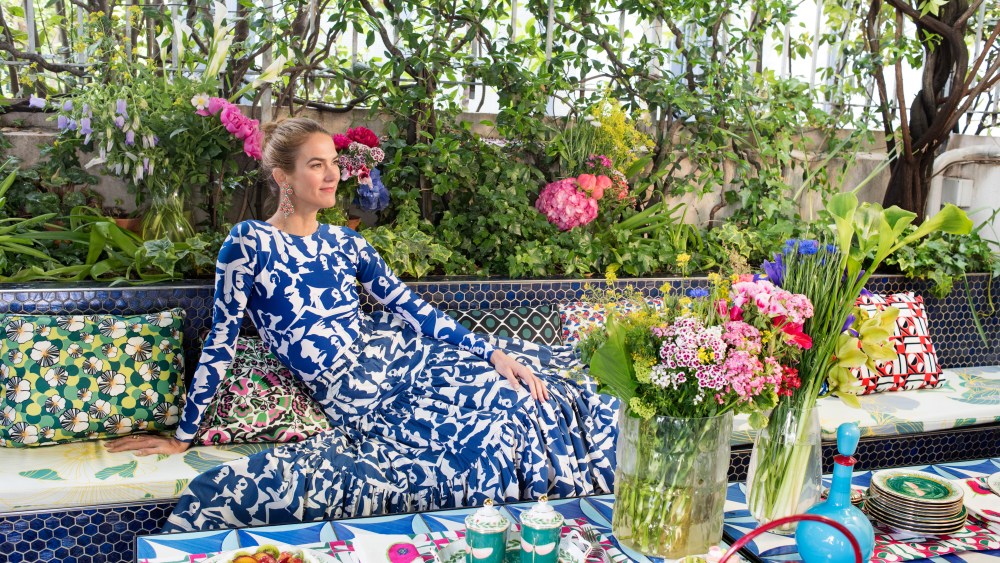
Is fashion’s next “It” bag to be found on the dining room table?
It seems possible as a clutch of leading online fashion retailers, and buzzy niche labels, rapidly expand their offers to include printed plates, hand-painted glasses and colorful linens.
In an age where the luxury fashion consumer is looking to curate, document and broadcast every aspect of her lifestyle, from the holiday wardrobe to the beauty cabinet and gym kit, table dressing is becoming as important a style signifier as personal dressing, observers agreed. Consumers’ desire for sharing and creating experiences is also heating up the home category.
“Our customer is just figuring out her style and her point of view and we’re helping her along,” said Moda Operandi cofounder Lauren Santo Domingo, who has been spearheading the launch of Moda Home. “We can take strategic risks, we can give you inspiration about how to do things in a way that’s unique and funny and not boring.”
Related Articles
Moda was an early online player that went into interiors, starting with the launch of a capsule collection of tabletop designs created with Cabana magazine’s Martina Mondadori. Moda then launched a dedicated home section featuring a range of tableware with labels such as Lobmeyr glassware and fashion names such as The Elder Statesman and Luisa Beccaria taking their first plunge into the category.
You May Also Like

For Santo Domingo, exploring interiors came naturally given her affinity of entertaining at home and her knowledge of the Moda customer’s lifestyle. “Although we have sold fashion in the past, we moved to fine jewelry, ventured into bridal and now also homewares. It’s really an extension of that lifestyle. This is how she lives, all of those are the things that she’s really interested in,” said Santo Domingo.
Moda’s home offer ranges from ornamental-stemmed goblets by La Double J priced at $4,900, to Luisa Beccaria-embroidered tulle tablecloths for $2,830 and Lobmeyr glass pitchers — featuring a 17th-century floral pattern that caught Santo Domingo’s eye in a Sotheby’s catalogue — for $450.
JJ Martin, the designer and entrepreneur behind La Double J, an Italy-based e-commerce site that sells new and vintage clothing, has been scouring the country to bring the work of Italy’s best craftsmen to life.
“I was in the Murano glass museum and found these designs that Salviati had done in the 17th century. They were just gathering dust, so I decided to reedit six of the glass styles. The workmanship is outrageous and the cost is over $4,000, but what was amazing was that Moda said ‘No problem, we’ll take them,'” said Martin.
She said she went into interiors in a whim and with “zero business consideration,” in a bid to translate her maximalist, patterned clothing in a new way. But her clashing printed linens and plates resonated with consumers, resulting in her collection of plates selling out five times in six months.
“I feel like plates are the new handbags,” said Martin. “Women right now would much rather buy something for their home, that they can use to have an experience with other people rather than having another handbag in their closet, when they already have 150 of them,” said Martin.
“There comes a time when there’s too much saturation of one thing and I think we’ve gotten there with shoes and handbags.”
Instagram also has a lot to do with this shift in perspective, according to Martin. “You’re seeing a lot of people get excited about what their dining room table looks like. It’s fun to take pictures of, and I always get twice as many ‘likes’ on those pictures than anything else. People just enjoy that, they like to have a sneak peek inside people’s homes.”
Snaps of colorful table settings, velvet sofas and patterned carpets, trendy web sites such as The Coveteur, which is known for sharing glossy imagery from inside creatives’ homes and closets, and YouTube vloggers taking their viewers on house tours, have helped to cultivate an appetite for homewares among the new generation of luxury consumers.
Matchesfashion.com is also embracing the trend with a new home category making its debut online this month. The retailer said the launch is a response to the shifting buying habits of its customers, who now see style in a broader way and want it to permeate all areas of their lives.
“Our customers love to discover and learn about new designers, about the provenance of the clothes they buy and to understand the story behind the brand. We wanted to offer the same sense of discovery with homeware and offer an edit that has a longevity that resonates, as it’s not seasonal or trend-driven,” said Natalie Kingham, Matches’ fashion and buying director. “By approaching homeware in the same way we look at fashion, it becomes a broader lifestyle concept with a focus on creativity and artisanal designs, allowing many of the brilliant designers we work with to show their passion for interior design.”
The retailer’s home offer will feature products ranging from Gucci crockery, to Calvin Klein blankets to House of Hackney cushions, as well as a bespoke range by interior designer Luke Edward Hall.
The launch will also coincide with the opening of the retailer’s new Mayfair townhouse in early September. The townhouse will showcase some of the furniture in the retailer’s offer as well as new monthly collaborations.
In an interview, Santo Domingo said she approached homeware in the same way she approaches fashion for the retailer, by offering a “head-to-toe look” and a couturelike approach with one-off, expertly crafted pieces. “Our customer is allergic to bad quality,” she said.
Developing the category has also been an opportunity for Moda to strengthen its relationship with some of its brand partners and offer them opportunities to develop a new business together.
“Not only from a business point of view but from a positioning point of view, that’s how a fashion designer becomes a lifestyle brand, by going into home. It’s an important step, when a brand hits the 10-year mark and they start having to think about how can they become a lifestyle brand. This is a very easy route,” said Santo Domingo, pointing to the retailer’s exclusive partnerships with the likes of Luisa Beccaria, The Elder Statesman and Mercedes Salazar.
Those brands certainly aren’t the first to discover the potential of home collections: A whole generation of brands, including Fendi, Ralph Lauren, Versace, Giorgio Armani, Marni, Missoni, Roberto Cavalli and even Diesel got into the luxury home game long ago, with some — but not all — licensing their names to specialist companies that produce everything from beach towels and pillows to sofas and refrigerators.
The latest entrants in the home category are more niche, working on a smaller scale and adding a personal element to the design, partnering with individual retailers from the get-go, and focusing on the artisanal rather than the industrial.
Luisa Beccaria has created a collection filled with romantic floral-printed plates and linens, monogram china and pink-hued glasses inspired by the tableware she created for her daughter’s wedding. The Colombian accessories designer Mercedes Slazar translated her flair for ornate, oversized earrings into raffia candlesticks featuring colorful parrots.
Cashmere label The Elder Statesman also worked with Moda, bringing its flair for color and tie-dye prints into hand tie-dyed linen and wine glasses created in collaboration with design firm RP Miller. The range also features and handmade ceramic plates and coffee cups created by artisans in Mexico.
“The designers come to us and we help them with resources. We’ll say, ‘Here’s someone who does porcelain, here’s someone who does the best linen. This silversmith is at capacity but why don’t you try this person?’” said Santo Domingo, adding the brands that will thrive in the category are the ones who are willing to put in the time and effort to deal with a long production process.
“It’s a survival of the fittest, I suppose. You are dealing with craftsmen — not factories — and some of them are living in very remote areas, so it takes a while. It’s about whichever designer is really ready to take that on. I guess that it has to become an obsession.”
Homeware also offers an opportunity for customers to spend, spend, spend, particularly for a retailer like Moda, which is known for its global network of high-net-worth customers and high average spends.
“It’s not women coming and buying a set of two, it’s women buying for their houses, it’s just a whole other level. There are no limits. Given all their resources, our customers have a ton of confidence, they’re not timid about making mistakes, they’re at the top of the world,” added Santo Domingo.
Secoo, China’s largest premium e-commerce platform, recently forged a partnership with the Kering-owned, Italian porcelain maker Richard Ginori, which was founded near Florence in 1735.
Secoo will offer a range of tablewares and allow customers to pick up their orders at one of the retailer’s “off-line experience centers” in nine major Chinese cities.
Li Rixue, the founder and chief executive officer of Secoo, said the Ginori deal is helping fulfill the site’s strategy of “further tapping into China’s robust luxury consumer market demand.”
Homeware plays an even more crucial role for specialty retailers, such as London’s Alex Eagle or The Webster in Miami, known for their distinctive aesthetics and expert curation.
Eagle created her Soho boutique to mirror the design and feel of her apartment, placing Yves Klein tables and Ettore Sottsass mirrors next to slippers by Le Monde Beryl and blazers by the Milanese label Blazé.
“I wanted to create a shoppable home. There should be synergy between the way we shop and live, and therefore fashion, home, interiors, beauty, music and art should all sit together in one shoppable place,” said Eagle, adding that homeware also offers more stability for consumers in an age of fast-moving fashion.
Similarly, the Webster’s founder and president Laure Hériard Dubreuil, said as brick-and-mortar retailers seek to create a richer shopping experience, interiors and design naturally become a bigger focus.
She has always been championing this approach, designing her stores in the same way she would a family living room, in order to encourage customers to feel comfortable and stay in the store as much as possible.
“It’s just another way for us to share mine and The Webster’s aesthetic,” said Hériard Dubreuil, pointing to the range of home accessories and furnishings available in-store from Atelier Courbet pitchers to artwork from Max Snow. “Our client might be very streetwear-inclined or someone who mixes high-and-low brands and we make sure our buy reflects that.”
The retailer has also been developing a home line, with vintage wallpaper and fabric placemats, as well as branded orange-blossom scented candles.
“People are now curating their lifestyle from their home to what they wear and how they travel to depict a certain image. It means that personal style and innate taste don’t stop with fashion,” added Hériard Dubreuil.
Brands, old and new, have also been looking to feed this growing appetite.
French luxury house Hermès jumped into the business in the early Eighties, transferring its expertise decorating silk scarves to porcelain and launching its first tableware set in 1984 with a peony motif. Four years ago, the label recruited an architect, Charlotte Macaux Perelman and Alexis Fabry, a publisher and specialist in Latin American photography, as artistic directors of the homeware business.
The home products and jewelry division, which includes the crystal glassware brand Les Cristalleries de Saint-Louis, which Hermès bought in 1989, and the silver house Puiforcat, is the fastest-growing division this year so far, with sales up 24.1 percent in the first half.
Each year, the label shows its new tableware set at the Milan furniture fair. In April it presented an airy and graphic garden-themed design outlined in orange, steel-blue, green and yellow, designed by artist Nigel Peake.
Peter Pilotto and Christoper de Vos of the London-based label Peter Pilotto said they’ve been drawing inspiration from interiors since they were students in Antwerp. They created their own collection of painted glass vases, knitted throws mirroring the patterns on some of their outerwear and colorful, geometric-shaped stools, to share a more intimate insight into their world.
“We wanted to show what surrounds us and our brand. An interest in the arts needs to be a complete one, ranging from fashion, design, interiors and art,” said the designers, who have recently introduced objects in collaboration with Atelier Swarovski, as well as a screen created in partnership with Nilufar Gallery.
In a different area of the market, the up-and-coming London label Shrimps has announced a partnership with Habitat, the British retailer of household furnishings. The limited-edition range, launching in September, will consist of bedspreads, cushions, wallpapers, cushions and rugs, featuring artwork from the brand’s archives and its signature faux-fur trims.