
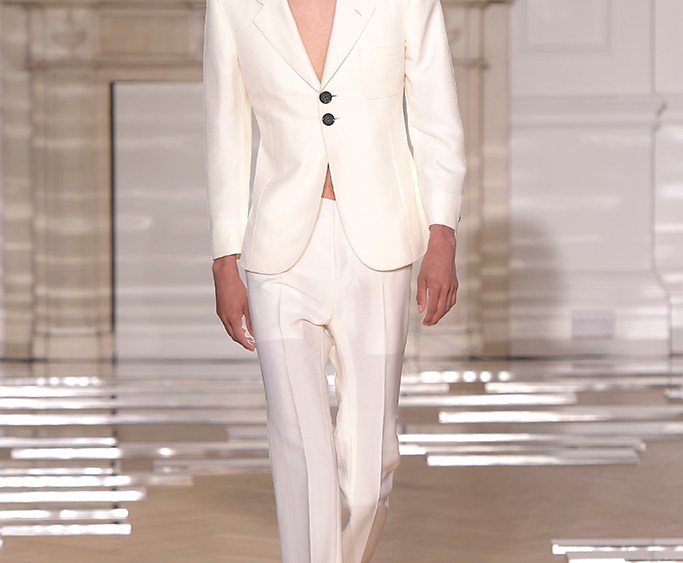
LONDON — From the calendar to the coed runway looks, this city was all about fluidity for the spring men’s wear season.
Many of the big brands left London’s table for one reason or another, making room for the smaller names — such as Craig Green, Wales Bonner and Kiko Kostadinov — to feast on the attention that’s usually given over to the likes of Burberry, Moschino, Alexander McQueen and Gieves & Hawkes.
Although the missing brands were a source of concern at first, most of the worries evaporated as the showcase unfolded and retailers said they relished the time they had to focus on — and hunt for — new talent during London Collections: Men.
Related Articles
“Once immersed in the weekend, opinions changed and a new lease of life was felt at LC:M with new designers taking center stage,” said Jo Harris, general merchandise manager for men’s wear at Harrods. She said LC:M “remains the hub of undiscovered talent,” and described the spring showcase as “fresh, fun and exciting.”
You May Also Like
Bosse Myhr, director of men’s wear and technology buying and merchandising at Selfridges, said, “We were able to focus on the clothes, and think more closely about how we can support and encourage the British men’s wear industry specifically.”
Bruce Pask, men’s fashion director at Bergdorf Goodman, said he’s always found London’s fashion inspiring and pointed to the tailoring brand Thom Sweeney, which lands at his store this month, and Belstaff’s “great moto leathers with color pops,” inspired by the look of the 1971 film “On Any Sunday,” starring Steve McQueen.
He called the Man and Fashion East collectives “platforms for the exciting new talent that is such a vital part of the men’s wear scene in London,” and described Man alum Grace Wales Bonner’s collection as “contextually rich and superbly realized.”
The London trends came through loud and clear this week: There was a further blurring of men’s and women’s wear — many of the smaller brands chose to showcase both on their catwalks — as well as raw-edged streetwear, athletic clothing, the use of technical fabrics and details, and patterns galore, including micro and maxi checks, stripes and foulard and scarf prints.
Harrods’ Harris, said the “feminization of men’s dressing reigned supreme,” with designers combining tailored pieces with loose and elongated, feminine layers of knee dresses, skirts and capes. Selfridges’ Myhr said Sibling’s ebullient show, in which men and women wore lacy crocheted and embellished clothing, “was the embodiment of the positives and possibilities provided by mixed-gender shows.”
Scott Tepper, fashion buying and merchandising director at Liberty, said the blending of men’s and women’s looks “felt like the future,” while Saks Fifth Avenue‘s Eric Jennings said his big takeaway was gender and season fluidity.
“It’s certainly been a buzzy industry topic, but it really came to life on the runways here. We saw male and female models with no clear gender differentiation wearing fabrics that they could wear in any given season,” said Jennings, Saks’ vice president and fashion director of men’s wear, home and beauty.
Pask added that activewear and athletics continue to be pervasive influences on men’s ready-to-wear, “with nylon and mesh ubiquitous materials and rip cords, elastic and zippers as detailing. Shapes inspired by performance wear and sports gear appeared almost everywhere.”
Daniel Todd at Mrporter.com, said streetwear and sportswear was also the clothing of choice for the crowds and supporters at LC:M. “It felt like London was leaving the tailored look to Pitti,” he said.
Nelson Mui, men’s fashion director of Hudson’s Bay Co. and Lord & Taylor, also pointed to the innovative technical nylons and crinkly, parachute fabrics, as well as to a continued play on oversize volumes, youthful and quirky graphics and embellishments.
Mui highlighted E. Tautz for its “chic volumes,” J.W. Anderson for the “playful prints and great outerwear” and called out Craig Green for “masculine layering and ethnic quilting.” He said Tiger of Sweden‘s tapestry prints came “in precise new contemporary proportions.”
Damien Paul, head of men’s wear at Matchesfashion.com, cited Edward Crutchley’s “rich, vivid prints” and Cottweiler’s “refined sportswear and clean vision.”
Youth culture played big on the runways, with designers doing their own takes on young bucks. Liberty’s Tepper described the bomber jacket as “ubiquitous,” while Harris at Harrods noted “rebellion” as a trend — seen in Maison Mihara Yasuhiro’s “embellished leathers and souvenir jackets.” Coach took its cue from Fifties greasers and American 20th-century kitsch.
Jennings picked up a post-punk street vibe. “Garments were deconstructed, left with raw edges and treated with slash-like cutouts. We saw exposed skin, ripped jeans and an Eastern Bloc youth street wear influence.”
Darren Skey, head of men’s wear at Harvey Nichols, said there was a definite focus on deconstruction and reconstruction, with designers using oversize stitching, raw cut edges and patchwork prints. “One trend that isn’t going away is a nod to the Seventies. This continuation of the trend works well commercially and was seen at Christopher Shannon and newcomer Grace Wales Bonner,” Skey said.
Mr Porter’s Todd picked out London’s use of color. “There were strong colors at J.W. Anderson (a pink and yellow layered jumper, a crimson trench) but I feel Craig Green was the standout show for use of color so far this season. Both the pop color styles and his bleached out equivalents looked incredible on the runway,” he said.
Across the board, buyers were tight-lipped about budgets and it remains to be seen how lucrative the London men’s shows will be. Despite the enthusiasm for the smaller, emerging names, there remains a sense of longing for bigger brands on the calendar.
Mui said that while the retailers “value London for the unique mix of sartorial, youth culture and advanced sportswear, along with offbeat ideas and great street style, long-term it’s important that the big global brands anchor the week to keep drawing an international crowd.”
Skey said the big names “certainly have an international pull, which we did miss this season,” but added that London has an array of home-grown talent, “which cannot be ignored and should be celebrated.”
Asked whether he planned to keep showing the Coach collection in London, Stuart Vevers, an Englishman and the brand’s executive creative director, said he’s still thinking about it. “Showing in London has been a big part of the reset of Coach men’s. There’s a young, exciting energy to the week, and I love being part of it,” he said backstage after the show.
In this season of fluidity, even the name of the men’s showcase is moving with the times. The British Fashion Council revealed at the kickoff last Friday that London Collections: Men will now be known as London Fashion Week Men’s. Organizers argued that the twice-yearly showcase, now in its ninth season, is long — four days instead of the original two — and that the new name is more consumer friendly.
“As fashion weeks change, we need to open our doors to more consumer-facing content…and better engage with a consumer audience,” said Dylan Jones, the chairman of London Collections: Men, and editor of British GQ.