LONDON — There’s no stopping Jens Grede and Erik Torstensson when it comes to the ambitions they have for Frame — the denim label they launched in London ten years ago and transformed into a global name with a full ready-to-wear range.
Now they are getting ready to hit refresh one more time and make sure that Frame is holding onto its relevance — and often leading the way — in the new, post-lockdown world the fashion industry is trying to come to terms with.
This means rethinking retail; bringing men’s wear back in bigger and better ways; setting some highly ambitious sustainability goals — and simply staying creative and having fun.
Related Articles
“It’s almost been like starting a new brand for us. All of these efforts are about bringing energy to the brand, there’s no rest for the wicked now,” said Torstensson in an interview, also pointing to a soon-to-launch new website, and recent collaborations with everyone from the Carlyle to the Museum of Peace and Quiet. “I can’t sit and hope customers are going to find us, I need to be out there and try 10 times harder to earn their attention and serve them every day.”
You May Also Like
So what does this re-energized, 2021 version of Frame look like?
“A brand that behaves like a fashion house from Paris with the smartness of a digital start-up in California,” said Torstensson, explaining that even if the brand veers toward more accessible price points, the intention remains to offer an elevated, design-led approach in everything it puts out there. “It’s super important at our price not to behave like a rollout brand. When everything looks the same, it’s no longer exciting.”
Hence the company’s updated retail strategy, which involves two concepts: “Neighborhood flagships” designed to serve local communities where Frame customers live and more centrally located spaces that will be treated as “permanent pop-ups… or active, white box spaces” with a rotation of exhibitions, installations and other activations.
“A store should either be like a billboard that shows the DNA of the brand and exactly where it stands or it should be all about activations and bringing energy to the brand with newness, collaborations, or new windows,” said Torstensson. “Our job is not to have 2,000-square-meter flagships on Regent Street. But I do believe very much in the idea of giving extraordinary, elevated experiences in the neighborhood where the customer lives.”
He’ll be testing this new concept in his old stomping ground, London’s Brompton Cross area, where Frame is getting ready to open its first neighborhood flagship on Draycott Avenue, next to the likes of Joseph, Chanel and Isabel Marant.

“I lived around there for 10 years. I know the person who lives there very well,” said Torstensson, who was behind the whole design concept.
The new space is about neutral tones, plenty of stone and wood accents, and custom furniture pieces that blend modernist and more classical design references. “It’s very much an extension of my personal taste, to be honest. Ultimately, I wanted it to be a very warm, inviting environment where a customer can experience and touch our brand, not just the product, and feel what we stand for.”
Two more neighborhood flagships are in the works, in L.A. and New York, and will feature the same fixtures and new, customized furniture to suit each location, while the brand is also planning more experiential openings in Aspen and Palm Beach.
“I’m now refitting our Aspen store. It will have mushroom wood on all the walls and in the middle I’m creating a big, three-meter-tall chrome mountain that you can go into. It’s a very different experience but it’s correct for Aspen and our customer there. I want to give them something new because a lot of them probably live in New York and go to our store there,” said Torstensson, adding that the merchandising will also vary from store to store.
“It’s about looking where you’re placed and who’s next to you. In London, we are next to Chanel and Joseph, so we have a very wealthy customer. I don’t think our customer here will necessarily buy a handbag from Frame, but I think we can take the role of being a real resource for her everyday chic outfitting meaning denim, amazing cashmere, great cotton product — all the clothes she wears between eight o’clock in the morning and six o’clock at night.”
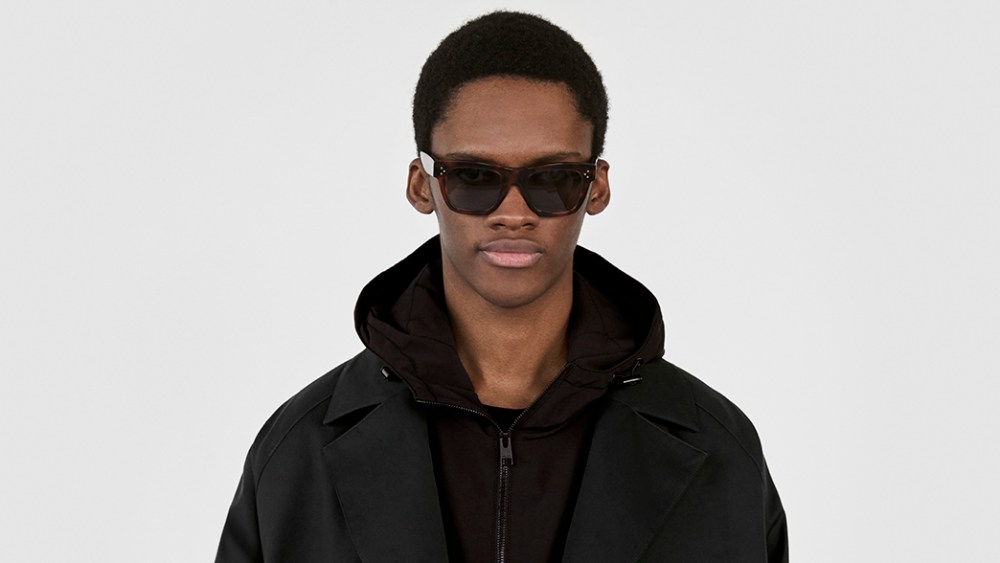
The debut of the new store concept coincides with the brand’s men’s wear relaunch — a category Torstensson said didn’t get enough love when it first launched but is now back with a new team and refreshed approach.
The idea was to offer great classics and pieces that fill the gap between athleisure and formal wear — and would serve the needs of everyday men across ages and backgrounds.
That’s why Torstensson was keen on presenting the new collection on as wide a range of men as possible. So he cast 44 men from all over the world, asked them to style themselves, and photographed them in New York and L.A. to create the brand’s launch campaign and a dedicated book.
“Men’s style is not about male models and fashion, it’s about characters,” he added.
His next big frontier is sustainability. The company has already been hard at work when it comes to rethinking its supply chain and making conscious choices, such as the use of recycled cashmere and washable silk in all its products.
Now it’s about to launch its first pair of degradable denim, featuring an innovative degradable stretch fabric that disintegrates in a fraction of the time conventional stretch yearns do, leaving no harmful chemicals behind. The denim is also dyed using a micro plastic free-dying process, features recycled paper tags, removable buttons made of recycled metals, and embroidery that replaces metal rivets.
Major upcycling and water conservation projects are also in the works.
“For fall 2021, our denim is 63 percent sustainable in fabric and wash. But that’s just like half time, we need to get to 100 percent. By 2023 we’re aiming to achieve that,” added Torstensson.