
It’s no secret China’s luxury market is slowing, but there are still cities that brands should be looking to for growth.
Though many Chinese consumers are buying luxury goods overseas, and brands are scaling back their brick-and-mortar presence around the country, experts say there remains space for more luxury stores in first-tier and fast-growing second-tier cities – particularly in the country’s north and west.
China’s brick-and-mortar luxury retailing has suffered in recent years because of a combination of factors – many of which are about increasing access to more options and yuan-friendly prices when purchasing luxury abroad while traveling or online from international e-tailers.
Related Articles
“Over the next two or three years we are going to see a flattening of store numbers overall, especially among the big brands – Gucci, Prada, Louis Vuitton – we will probably see some retrenchment,” said Franklin Yao, chief executive officer of Shanghai-based consultancy SmithStreet Solutions.
You May Also Like
“Consumers in second- and third-tier cities are spending on luxury goods, but they aren’t buying in their own cities. People are traveling within and outside of China and people like to buy luxury when they are traveling,” he said.
New research from Bain & Co. sees the market for luxury goods purchased in China down 2 percent in 2015 to 113 billion yuan, or $17.2 billion, while those purchased abroad or through international e-commerce platforms grew 40 percent to 293 billion yuan, or $44.5 billion at current exchange.
So while there have been reports of luxury brands shuttering China stores in reaction to the country’s economic slowdown, the appetite for luxury is still very apparent.
The building of high-end malls is also continuing around the country, particularly in up-and-coming cities, meaning there are plenty of opportunities for brands to explore new real estate.
Qingdao recently opened the MixC luxury shopping mall, the largest of China’s nine MixCs, which includes a theme park (complete with roller coaster), ice skating rink and Imax and 4-D cinema.
In China’s west, the massive cities of Chengdu and Chongqing — the latter has a population of 30 million people across a geographical area more comparable to a municipality than a city — are also still building luxury malls. Another four or five luxury malls are expected to come online there in coming years.
Ken Grant, director at FDKG Insight in Shanghai, identified Chengdu and Chongqing as the cities with the most potential for luxury growth in mainland China.
“A lot of people are currently being urbanized in that area and that will result in a larger middle class population there,” he said.
“They are also the only two big cities in the west of China. Everywhere else in the country there are a number of cities that are quite close to one another. If you are a luxury brand, you don’t really need to expand to a lower tier city not far from a higher tier city they already have a presence in.”
According to Steven McCord, head of retail research for JLL Asia, there are cities around China that should offer opportunity for luxury expansion, where the online search volume for luxury brands is high but there is no physical retail presence.
“There are cities which, in theory, are untapped frontiers. However, it becomes a question of whether there’s critical mass to support a store or is it better to allow customers to obtain luxury goods during travels to a larger city,” he said.
McCord believes the most likely cities to be able to support new luxury stores, paradoxically, are actually the cities that already have the most — Shanghai and Beijing.
“There remain opportunities for small luxury brands and for new entrants to establish themselves in gateway cities like Shanghai and Beijing. Of these, Shanghai may be the stronger market today, which is reversed from five years ago because of Beijing’s greater reliance on government-related spending, which is the key target of the anticorruption drive,” he said.
Yao agreed that it will be smaller brands that will lead any expansion of brick-and-mortar luxury retail in Mainland China, but he believes that as fashion consumers in cities beyond Shanghai and Beijing develop, there will be room for these brands to further expand their physical footprint.
“The Stella McCartneys, the Saint Laurents, the Givenchys, the Chloés — I think you will see a slow expansion there. This growth relies on the sophistication, the knowledge and experience of the consumer, rather than the spending power of the consumer – because that has been there for a while,” he said.
The development of these consumers as more sophisticated and experimental fashionistas is partly being driven by the growth of multibrand fashion retail boutiques in cities around China.
These boutiques are allowing people in second- and third-tier cities to discover and experiment with a wider range of fashion brands, and consumers are proving enthusiastic.
Michele Alberti is ceo of Luxemporium, a multibrand store specializing in luxury accessories. The retailer recently chose Tianjin, a tier-two port city near Beijing on China’s east coast, as its first China location.
“Tianjin is the fourth-largest city in China and historically has European influences,” Alberti said of the decision to set up shop there. “Consumers in China are now well educated about fashion and style and always looking for new trends. There is a big potential for a new multibrand shop concept, especially in second- and third-tier cities of China.”
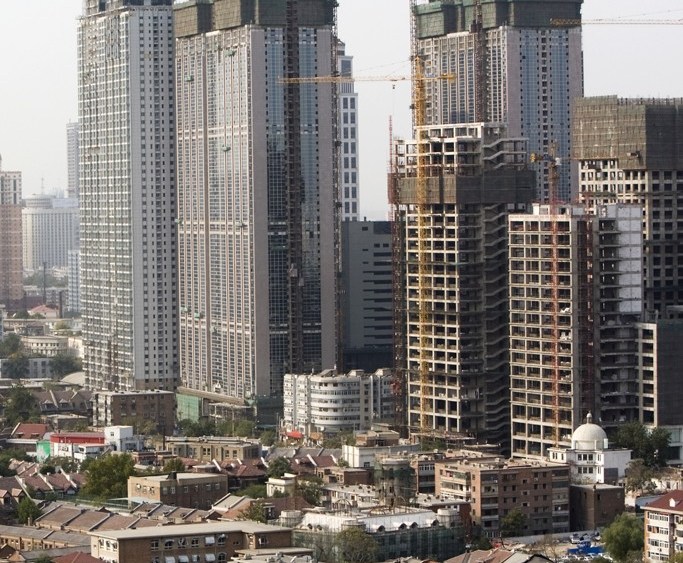
All of the cities identified by experts interviewed – Qingdao, Chengdu, Chongqing and Tianjin – are tier-two cities on the rise, sometimes described by China watchers as the country’s tier one-and-a-half cities, and the consensus seems to be that there is little point in luxury brands looking lower down the tiers for physical expansion.
Yao, however, advises brands not to get too caught up in the tiers and look instead at the standard and sophistication of consumers who live in a particular city.
“When you start getting to tier-two and -three cities it’s a mish mash of the development of the luxury and fashion consumers in those cities. Some are more developed then others, even if they are technically lower tier cities,” he said.