
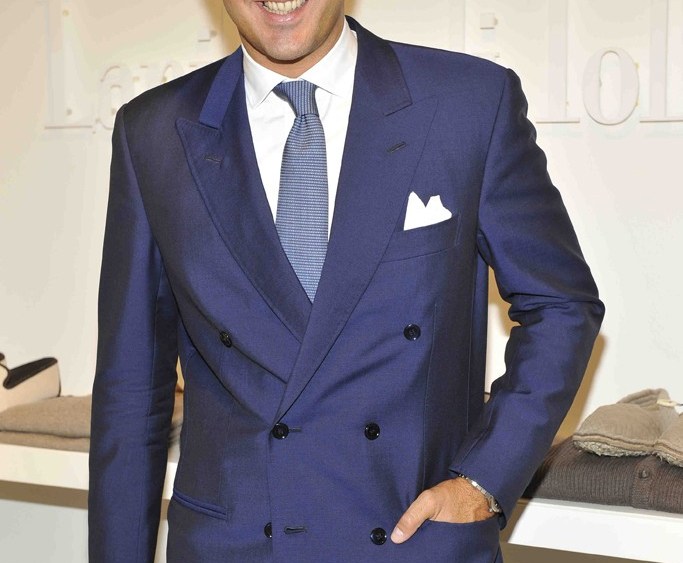
MILAN — The next edition of the Milano Unica textile fair, set for Feb. 4 to 6, will take place amid an inclement macroeconomic climate, with exports falling off and the central bank reducing Italy’s economic growth forecasts.
Earlier this month, Italy’s central bank slashed the country’s growth forecast for 2015 to 0.4 percent from a 1.3 percent forecast made in July. The euro zone’s third-largest economy is expected to report another period of negative economic performance for the fourth quarter of 2014 after a three-year-long recession. According to Italy’s statistics office, Istat, exports fell 1.1 percent in November, weighed down mostly by a decrease in exports to non-European Union trade partners.
Related Articles
Organizers said there are 357 exhibitors registered for the fair. That compares with 398 exhibitors present at the February 2014 edition and 410 who were present at the September edition of the fair. They expect between 15,000 and 17,000 visitors, compared with 19,000 visitors in February 2014 and 21,800 visitors in September 2014.
You May Also Like
In line with central banks, Italy’s prominent textile makers set to unfurl their spring collections at Milano Unica’s Fieramilanocity venue here are cautious on the year ahead.
“The current market situation is not ideal, but we believe that 2015 will be a positive year,” said Guglielmo Miani, chief executive officer of premium cotton fabrics maker Larusmiani.
Miani said the focus is on the European and U.S. markets, with the hope that the strong dollar versus the weak euro will stimulate Chinese luxury brands to purchase more Italian fabrics.
“This will be particularly true with U.S. brands that have always enjoyed buying high-end quality fabrics from Italy,” Miani said. “We always strive to select and use the best products available in the market in order to constantly improve our quality level standards.”
High-end Italian woolen mill Vitale Barberis Canonico, a family-run company with 350 years of history, noted a slowdown in key markets like Russia, Hong Kong and China.
“For 2015, we’re expecting a weak recovery, helped by a weaker euro, by a more stable China and by a consequent increase in tourism,” said the company, adding that in 2014, it increased sales about 10 percent over 2013 levels.
“In 2015, we’re expecting an increase from 3 to 5 percent,” the Vitale Barberis Canonico’s press office added.
China continues to be a concern for cotton shirt fabric maker Canclini Tessile SpA, after seeing a slight decrease in sales of its premium luxury shirting fabrics to Chinese customers.
Overall, Canclini saw a 25 percent rise in 2014 sales compared with 2013. During the last year, the company also made major investments in order to update machinery, streamline production and reinforce its sales team. In 2015, it expects to see the fruits of its labors.
“We expect an increase in 2015, when all these improvements will have an even further significant impact,” said Mauro Canclini, the company’s style director.
Other major textile makers like wool mill Tollegno 1900 also said it booked double-digit growth in 2014, compared with 2013.
“In 2015, we expect to maintain the market share we cornered in 2014,” said Lincoln Germanetti, ceo of Tollegno 1900.
Larusmiani will extend its range of luxury denim, cotton blends and performance fabrics such as its Ice Cotton line. Canclini will widen its color and pattern ranges, representing a refreshed Seventies mood and vintage feeling.
Alternative fabrics maker Alcantara said its spring collection was inspired by life on remote islands such as Japan’s Kyushu and Italy’s Stromboli. This year, it continues to work on making 100 percent carbon-neutral materials made in Italy. Tollegno 1900 said it will launch its Tekno-wool line of stretch wool and nylon material that is perfect for travel suits.
Overall, Milano Unica’s creative team has proposed a “neo-modernist” approach for prints. Under this umbrella, there will be two subthemes: Designed Simplicity and Artistic Boldness, which supports pop-art-inspired jungle prints, abstract motifs and the use of primary colors.