
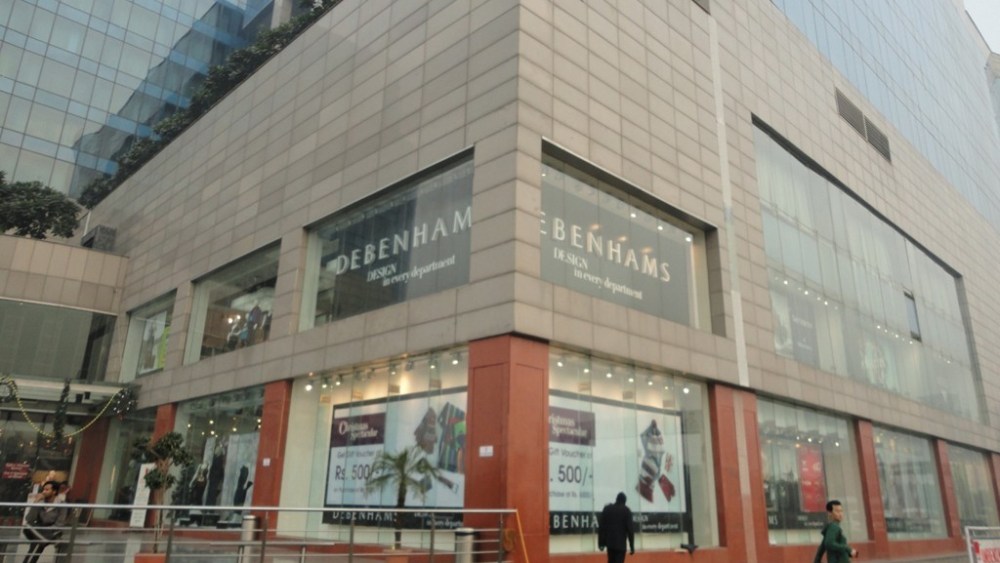
NEW DELHI — British retailer Debenhams, which opened its first department store in India with exclusive franchisee Planet Retail Holdings and has one store in Gurgaon in the National Capital Region, has revealed a major expansion plan with a new slant on the fashion labels it will carry, including retailing Indian designers for the first time.
The plan means opening more than 15 stores across eight cities in India over the next two and a half years, Ramesh Tainwala, chief executive officer of Planet Retail Holdings, told WWD.
Tainwala, who acquired a 50 percent stake in Planet Retail Holdings last year, has moved the offices of the company to Mumbai from New Delhi, hired a new team and has plans to revamp many of the other brands Planet Retail franchises in India, including Guess, Nautica and Accesorize. He said the company will invest more than 3 billion rupees, or $66 million at current exchange, in the next four years for the retail expansion of all its brands.
Related Articles
The plan is for Debenhams to now be more female-centric and to add clothing options at ready-to-wear prices by Indian designers, who will complement British designers such as John Rocha and Betty Jackson.
You May Also Like
These will include styles by well-known Indian designers Manish Arora and Narendra Kumar.
“Manish Arora and Narendra Kumar have international design sensibilities and are masters in their craft.
They are known for attention to detail in areas such as cuts, silhouettes and finishing. Debenhams’ international positioning of ‘Design in Every Department’ seamlessly integrates these designers,” said Aditya Nadkarni, business head of Debenhams in India.
Three new stores will open in the next 12 months, targeting Delhi, Mumbai and Bangalore. Each subsequent year will target cities such as Ahmedabad, Chandigarh, Hyderabad and Bengaluru.
When Debenhams was introduced in India three years ago under previous management, there was an ambitious growth plan to open more than 30 stores. The first store opened in Gugaon with U.K. labels and a beauty area comprising MAC, Clinique, Lancôme, Christian Dior, The Body Shop and others. However, instead of the projected growth, two of the three locations of Debenhams were closed down last year.
Jaideep Wahi, director of retail services at real estate consulting firm Cushman & Wakefield, pointed out that part of the problem was that the openings coincided with the global economic slump. He said the retailer also started on the wrong foot in India — “Their positioning was not very clear. But now the brand is driven by a new management team and they’ve also changed the look and feel of the store to position themselves in the premium segment.
“It’s really a question of timing,” Wahi continued. “Things are very positive for global brands in India at the moment, whether we talk about current growth rates or the fact that India has a very young, upwardly mobile population — more than half the population is under 25 years of age. Apparel and fashion is definitely on the upswing.”
Tainwala acknowledged the problems himself and said that these factors have been taken into account for future plans. “Two of the existing Debenhams were inappropriately located so we closed them down. The Asian body fits are different. Now styles and cuts have been adapted,” he said. “We’re looking at 25,000- to 30,000-square-foot spaces. We also have a new focus as a women-centric store.”
The growth plans come at a time when the Indian retail market, estimated by Booz & Co. (India) to be worth $8 billion, is expected to grow more than fourfold in the next five years. Currently, less than 6 percent of the retail market is in the organized segment. Most retailing in India is small mom-and-pop stores that are independently owned.
“Far from saturation, a department store like Debenhams has a lot of potential to grow,” Taimwala pointed out. “The biggest challenge in India is that of high rental investments. Retail is all about penetration and scale. Guess has 35 doors at this time, and we plan to open 100. Unless you get the scale right, it will never be profitable. Retail is about the existing economies of scale, and Nautica, which has only six stores at this time, will expand too. Accessorize, of which we have 45 doors, will grow to more than 200.”
He pointed out that India is becoming a “more important” market for global brands, although it is still within the learning curve for retail. “I get a request from a global brand every week because they are seeing that kind of growth opportunity in India,” said Taimwala.
However, he realizes the challenges facing this growth — the high real estate costs, customs and poor infrastructure — but if handled strategically, the challenges can be overcome and the market can yield high returns. “If you invest in retail growth, you can expect 25 to 30 percent growth in like-to-like stores but it is essential to have the investment capital available,” he said.
Tainwala said he is not being rash in his judgment. “Retail will be the next sunrise industry in India,” he predicted. “But it is not for the weak-hearted. It has a longer gestation period, which works only if you are investing continuously and giving the customer the style, design and value proposition they want. Retail in India has only one way to go.”