
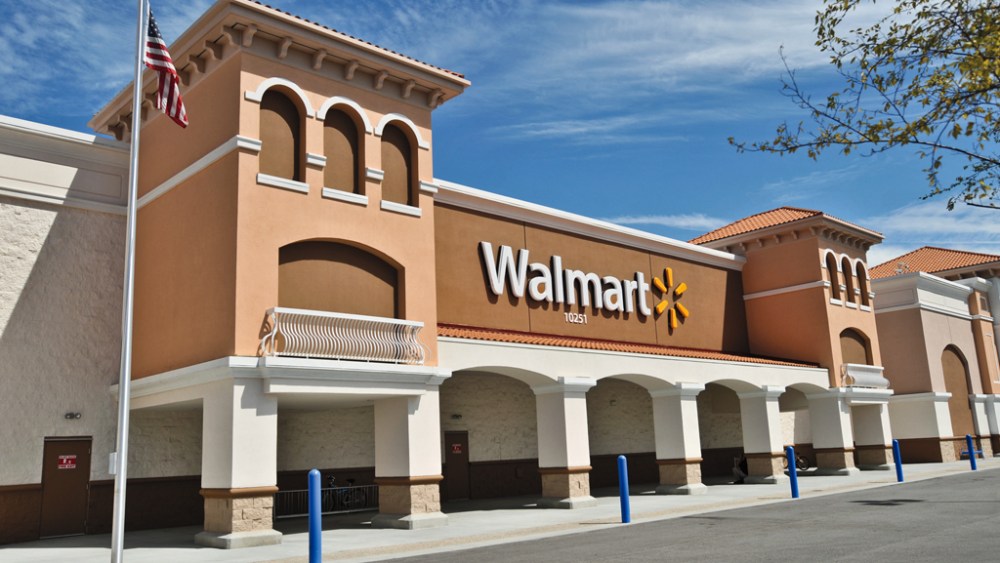
Size always matters at Wal-Mart.
The demise of Wal-Mart Express, a 102-unit chain of smaller stores with an average footprint of 15,000 square feet, doesn’t point to an abject failure, but rather a realization that Wal-Mart doesn’t “do small,” observers said.
Express’ shuttering was part of last week’s announcement that Wal-Mart will close 269 stores worldwide. One of the smallest store formats, Express was seen as a vehicle for entering dense urban markets when the pilot was revealed in 2011. Express’ closure doesn’t necessarily mean that the Bentonville, Ark.-based retail giant is giving up on urban retail.
Related Articles
Many Express stores are in rural markets, with the exception of units in Chicago. A spokesman said the economics of operating in cities has been difficult for Wal-Mart to rationalize. “We have two SuperCenters in Washington, D.C.,” he said. “Having said that, you may have noticed that we made the decision to not move forward with two additional locations in Washington, D.C., that were planned. The decision not to open those stores was part of an overall portfolio review. We look at costs and where it makes sense for us to be. Unlike some retailers, we don’t raise our prices based on costs in a particular market. Obviously, it’s a factor in how we approach locations.”
You May Also Like
“Wal-Mart has made no secret that Express stores were set apart and so different than Neighborhood Markets that they didn’t have any synergies,” said Carol Spieckerman, president of Spieckerman Retail. “They had to decide how far they were going to go with a concept that was terminally unique. Wal-Mart is realizing that it can accomplish many of the same goals it had with Express without necessarily doing it through physical locations or a small, medium, large strategy.”
Wal-Mart’s relationship with cities has been fraught at times. At one time, the retailer planned to open six SuperCenters in Washington, D.C. It spent millions of dollars on a public relations campaign in New York in 2006 when it was actively seeking locations in the five boroughs. But Wal-Mart has been met with resistance in several cities, including New York. While the retailer has said New Yorkers spend $200 million at Wal-Mart stores outside the city, it has yet to open a store there.
Wal-Mart has been aggressive about creating synergies between its online business and Neighborhood Market locations. The spokesman said buy-online, pick-up-in-store has been rolled out to the entire fleet of Neighborhood Markets.
The retailer is locating Neighborhood Markets in close proximity to existing SuperCenters — often across the street — in an effort to capture shoppers’ fill-in trips. Customers visit SuperCenters for more extensive shopping trips. Wal-Mart in the past had a strategy of cannibalizing its own stores by building SuperCenters very close to one another, believing it was better to lose sales to one of its own stores than a competitor’s.
A spokeswoman for Wal-Mart’s global e-commerce group said the company’s delivery options now include buy-online, pick-up-the-same-day, with more than 70,000 items on offer. A locker system is being tested at select stores.
Spieckerman said Wal-Mart was smart to exit the Express business. “Small-format retail is becoming a much more crowded place,” she said, noting the thousands of dollar stores and drug stores and small-format units that Target is rolling out. In addition, Kohl’s is introducing 35,000-square-foot units and 25,000- to 30,000-square-foot Off-Aisle clearance stores, while European retailer Aldi is expanding in the U.S. and its fellow European discount chain Lidl is set to open stores in the U.S. by 2018.