This week the grande dame of Berlin shopping changed her skirts. On Thursday evening, the venerable KaDeWe department store celebrated the opening of renovated areas that have been six years in the making.
The department store, which opened in 1907, is an institution in the German capital. With 700,000 square feet of floorspace, KaDeWe — short for Kaufhaus des Westens, or “department store of the west” — is also the largest department store in continental Europe. It is seen as the German equal of Galleries Lafayette in Paris or Harrods in London.

Since 2015, the KaDeWe has been undergoing what local media have described as “once-in-an-era” renovations. This week the department store unveiled 150,000 square feet of the revamp, including the new men’s wear, women’s wear and beauty departments. The latter boasts lofty, 100-foot ceilings.
Related Articles
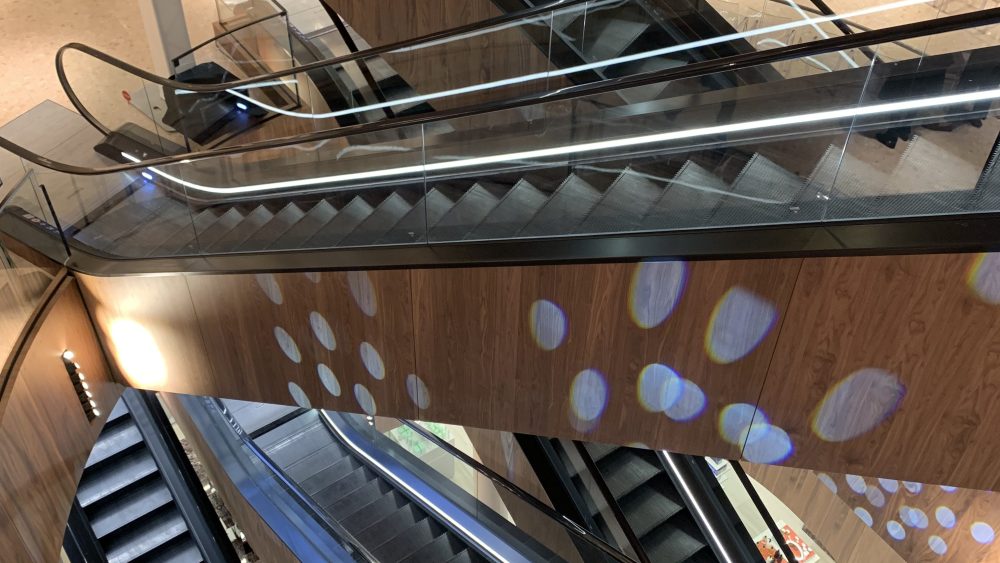
The building work was overseen by renowned Dutch architect Rem Koolhaas and his firm, OMA. According to Koolhaas’ plans, the department store would be roughly divided into four areas, with each getting a sculptural staircase.
You May Also Like
During the opening celebrations, more than 40 models wearing luxury brands, including Prada, Balenciaga and Gucci, used the first staircase — a spiral elevator, open at the top — as a runway, parading in front of a crowd of around 350 guests, including local politicians and celebrities.
“By the end of November, around 80 percent of the renovations will be complete,” confirmed André Maeder, chief executive officer of the KaDeWe Group, which also owns other German luxury department stores, the Alsterhaus in Hamburg and Oberpollinger in Munich. The KaDeWe Group itself is owned by Thailand’s Central Group, which has 50.1 percent and Austria’s Signa Group, which holds 49.9 percent.
“Over the last six years, the owners have spent around 600 million euros on renovating the three stores,” Maeder told WWD. “Because they obviously believe in them.”
Over the next few years, the KaDeWe Group is adding another two stores to its roster: one with 107,000 square feet in Dusseldorf in 2023 and another at 183,000 square feet in Vienna in 2024.
Still, it may seem like a strange time to believe in this kind of shopping. Even before the COVID-19 pandemic put extra pressure on retail, high-end department stores appeared to be in danger of extinction with financial issues impacting notable brands like Barneys New York, J.C. Penney and Neiman Marcus. Over the past 18 months of the health crisis, similar British retailers Harrods, Selfridges and Harvey Nichols have all announced layoffs, Debenhams has declared bankruptcy and in France, Galleries Lafayette has admitted to financial struggles.
Maeder, who is also the current president of the Intercontinental Group of Department Stores, the largest alliance of its kind in the world, has no such concerns. He told WWD that he is certain the new look KaDeWe will thrive.
Before the pandemic, KaDeWe attracted a lot of tourists and customers were around half international and half local. But, as Maeder said, “the last two years have shown that we have a very strong base in our local community. We love tourists, we need tourists, but we are not dependent on them.”
Another factor that will make the KaDeWe fashion floors more enticing are the changes in fashion buying policies at the department store. Maeder noted that over the past five years or so, alongside the renovations, they have also made a lot of changes to their roster of buyers.
More effort has gone into seeking out directional and new brands and Maeder referred to Barneys New York as a model for “cool” luxury retail he likes. In other interviews, he has said he believes it is the middle-of-the-road department stores that are most endangered.
“Of course, at the end of the day we need to earn money,” he told WWD. “We need top brands like Hugo Boss or Tommy Hilfiger. But we’re becoming more diverse, too. It’s not 50-50, but we’re going after more brands that we see might be very hot on the market, whether that’s a sneaker or a whole line.”
The new fashion departments will feature many more of these kinds of brands, although if they don’t sell successfully, they’re likely to only be at the KaDeWe for one or two seasons.
Pop-ups within the KaDeWe are another way of adding spice to the retail mix, Maeder said, adding that the store takes pop-ups “very seriously” and will continue to do so.
Additionally, Maeder believes that, even though they all act as separate entities and many shoppers don’t even realize they’re connected, the three luxury department stores together make for a stronger concept. The Munich and Hamburg sites have also been refurbished and will open revamped food halls in 2023.
“When you travel from city to city, there are chain stores everywhere and you always see the same names. I think people are a little bit fed up,” Maeder said in explaining why he thinks the unique identities of the three stores are important. He believes the fact that the KaDeWe and its counterparts in Munich and Hamburg also have homewares, toys and celebrated gourmet food departments besides clothing is also something that will keep consumers coming.
The KaDeWe’s fancy new spiral escalator is all part of that. In fact, one could say it’s almost a throwback to the days of the first department stores, combining cafés with clothes and other goods, and making shopping a leisure activity for the first time. Back then, department stores were described as “cathedrals of consumption.”
Maeder, whose ultimate goal is a turnover of more than 1 billion euros in the next year or so, thinks that’s still relevant. “Look, we always say we don’t sell you anything you need,” he concluded. “Instead we want people to come and have experiences, to have fun, to touch, smell and eat and drink — and then buy some of the merchandise.”