
Keeping the home fires burning.
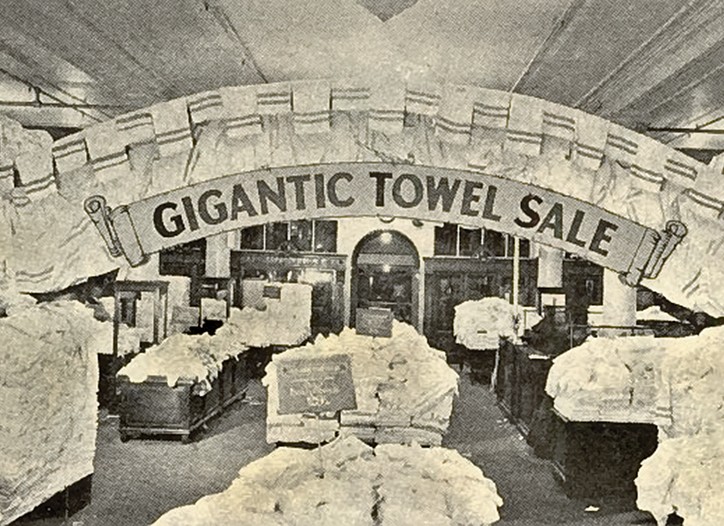
Home goods have been a part of Macy’s recipe since the 1860s, when cookware was cast-iron, not All-Clad.
The retailer pioneered selling floors arranged as room vignettes in the Twenties, an innovation that’s become an industry standard. In the Eighties, Macy’s introduced decor conceived by fashion designers, starting with Ralph Lauren. In the Nineties, the retailer created a national gift registry online, an effort that powers a huge bridal business. Macy’s approach to home has always been comprehensive. For a time in the Sixties, the company even sold modular homes out of its Herald Square flagship. And while shoppers can’t buy an address there anymore, they can find just about anything to put within four walls—from organic Frango mints to sofa sectionals.
Related Articles
In 2004, the division was centralized and consolidated in Manhattan as Macy’s Home Store. Under Macy’s Home chairman and chief executive officer Tim Adams’ leadership, the division runs home departments in nearly every Macy’s across the U.S., more than 800 units ranging from 5,000 to 60,000 square feet and up. About 50 Macy’s Furniture Gallery stores, which stock casual home fashion priced slightly below Crate & Barrel, also fall under Adams’ purview. All told, the home category represented 15 percent of Macy’s total business in 2007; on net sales of $26 billion, that’s roughly $4 billion in home goods.
You May Also Like
Yet, like the rest of the company, the division has faced challenges in recent years. Among them: merger pains, falling home prices and assortments that didn’t reflect regional preferences. “We were struggling in this category for some time,” Macy’s Inc. president and ceo Terry Lundgren said at a Bank of America conference in March. “It was really the weakest part of our store for a couple of years. We made some of our own mistakes on this subject, moved too fast to centralize and the like. The good news is that’s all behind us.”
He predicted momentum will build as the company gets further along with its My Macy’s localization initiative aimed at driving customer loyalty through regionally customized displays and assortments.
In Burlington, Mass., which is close to many colleges and private schools, My Macy’s meant extra-long twin sheets displayed for back-to-school. The kitchen area held a regional cooking vignette with lobster pots and other items.
Macy’s has also identified about 100 top-performing stores for “best intensification,” says Gary Conroy, Macy’s East senior vice president and regional director of stores. Those units get large, aisle-facing displays of top national brands and prestige labels other stores don’t stock. In Burlington, for example, the store had Le Creuset cookware, Lacoste towels and Monique Lhuillier china.
What is common, however, to all Macy’s stores is a balance of national brand exclusives, such as Martha Stewart, with well-established private label programs, such as Charter Club, The Cellar, Tools of the Trade
and Hotel Collection, which in 2007 added an eco subbrand, Haven by Hotel Collection.
The Martha Stewart program, in particular, has become a major part of Macy’s Home. In 2007, the brand set a new standard in splashy launches (1,400 stockkeeping units, the biggest ever for Macy’s, and a televised shopping spree for Stewart’s studio audience in Herald Square).
“We had a massive update of every store around the Martha Stewart initiative,” says Adams. “It gives our floors a point of view and a point of difference.”
Stewart’s merchandise is displayed on furniture—her Wedgwood china pattern sits on a replica of her dining table, kitchen tools on her putty-colored prep island.
On a first-quarter earnings call in May, Macy’s chief financial officer Karen Hoguet said the Martha Stewart collection was doing “very well. We feel very good about that product.”
Bridal registry data, which signal trends and regional differences, have become an important tool in making home stronger, says Adams.
“The home customer definitely parallels our apparel customer, except there is even more mass appeal,” Adams notes. “Pots, pans and comforters relate to everyone.”