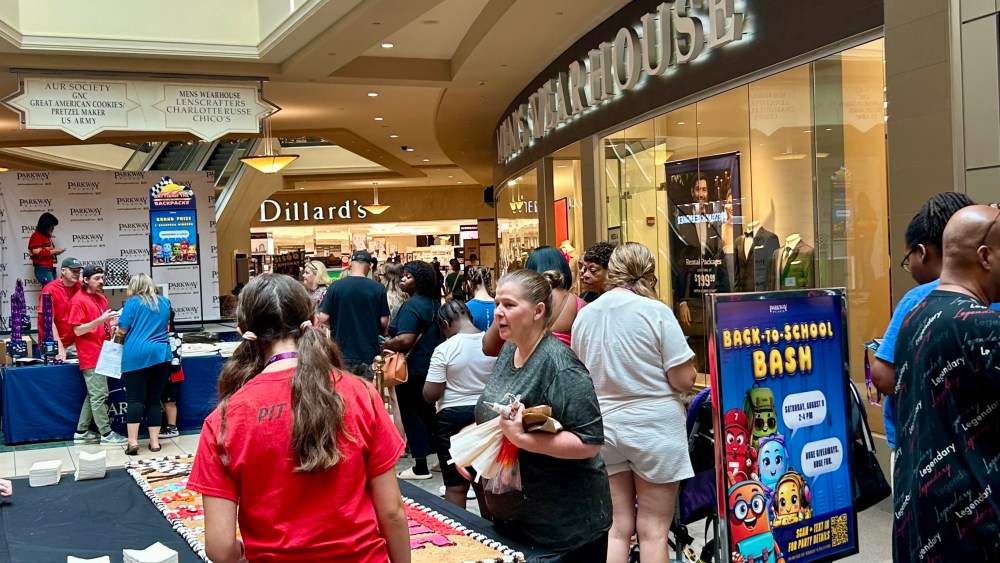
The world is in turmoil, consumer confidence is shaky and prices continue to rise — but the back-to-school shopping this season is holding up.
Sales of school supplies, apparel and footwear have so far met retailers’ expectations, though inventories were planned very conservatively. Typically, the bts season peaks in August, but this year consumers in many parts of the country took to the malls and outlet centers earlier than ever hoping to avoid price increases later in the year due to tariffs.
Related Articles
Retailers jumped on the Amazon Prime Day bandwagon with a panoply of offerings, including sharp discounts and free shipping. The “Walmart Deals,” “Target Circle Week” and “Macy’s Black Friday in July” events were all timed around Amazon Prime Day, which this year was extended from two to four days — July 8 to 11 — as the Internet giant sought to offset increased competition.
You May Also Like
Tax-free days last month in Tennessee, Alabama, Mississippi and New Mexico, gave another lift to traffic at stores, and some of the better-than-expected business retailers witnessed in July would be attributed to the first day of classes for the new school year starting in certain areas of the South and West.
“It’s been a back-to-school season unlike any other,” Marshal Cohen, chief retail industry adviser for Circana, told WWD. “You’ve got all these new dynamics and added pressures, from elevated temperatures across the country and regional flooding, to concerns about pricing and things costing more, and more sophisticated systems of supplying school supplies earlier.”
According to Cohen, core needs for the classroom and basic apparel — shorts, T-shirts, underwear — as well as athletic footwear and some beauty products have top families’ shopping lists. Consumers are not rushing to buy more fashionable styles, he said.
Cohen said prices are higher than they were, but “not by that much.”
“Consumers have demonstrated an acceptance of the relatively marginal price increases witnessed to date,” he said. “They are picking and choosing what they spend on, which introduces some variability into more granular discretionary retail activity. We’ve got a consumer prioritizing purchases between price increases and the economy, but they rarely cut back on spending for kids going back to school.”
Overall, for the four weeks ended Aug. 2, U.S. retail sales rose 2 percent across discretionary general merchandise, food and beverage, and nonedible consumer packaged goods, from the same period in 2024, while unit demand fell 1 percent, according to Circana.
“Back-to-school is off to a really good start for us,” said Stephen Lebovitz, chief executive officer of CBL Properties, a real estate investment trust with 89 properties in 22 states. “The economy has held up. Traffic has stayed steady and is even up a bit. This is definitely surprising compared to what we would have projected three months ago. In the spring, everybody was worried.”
Tax-free weekends in July, Lebovitz added, “were really strong for a number of our malls and retailers.” Two Tennessee centers, Hamilton Place in Chattanooga and CoolSprings Galleria in Nashville, had particularly strong tax-free weekends, he said. “Retailers were saying it was like Black Friday in the summer, but a lot of people were also buying early because they were worried about the impact of tariffs and retailers passing on higher costs.”
According to several industry analysts and surveys, most consumers are spending the same or more than last year, though roughly a quarter to a third of consumers expect to spend less on bts. Analysts believe the bts season can be considered a barometer for how the holiday season plays out.
“Spending remains. It doesn’t seem like what was feared is coming to fruition,” said Michael Gunther, vice president and head of insights at Consumer Edge, a data insights company specializing in analyzing consumer behavior and transactions across 40 million credit and debit cards.
“Consumers are just being a little more discerning of where they spend,” said Gunther. “They’re price-conscious.”
With August almost one-half over, “There doesn’t appear a deceleration in sales growth as a result of all that pull front,” Gunther said, referring to the unprecedented level of bts shopping seen in July and June. “It’s too early to say early shopping for the season will pull business out of August.”
Based on its U.S. credit and debit card data, Consumer Edge listed Aéropostale, J.Crew Factory, Carter’s, Hollister, PacSun, Express, Janie & Jack and Pacific Sunwear as achieving double-digit sale gains for the July 7 to 18 period, while Gap was right around 10 percent, underscoring the robust early bts shopping. But two backpack brands, Kipling and Herschel Supply, as well as American Eagle and Tilly’s saw spending declines.
Retailers have been prepared for the early-bird rush, having placed orders with vendors much sooner this year before the tariffs kicked in. U.S. President Donald Trump has put tariffs on dozens of U.S. trading partners, ranging from 15 percent on the EU to 50 percent on Brazil. Many of the tariffs went into effect Aug. 7.
CBL’s Lebovitz cited Gap, Hollister, Abercrombie, The Buckle, American Eagle and Palmetto Moon, a regional retailer for family apparel, gifts and home goods, as having solid seasons so far. Asked if retailers were any more promotional this year for bts than last year, Lebovitz replied, “Being promotional is always part of it. There is an expectation” of shoppers wanting it. “But I don’t think it’s any more extreme this year.” He also said he hasn’t seen much in the way of recent price increases. “If there were any price increases, there were also discounts, so the net pricing is comparable to what it has been.”
“Advertisers should take note: this is not the season for overly showy or out-of-touch creative campaigns,” Tony Gemma, vice president and global head of Yahoo Creative, said in a statement. “Shoppers want value. Ads that emphasize discounts, practical tips, and ease of purchase are more likely to win.”
Here’s how Yahoo and other industry sources and tech-oriented firms evaluated BTS 2025:
- Yahoo’s “2025 Back-to-School Shopping Survey” of 1,000 consumers indicates that 70 percent of K-12 parents and 55 percent of college students plan to spend more this season, largely driven by inflation and increased tech needs. Nine in 10 shoppers are worried about U.S. macroeconomic factors, such as inflation and the rising cost of living. Still, the average back-to-school shopper plans to spend just $371, with many budgeting less than $500.
- Samsung Ads, the advertising platform for the South Korean conglomerate, surveyed shoppers and found that three-quarters of bts shoppers plan to spend the same or more on bts merchandise than a year ago, with 41 percent planning to spend the same amount as last year; 33 percent planning to spend more, and 26 percent expecting to spend less. Eighty-two percent of bts shoppers say mid-summer (July) is the most impactful time to influence their bts purchase decisions, Samsung reported.
- GumGum, an adtech company, conducted a bts shopping survey of 3,000 consumers across the U.S., Canada, the U.K., Belgium, the Netherlands, and Germany in mid May. Sixty-eight percent of the respondents said price and promotions were the top factors when buying bts supplies; 35 percent said they’re actively hunting for sales due to economic pressures, and 27 percent said they would be buying less than last year. GumGum also indicted that 61 percent of the consumers’ bts spending would be for clothing and footwear.
- The National Retail Federation, with Prosper Insights & Analytics, predicted based on their annual bts survey that spending for students in grades kindergarten through high school will reach $41.5 billion — up 12.5 percent from $36.9 billion last year. The previous high was $37.1 billion in 2021. The survey also concluded that back-to-college spending is expected to hit $94 billion, about $20 billion or 27 percent more than last year’s record $74 billion. The NRF sees U.S. retail sales for all of 2025 increasing 2.7 to 3.7 percent over 2024. As NRF president and CEO Matthew Shay previously said, “Retailers have been preparing for months to ensure they are well stocked with essential items that families and students need for the school year.”
