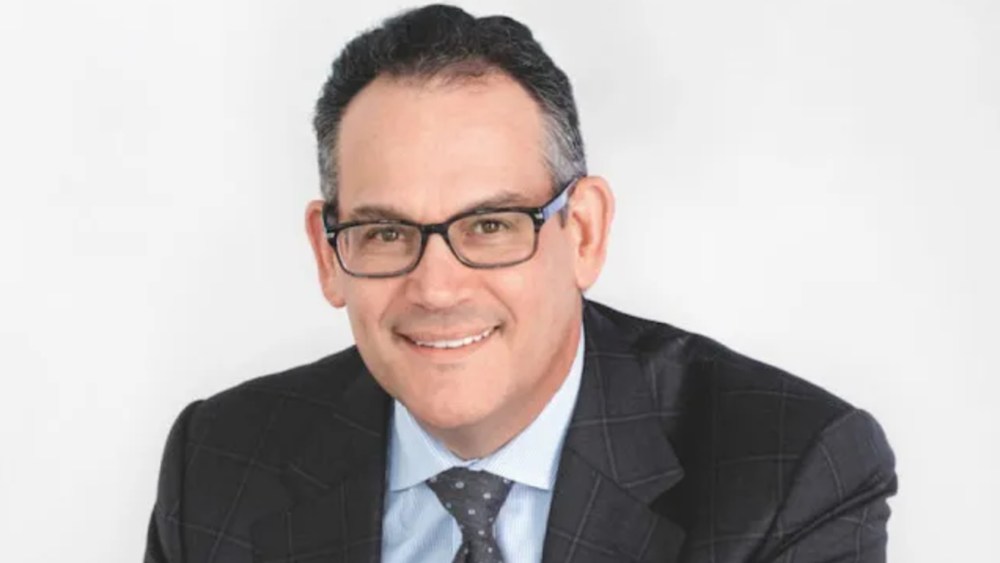
Updated 6:17 p.m. ET March 23
David Simon, the formidable and driven billionaire leader of Simon Property Group, the nation’s largest developer and operator of traditional malls and mixed-use, lifestyle and outlet centers, died peacefully Sunday after a monthslong battle with pancreatic cancer. He was 64.
He simultaneously held the titles of chairman, president and chief executive officer.
Simon led the real estate investment trust for three decades, becoming the CEO in 1995. He was highly respected as a fierce competitor, spearheading more than $40 billion worth of takeovers of other major retail property companies. Simon Property Group owns or holds interests in more than 250 properties comprising more than 200 million square feet across North America, Europe and Asia, generating billions in annual revenue.
Related Articles
The board on Monday named his son, Eli Simon, as the real estate giant’s new CEO and president. Eli will also continue as chief operating officer and a director. The eldest of Simon’s five children, Eli joined the company in 2019 and has been taking on an ever-larger role. Recently, the 37-year-old oversaw the acquisition of two luxury outlet malls in Europe.
You May Also Like

In a statement, the Simon family said: “Our beloved husband, father, grandfather and brother poured his heart and soul into building Simon Property Group. He was most proud of his family, his wife of over 40 years Jackie, and their five children: Eli, Rebecca, Hannah, Sam and Noah, and seven grandchildren. We ask for privacy as we grieve our great loss.”
David Simon was considered one of America’s most successful CEOs, considering his company’s long track record of profitability, enormous growth, and for having a clear vision. While naysayers were predicting the death of malls, as they were losing shopper traffic, Simon had his company invest heavily into remaking properties within his company’s portfolio with new retail brands and innovative formats and predicted correctly that malls would recover after the Great Recession of 2009 and again after COVID-19.
Among Simon’s biggest, most productive and recognized malls today are Roosevelt Field in Garden City, N.Y.; Sawgrass Mills in Sunrise, Fla.; King of Prussia outside of Philadelphia; the Houston Galleria; Woodbury Common Premium Outlets in Central Valley, N.Y., and Del Amo Fashion Center in Torrance, Calif., to name just a few.
The real estate giant also accumulated partnership stakes in several major retail properties including the upscale Aventura Mall in north Miami. Most notably, Simon purchased a 27.5 percent stake in the mega Mall of America in Bloomington, Minn., from a third party, but the majority owner and original developer of the property, The Triple Five Group, contested Simon’s purchase in court, which forced Simon to sell its stake to Triple Five in 2004.
David Simon was the son of the late Melvin Simon, who, along with his brother Herbert, founded Melvin Simon & Associates in Indianapolis in 1960. They built strip centers, urban and suburban shopping centers including enclosed malls. The Simon brothers were colorful figures, often engaging with the media, unlike David Simon, who rarely gave an interview to the press. Melvin Simon also died from cancer in 2009.
David Simon obtained a bachelor’s of science degree from Indiana University in 1983. Two years later, he earned an M.B.A. from Columbia University’s Graduate School of Business. Out of grad school, Simon worked at First Boston and later at Wasserstein Perella & Co.
In 1990, he joined his family’s business as chief financial officer. In that role, he was instrumental in lifting the company out of its financial doldrums. It was cash-poor and over-leveraged with debt. He took several actions to repair the balance sheet, including putting a temporary halt on development and pulling out of costly partnerships. His repair work set the stage for the company’s initial public offering in 1993, valued at close to $1 billion. At the time, it was the largest real estate stock offering. He was named CEO in 1995 at the age of 33, becoming one of the youngest CEOs of a major publicly traded company in America. What followed was an unparalleled era of growth, innovation and value creation. Under his leadership, Simon Property Group delivered a cumulative total shareholder return of more than 4,500 percent since its IPO. He added the title of chairman in 2007. The company started with 115 properties when it went public and over the years bought 300, developed more than 50 and sold about 250.
In 2007, Simon led his firm’s purchase of the Mills Corp., which operated sprawling outlet centers. Then in 2020, the company purchased 80 percent of the Taubman Co. with its portfolio composed largely of traditional, high-end malls. The deal was surprising because, for years, Taubman rebuffed Simon’s repeated hostile takeover advances. Last year, the company acquired full ownership of Taubman Co.
Simon also launched unwanted takeovers of the Macerich Co., another major REIT based in San Diego, which remains independent. But just this past June, the Simon company acquired the retail and parking components of Brickell City Centre in Miami from Swire Properties. Prior to the acquisition, Simon owned a 25 percent, non-managing interest in the retail at Brickell City Centre. With this latest transaction, Simon wholly owns and manages the asset.
Simon adopted an unconventional strategy of buying up failing and bankrupt retailers with significant footprints in his malls to maintain the properties’ high occupancy rates and prevent other retailers from vacating based on lease clauses granting them rights to leave or terminate their ease in the event of certain tenants leaving due to a bankruptcy or for some other reason. Simon’s list of retail deals, which often included partners such as Authentic Brands Group, ran from Aéropostale and JCPenney to Forever 21 and Brooks Brothers. Forever 21 slid into bankruptcy for a second time earlier this year and was liquidated in the U.S. In addition, Simon has a stake in Catalyst Brands formed in January 2025 by the merger of JCPenney and SPARC Group, a joint venture of Authentic, Simon Property and Shein. Simon also has a stake in Rue Gilt Groupe e-commerce, and Jamestown, a global real estate investment and management company.
Jamie Salter, chairman and CEO of Authentic, said: “Our thoughts are with the Simon family and the entire Simon community during this difficult time. Some of the most defining moments in Authentic’s history were made possible through our partnership with David Simon. He built one of the most important companies in retail, and his impact continues to influence how the industry operates today. David was a valued partner, a trusted mentor and a great friend, and we will miss him dearly.”
In another unconventional maneuver to keep his centers appealing with new retail, Simon this year began collaborating with Shopify, the global e-commerce platform, and Leap, a platform for physical retail, to provide brands with the technology and operations they need to open brick-and-mortar locations, in particular e-commerce-only brands or brands with limited experience or resources to deploy physical stores.
By necessity, Simon was among the country’s staunchest advocates of brick-and-mortar retail, and was ahead of competitors in reinvesting billions of dollars to upgrade his malls. At times, he felt his competitors as well as retailers were failing to sufficiently reinvest in brick-and-mortar, and instead directed resources to the internet and technology. In February 2025, Simon disclosed what he characterized as a “big program” for redeveloping “B” properties while the company continued its efforts enhancing “A” assets as well. Under his direction, the company has invested billions in redeveloping and reimagining its properties — creating premier shopping, dining and entertainment destinations that became community gathering places.
He did seem to temper his stance on e-commerce in more recent years as the company began developing a deeper omnichannel posture. “The importance of brick-and-mortar has never been higher,” he said during a conference call with industry analysts and investors last year. “Don’t get me wrong, e-commerce is critically important, but all of this stuff about e-commerce, cost of customer acquisition, returns, stickiness, ecetera, it all continues to be a challenge. If you’ve looked at the [pure online] marketplaces, they run into problems, so they really need to be connected to brick-and-mortar for survivability. So all of those things are pointing to a positive picture.”
About two years ago, the developer revamped its e-commerce website for a much broader selection of sale-priced items and renamed it ShopSimon, replacing Shop Premium Outlets. The expanded and rebranded digital marketplace includes on-sale and discounted merchandise, while continuing to offer outlet products from brands. The prior website offered only products from Simon’s network of outlets around the country.
“By seamlessly integrating the ease and portability of online shopping with the appeal of our nationwide network of top-tier malls and premium outlets, Simon is creating the standard for a truly integrated omnichannel experience,” Simon said at the time. “Inherent in our culture is a drive for innovation and a desire to enhance the shopping experience for our consumers while delivering new sales opportunities for our retailers. ShopSimon is yet another example of how we are bringing the retail ecosystem together to deliver more of what today’s discerning shopper wants.”
Simon didn’t take criticism lightly. Once, when Mickey Drexler — of Gap, Old Navy and J.Crew fame — at a Financo Forum conference in 2012 accused malls of lacking innovation, having too many kiosks selling inferior product and, even in one case, smelling from popcorn, Simon, who was in the audience, shot back, “I’ll take all your space back right now.” Simon, as well as other powerful developers, have been accused of pressuring retailers to sign leases on more locations than they may have wanted to, but that’s something Simon always denied.
Simon served, until recently, as chairman of the supervisory board of Klépierre, a publicly traded, Paris-based retail real estate company, and served on the board of Apollo Global Management Inc., reflecting the breadth of his influence across global business and finance. The Harvard Business Review recognized him as one of the world’s best-performing CEOs in both 2010 and 2013, and Barron’s magazine bestowed the same distinction in 2013.
Details regarding memorial services will be shared by the Simon family at a later date. In lieu of flowers, the family requests that contributions be made to the Anti Defamation League, American Jewish Committee, UJA Federation of New York and Foundation to Combat Antisemitism.
“There are no words adequate to express the depth of our sorrow or the magnitude of our gratitude,” said Larry Glasscock, nonexecutive chairman of the board. “David’s extraordinary intellect, his relentless drive for excellence and his unmatched strategic vision transformed a privately held family business into an esteemed global institution — creating billions of dollars in value for shareholders along the way.
“David’s legacy transcends financial performance,” Glasscock added. “He was a leader of uncommon integrity, fierce loyalty and deep personal conviction. He inspired everyone around him to reach higher, think bigger and never settle. He set the standard — not just for our company, but for an entire industry. All of the Simon Malls, the world-class Simon Premium Outlets and every mixed-use destination in our portfolio bears the imprint of his vision and his exacting standards.”
“David took a company that his father and uncles started and built it into a dominant retail real estate company. He will be missed,” said William T. Dillard 2nd, chairman and CEO of Dillard’s Inc.
John D. Idol, chairman and CEO of Capri Holdings Limited, said, “David Simon was one of the true visionaries in the retail real estate industry. He championed the importance of creating exciting retail experiences for consumers. On a personal note, David was a true friend to me and many others. He was always there to help, supporting businesses when they were starting, growing, and even experiencing difficulties. He will be greatly missed, but his legacy will live on in the industry he transformed and the respect he inspired.”
William Taubman, the former president and chief operating officer of The Taubman Co., said: “I knew David for 40 years. He was a great partner and always thought about how to improve the shopping centers. He was a tough negotiator but an excellent partner. We prospered very well with his help over the last few years.”
That sentiment was echoed by Michael Gould, the former CEO of Giorgio fragrance and Bloomingdale’s, who said: “He was a great partner in the malls where we had stores. He was a hard negotiator and tough landlord, but forthright and honest. We became friends. We had some wonderful times joking together. We always bantered about basketball. He inherited a great company and took it to a whole other level. He built fantastic malls.”
— With contributions by Jean E. Palmieri