
Remember “Cat Person,” The New Yorker short story about a hookup gone wrong that went viral in 2017? Well, it’s coming back — this time as a movie starring Michael Gandolfini (James Gandolfini’s son), Nicholas Braun, Emilia Jones and Isabella Rossellini and directed by Susanna Fogel, whose other work includes “Booksmart” and “The Flight Attendant.”
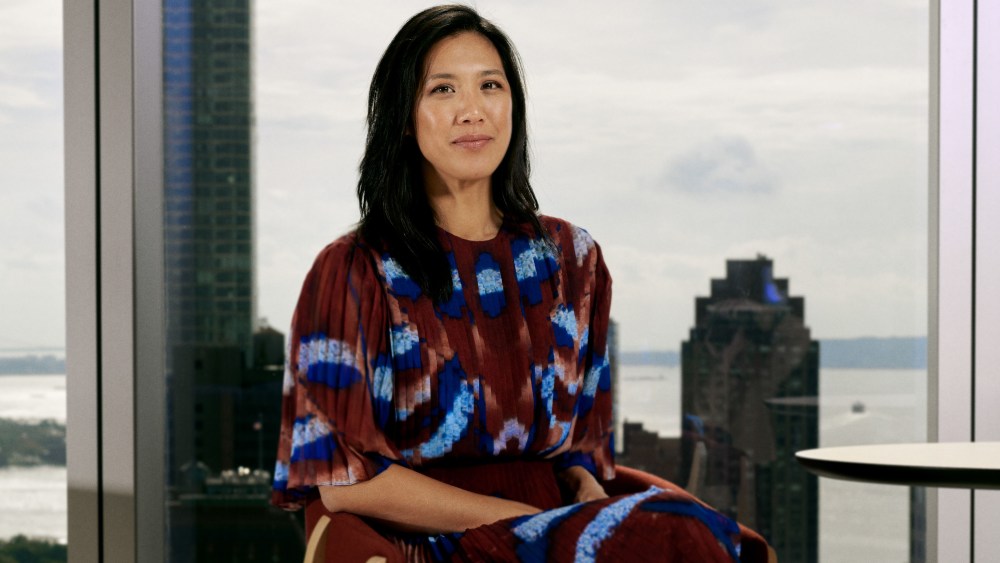
This is all part of president of Condé Nast Entertainment Agnes Chu’s plan for the legacy magazine publisher’s entertainment arm to be taken seriously in Hollywood as creative producers. Instead of simply selling its intellectual property to a studio, she wants to be involved in the process from beginning to end. In the case of “Cat Person,” Oscar-nominated Helen Estabrook, who Chu tapped as head of development production for features and scripted series, is on set with Studio Canal as we speak.
Related Articles
“It’s not just about coming to us for the rights form and IP but that Hollywood wants to work with us because we have great people who know how to make great film and television,” Chu boasted over Zoom, adding that she wants to be able to announce film and TV deals the same day a story is published.
You May Also Like
Chu, a longtime Disney executive who helped mastermind the Disney+ streaming service and at one point was a vice president in former Disney chief executive officer Bob Iger’s office (a role that saw her work day begin at 4:30 a.m.), joined Condé around a year ago and appears to have taken tight control of the ship, helping to right what had been a listing vessel. Before she was brought on board, its former president Oren Katzeff hit headlines for the wrong reasons, making offensive comments about women and a Mexican waiter on Twitter in the past and being mired in allegations that the division did not fairly remunerate journalists of color for their participation in the popular Bon Appétit Test Kitchen video series.
And while its finances weren’t made public, there was speculation in media circles that Condé Nast Entertainment had failed to become the magic wand executives had been hoping for when it came to making up for the steep losses triggered by the nosedive in the too-heavily-relied-upon print advertising — a trend that was already in play only to be exacerbated by the coronavirus pandemic.
Now Chu is working toward making Condé Nast Entertainment a serious player on multiple stages — not just the short videos like Vogue‘s “73 Questions” and Wired’s “Autocomplete Interview” that became its bread and butter. Condé’s future relies to a large extent on how successful she is in that goal.
Poaching the right talent has been key to that strategy. In addition to Estabrook, a respected TV and film producer whose work includes “Whiplash,” Chu has tapped Jennifer Jones, vice president of business affairs for Disney+, as head of global business affairs and operations and Marvel executive Sarah Amos as vice president of development and production. Most recently, Stitcher’s Chris Bannon was named head of global audio as Chu looks to build a competitive podcast offering. The team has more than 70 active feature, documentary and television projects in development and production.
Then there are the live events, which Condé Nast Entertainment is trying to take control over and monetize. Hosted by Keke Palmer and Ilana Glazer, Vogue’s Met Gala livestream was the most watched of any year, according to a Condé Nast Entertainment spokesperson, who added that just over a week after the event, Met content drove 320 million global views across all global social channels.
Chu is also striving to make sure the more traditional editorial side is working closely with CNE and not operating as two separate entities, which has long been the case.
She’s clearly committed to the strategy: She relocated with her family from her home state of California to New York to take on the CNE job. It’s her second time living in the city, having moved there after graduating from Harvard when she wanted to be a film director or cinematographer — before she moved to the corporate side and joined Disney.
“At times I think I have an artist’s heart, and it informs so much of why I get excited about what it is that we’re doing here at Condé Nast. But I also have a producer mind, which is a little bit more on the business side of things as well. It’s been great to cultivate both sides,” she said.
Here, Chu talks WWD through the changes she’s made since joining the company.
WWD: When you were growing up, did you always picture yourself in the entertainment business?
Agnes Chu: I was a theater kid. I was a really crappy actress, but I loved it anyway. And I actually got into directing a lot in high school and that’s what brought me to this space. I thought I wanted to be a film director or at least a film cinematographer. I studied film production in college so that’s really where all of this came to life. I made an experimental film for my thesis. I spent most of my time actually in a basement at Sever Hall at Harvard editing 16 mm films on steam backs so I was very, very in it in terms of the craft of making. Certainly I don’t think I imagined being an executive in this world, but now when I look back on just the different milestones in my career, while I couldn’t have charted out all of the different roles it’s amazing to see how they actually do connect in a kind of through line that has been incredibly beneficial.
WWD: You were at Disney for a long time. What attracted you to join Condé Nast?
A.C.: It’s different that its foundation is in publishing and in the magazine space, but there are a lot of things that are very similar. [Condé] is a company that has a bedrock of just true cultural impact and an ability to move a conversation forward and ultimately move the world forward. It just gives us a really strong hand as we move forward into what the brands could stand for for the next 100 years.
WWD: Will you be based at 1WTC because doesn’t CNE have some other offices?
A.C.: It’s both. I wanted to come to New York because a lot of this is about establishing that connection to the brands. I’m really interested in how we’re uniting our brands’ voices together and I had noticed a little bit of a separation of church and state between the written word and how we express the brands in film, television, audio, digital video. I understand why that was necessary in the past, but I’m excited about a future where they’re united and some of the early work means me being here in person and getting that work started. But, yes, we have offices in Los Angeles also.
WWD: Just on the church and state and the collaboration, it’s been reported in the past that people on the editorial side were rubbed up the wrong way or weren’t brought in from the beginning or vice versa. So are you working on collaboration from very early on?
A.C.: Yes, absolutely. I do believe when we plan and when we collaborate and communicate early on we can find the right way through that is a win-win for everyone. One of the best examples of this is what we’re doing in the film and television space. What we’ve done is actually brought all our teams together so that we’re identifying as that research is happening the possibility of something for film and television, aligning our timing around the deal-making so oftentimes we’re just more proactive with our projects even before an article has been published. That has just helped to unlock a lot of possibility. It’s also just made it a little bit easier to work with us in Hollywood.
WWD: What are the main skills that you learned at Disney that you think are really helping you in this new position?
A.C.: At Disney, there’s a theme park, there’s a movie, there’s a television show, there’s merchandise, there are so many different ways that a fan can really connect more deeply with a character or for a story and we here at Condé Nast have those same types of touch points that when we’re all aligned together can really be amazing, like what we did at the Met Gala. We had a live event, we had a livestream, we had original content on our social platform — some designed for Tiktok and some for Instagram — we had red carpet interviews with Emma Chamberlain, who’s a YouTube star, that we purposefully premiered on YouTube. Wherever our audiences are we had an especially designed quality content way to experience the Met Gala.
WWD: Condé Nast is obviously a legacy brand like Disney and you’ve been brought into expand and supercharge its entertainment strategy in Hollywood, which definitely is not an easy thing to do. What are your main plans to achieve this?
A.C.: Within Condé Nast Entertainment, I oversee the storytelling from our film and television, also from audio and our podcasts and then digital video and this is across all of our brands. As we are forging forward, it’s continuing the strength in digital video, but I’m super excited about developing a slate for audio and for podcasts. Bringing on a leader there with incredible experience and track record that can really help to translate all this IP that we have into the great podcast base that I know you and I engage in on a regular basis. For me, it’s all about this ecosystem and bringing in the best people and leveraging the content that we have so that we are lighting up that ecosystem.
WWD: During the pandemic the popularity of podcasts continued to skyrocket. Do you want to launch a lot more?
A.C.: We’ve had some great successes already. We’ve had “In Vogue: The 1990s” and now we’re working on one about the 2000s. We had some great success with “Love Is a Crime” on Vanity Fair. But each one of those has been very producorially heavy and bespoke in a certain way. It’s not creating a volume of content that really leverages all the articles that are regularly being written and also the personalities that we have in-house. David Remnick, for example. Anna Wintour. These are all people who can call literally anybody to share their expertise and they do and it’s now how do we leverage that kind of talk show dynamic into a podcast slate that we can really build out. This upcoming year a lot of the focus is on just creating more, but not necessarily content that is that heavy lift. We certainly want to do some of those but it’s also that foundation of giving people direct access to some of the most authoritative experts that we have and engaging in that type of conversation.
WWD: In the past the Vogue podcast was made by contractors and it seemed like there was some confusion with the contractors themselves about their future at the company. I’m interested to know how you see the future of production of podcasts going. Are you in favor of in-house, partnerships with other organizations, contracting. Where do you stand?
A.C.: I think we’re going to do a little bit of all of it just based on the project at hand. Every project has its own certain needs and so what will help make the project most creatively successful. Also, what is financially prudent obviously plays a big hand in all of this. What’s been important for me as a leader here at this company for the past year is being very transparent in my communication and proactive in my communication.
WWD: When everything happened at Bon Appétit, which was before your time, just from being an outsider looking in it seemed to be very disjointed between CNE and the editorial side. Is it a priority for you to work closely with Dawn [Davis, editor in chief of Bon Appétit] and make sure you’re on the same page? How are you working together to make sure sometime like that doesn’t happen again?
A.C.: She’s been such a delight to get to know this past year. We actually sat together at the Met Gala. Earlier that day we actually did a Zoom meeting with our teams together so absolutely I think it goes back to what we were talking about earlier, about that brand stewardship, but doing it in a unified way where it’s not us talking about our org structure like what’s the format, is it video, is it an article. I don’t think the consumers and our audience really think about things that way. I’m absolutely in support of just that seamlessness and connection and that unity ultimately.
WWD: Just talking about the Test Kitchen series, I know that is a big part of CNE. The Alliance for Audited Media figures showed they were down in the first half of the year. Is that a concern? I imagine that comparison could be because everyone was locked down at home, cooking, watching these videos. Also, production wasn’t happening for a while.
A.C.: That’s the primary thing. You hit the nail right on the head. A lot of our video content actually was very dependent on physical production on sets like in the Test Kitchen. During COVID-19, our entire building was shut down. There was no access to the Test Kitchen so that type of production was on hold. Some of our best formats for Architectural Digest depend on the fact that people would let us into their homes to film them. That certainly was not happening during the pandemic. So there was a lot of impact on our production volume because of that. It’s also made us be thoughtful and think about, oh, interesting, we have an opportunity to expand our creative portfolio. Are there formats that we should be thinking about that are less dependent on some of those things that were suddenly missing once we weren’t able to send crews to people’s homes or attend a celebrity junket or have access to celebrities in general? So that’s been helpful to us to be innovative and think about what the future opportunities are.
WWD: In terms of the Met Gala, I know the goal was to beat E!. Did you do that?
A.C.: I don’t think I necessarily said out loud we need to beat E!, but it was really a great opportunity for us to have the red carpet exclusively on Vogue.com. It was the first time we ever did that. It was the first time we did it globally. We broke all our records internally for all of our content on all of our platforms. We reached 16.5 million viewers. Not only did we break records in terms of the livestream itself the night of, but afterward for seven days millions of people were replaying that livestream because it continued to have so much cultural relevance. That was amazing to see. We had never created original social content before for our platforms. We did that here. The weeks leading up to the gala we cleared 41 pop songs basically so we could cut really fun TikTok and Instagram Reel experiences to that music. We broke records there as well. It’s really a testament to what happens when all of our teams just rally together in a united way.
WWD: Which designer did you wear?
A.C.: Jonathan Simkhai. I was so honored to wear a dress by him. He doesn’t typically do any custom.
WWD: Was that the first time you met a lot of the Condé editors in person?
A.C.: Yes, you’re absolutely right, I did. The funny thing is I’m not tracking anymore who I met in person or who I haven’t met in person. I think because I’m so used to Zoom now I feel like I am actually meeting people for real.
WWD: I know that you have a big focus on studio and that’s your background. Do you think there’s any risk that that could take the focus away from digital video?
A.C.: I get this question a lot and I get this question internally, too. That it’s either one thing or the other and maybe for me it’s the embracing of the multitudes of the human experience but none of us are just one thing or the other and I don’t think we experience content or storytelling as one thing or the other. Our strongest is when we’re actually all the things in a really intentional way. So I keep talking about this ecosystem. I keep talking about all these different ways in which we’re bringing one of our fans into our ecosystem but that’s what I mean that all of these things are important. I want a Vogue fan to get excited about the live event at the Met Gala. At the same time I want them to get excited about an audio podcast about fashion in the decades. At the same time I want them to be following us on social feeds and watching the great celebrity access of “73 Questions” on YouTube. I want them to be doing all of these things. As a result it’s not an either-or. We just want to be where audiences are with the brands that we have, so I’m really not worried nor is that where my — it’s actually the opposite of my vision, I would say, to pick one thing and prioritize it over something else. It is about unlocking all of those things and having them actually talk to each other and work together.
WWD: Condé hasn’t had a big hit yet on the studio side. Are you hopeful that will happen in the next couple of years?
A.C.: Absolutely. I think we’re taking meaningful steps. We’re not actually a studio. We’re a studio when it comes to our digital videos because we are physically producing, we’re financing all of our digital content and we distributed it all on all of our networks. But in film and television as a production company we’re primarily selling it to other studios or streaming distributors so we’re not financing all of the film and television ourselves. Maybe one day we will be but in the near term what it is for me is just proving that we have great [producing] abilities — that it’s not just about coming to us for the rights form and IP but that Hollywood wants to work with us because we have great people who know how to make great film and television. Right now we’re in the process of doing that actually. Helen is just this week on set for “Cat Person,” which was The New Yorker’s most shared, most viral story. Susanna Fogel is the director. We have a really brilliant cast and incredible heads of all of the departments so it’s going to be a really wonderful film and it’s been great to have Helen’s track record and expertise to help to bring that to life.
WWD: When you joined it seemed like you focused on getting big names to join on the studio side of things. Do you think you’re done on that side of hiring or are you always looking to add to it?
A.C.: We did need to do a little bit of reset and [a] reset [in terms of reputation] and really solidify our place as a credible production company. One that has access to great IP but one that has the chops to develop an idea and bring it out into the marketplace to be undeniable. And it takes a little while to incubate film and TV so it was about immediately bringing in the best and brightest there and I’m thrilled where we are with having Helen’s leadership, Sarah and also the business affairs side with Jennifer Jones. We’re going to continue to build out that team and support that team as it’s growing in these next few years. In audio we haven’t had a leader with [that kind of] experience before, so I’m really thrilled.
WWD: What are you doing to improve diversity at CNE?
A.C.: First and foremost it’s in our hiring and I’m really proud of the teams about that. We cast our nets very wide to find the best people and we do that because as we all know having a diversity of voices at the table drives the best results. It means we’re representing the world as it is. And it means that we’re bringing in the best ideas that are reflective of the world around us. We’ve also spent a lot of time updating our production practices as well and building in certain categories of basically how we’re hiring people who are behind the camera and our crew. I think it is about actively seeking out projects that we’re bringing out into the marketplace, whether it’s our content on YouTube and the hosts that we’re casting to stories that we’re developing in-house in film and television. It’s always been very intentional with this being a pillar of how we do our most creative and best work.
For more, see:
Media People: Dawn Davis, Editor in Chief of Bon Appétit
Media People: Jessica Lessin of The Information
Media People: Simone Oliver, Global Editor in Chief, Refinery29
Media People: Robin Givhan of The Washington Post
Media People: Graydon Carter and Alessandra Stanley of Air Mail