
LONDON — GQ China‘s surprise return on Friday left many questions unanswered.
Previously one of the most profitable global editions of GQ, the Chinese edition ceased operation in the summer of 2024.
Industry sources told WWD at the time that GQ China’s local publishing partner, Zhizu Magazine, a subsidiary of China News Service, a state-owned news agency based in Beijing, fell out with Condé Nast China, primarily due to an unruly firing of an employee with a deep government connection.
Related Articles
Since then, there have been chatters about a revival of GQ China, with some claiming that Jonathan Newhouse personally intervened to improve the relationship between Condé Nast and the Chinese authorities, hoping for a new permit.
You May Also Like
In the Chinese market, fashion glossies exist as syndications that copublish with a state-owned entity, which grants the publication its ISSN number, its Chinese title, and has the final say on all editorial content. Without a local partner, a global fashion media brand cannot operate on its own.
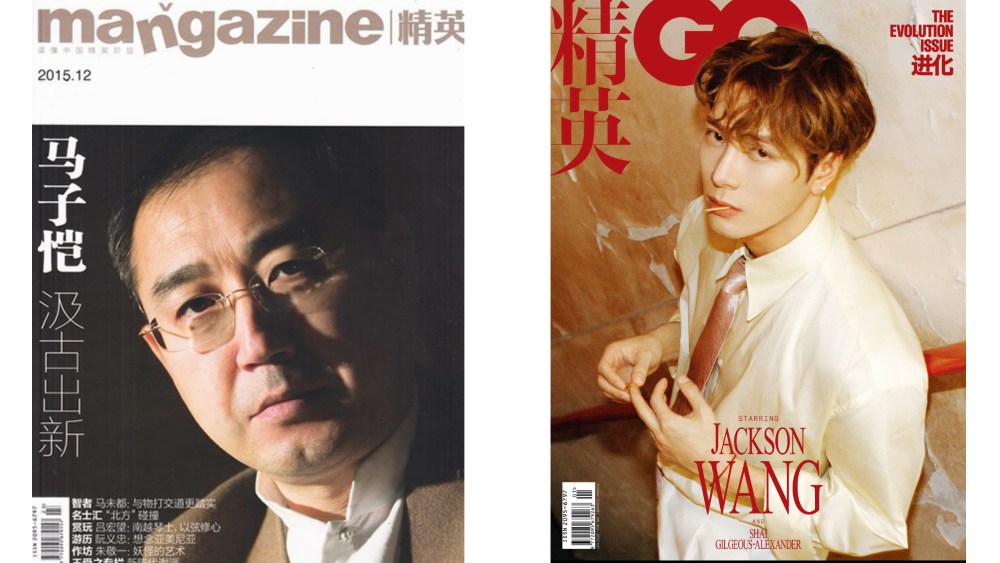
For the relaunch, GQ China was able to secure the Chinese title of Jingying, meaning elite in Chinese. The publication sits under the Guangzhou-based Nanfang Media Group, which is owned by the Publicity Department of the Guangdong Provincial Committee of the Communist Party of China.
First launched in 2003, Jingying used to operate under the title of Mangazine, a premium lifestyle magazine targeting China’s male elites, but has remained dormant for a long period of time.
A few weeks ahead of the official unveiling, sources have told WWD that Will Welch, whose last day at GQ as global editorial director is Feb. 15, approached the Shanghai-based communication agency Boh founder Qiu Bohan to work on the first few issues of the relaunched GQ China, while the team hiring process is ongoing.
Confirmed hires so far include former Harper’s Bazaar China editor Ada Qi in charge of operations management, and former Man About Town China editor Wu Jiacheng as senior fashion planner. No top editor has been named to lead the day-to-day operation of the magazine for future issues.
The first issue had two covers, featuring singer Jackson Wang and Canadian basketball player Shai Gilgeous-Alexander. The Wang cover was produced by Boh Project. It remains unclear whether Qiu and Boh Project will continue to produce the content beyond the relaunch period.
Qiu studied political science and journalism at the University of Hong Kong, and Sciences Po in Paris prior to making his foray into fashion as a writer. He later joined Mr Porter as a communications executive, looking after the Asia-Pacific region until 2019. The same year, he launched Boh Project, and in 2023, expanded into South Korea.
Sources also claimed that Condé Nast China tried to call back many of the GQ China team members to work on the relaunch, but few took the bait.
Rocco Liu, who was responsible for GQ China’s initial digital transformation and commercial success, joined Vogue China as editorial director shortly after GQ China stopped publishing with its original partner Zhizu Magazine in 2024, and he has since taken in several former GQ China members under the Vogue name.
As a temporary solution, Liu brought back Vogue Man in China, in a bid to capture the market’s lucrative men’s advertising spending in the absence of GQ.
In an announcement shared with WWD, Roger Lynch, chief executive officer at Condé Nast, said the relaunch reflects “Condé Nast’s continued commitment to supporting and celebrating Chinese culture.”