
Thrasher waged war with Swedish fast-fashion giant H&M over a lookalike T-shirt last week, while Jimmy Choo and Compagnie Financière Richemont each successfully claimed rights to infringing domains being used to sell counterfeit goods, albeit through different legal means. And coinciding with its fall 2017 runway show, New York-based Coach filed an interesting lawsuit in which it claims to own the design of the seemingly commonplace hangtag that adorns its bags.
Thrasher Lashes Out at Forever 21, H&M
In recent seasons, brands such as Vetements and fashion figures alike have proven to be fans of San Francisco-based skater magazine Thrasher’s clothing line. Unsurprisingly, fast-fashion brands also have caught on to Thrasher’s popularity and have taken to replicating the company’s famous flame logo for its own wares. In response, the skater title is seemingly gearing up for a legal battle: Thrasher has threatened to sue H&M for its “Trippin” lookalike T-shirt, citing trademark infringement in a recent cease and desist letter.
Related Articles
The T-shirt appears to have gone missing from H&M’s site even though the retailer denied any wrongdoing in a letter of its own to Thrasher. While the skater bible has not officially filed an infringement suit against the Swedish fast-fashion giant since sending the cease and desist letter, it has taken to the court of public opinion – Instagram – to make its lack of affiliation with the T-shirt known to the public. To all 2.8 million followers, Thrasher called out H&M and others for copying and potentially confusing consumers.
You May Also Like
Jimmy Choo Recovers Infringing Domain Thanks to WIPO
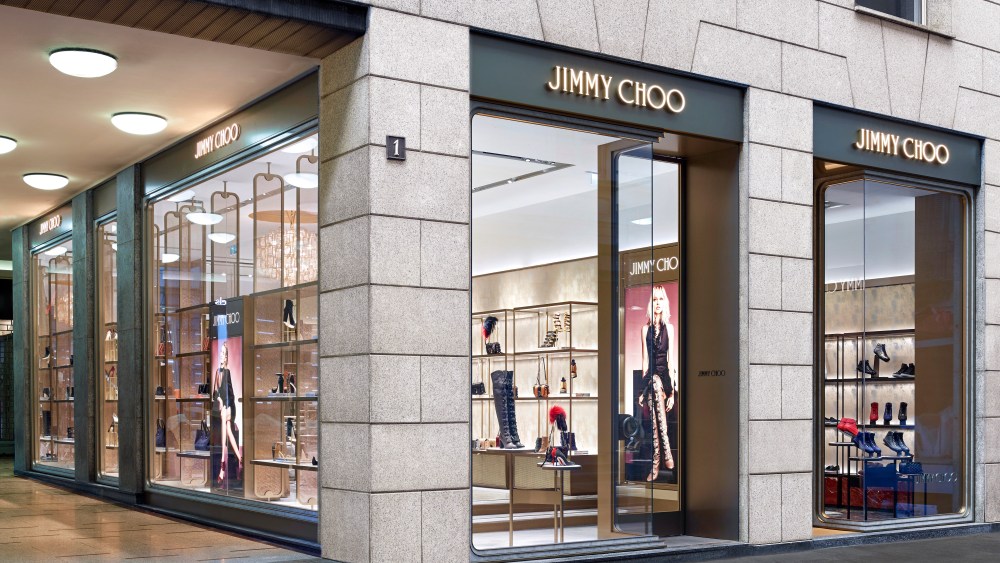
Jimmy Choo has been awarded ownership of jimmy-choos.com, which was being used by a China-based individual to sell counterfeit shoes. Instead of filing suit in federal court, London-based Choo opted to file a complaint against Qin Chuang with the World Intellectual Property Organization’s Arbitration and Mediation Center, a body that offers speedy, cost-efficient mechanisms to resolve internet domain name disputes.
The WIPO panel found that Chuang was using the domain name, which is suspiciously similar to Choo’s own domains, to “mislead Internet users” into believing the web site was connected to the Jimmy Choo brand and was likely to confuse consumers. As a result, WIPO ordered that the domain be transferred to Choo.
While WIPO’s Uniform Domain-Name Dispute-Resolution Policy findings are not legally binding, the panel’s decisions are mandatory in the sense that most web site registrars do, in fact, take the necessary steps to enforce the panel’s decision, including transferring the domain names at play.
This matter is just one example of a larger trend of brands relying on WIPO’s Uniform Domain-Name Dispute-Resolution Policy to recover infringing domain names, most of which tend to serve as homes for the sale of counterfeit garments and accessories, as well as cosmetics. In the past year alone, brands including Prada, Miu Miu, Balmain, Salvatore Ferragamo and Hugo Boss, among others, have claimed rights in infringing domain names through the process, which is often much speedier and cost-efficient than litigation.
Richemont Awarded $21 Million in Counterfeit Judgment
Richemont — the luxury conglomerate that owns Cartier, Azzedine Alaïa, Chloé and Dunhill, among other brands — has been handed a favorable ruling by the U.S. District Court for the Southern District of Florida in connection with 21 defendants who operated more than 100 different web sites offering counterfeit goods. The Switzerland-based luxury goods conglomerate argued in its November 2016 suit that the defendants had infringed its various trademarks by selling counterfeit goods — including “Cartier” watches and Love bracelets — of a “substantially different” quality that the goods its brands offer.
Siding with Richemont, the court ordered — in a default judgment — that the defendants immediately and permanently cease all uses of the Richemont trademarks, including on goods and in domain names. The court also ordered each defendant to pay Richemont $1 million in statutory damages.
Chances are Richemont will see only a small fraction of the $21 million damages award, if any, considering that the defendants, which were identified in Richemont’s complaint by web site, did not appear in court and likely cannot be identified further or located. Quite often web sites hawking counterfeit goods are registered under fake names and with fictitious information, and as a result, when lawsuits are filed, default judgments are awarded.
As such, Richemont’s key takeaway here is its new ownership of the infringing domains, which were transferred to the company.
Coach Claims Rights in Its Hangtag
In the latest of an array of lawsuits filed by Coach since it embarked on a revamp several years ago, the New York-based brand is claiming rights to the hangtag that commonly comes attached to its bags. According to a counterfeiting lawsuit filed by Coach in the Southern District of New York against La Vani Inc., Weihong Cui, and several unnamed “Does,” it is claiming federal trade dress protection in the unbranded hangtag-and-chain design.
Coach, which is gaining steam again under the creative direction of Stuart Vevers, states in its complaint that it “has used the Hangtag [trademark] since 1973. Coach’s hangtag mark has acquired secondary meaning so that any product bearing such mark is immediately associated by consumers, the public and the trade as being a product of Coach.”
The brand has asked the court for temporary and permanent injunctive relief, which would bar the defendants from making use of Coach’s blank hangtags, as well as “damages, including actual damages suffered as a result of the defendants’ willful infringement of Coach’s trade dress obtained as a result of defendants’ trade dress infringement.”
This is a particularly interesting claim since if Coach is successful the company stands to possess exclusive rights to a seemingly commonplace design.
Julie Zerbo is the founder of The Fashion Law.