
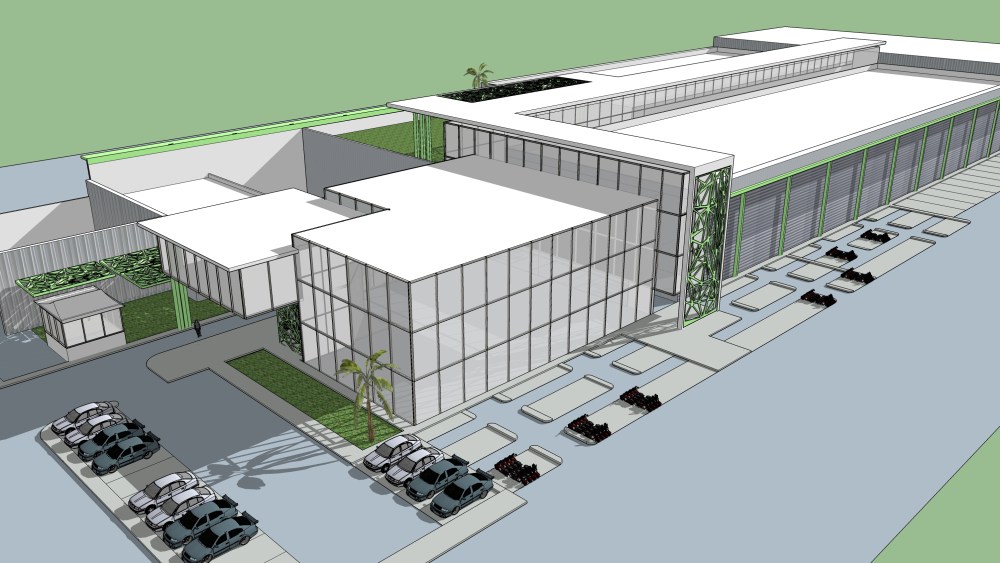
Delta Galil Industries is expanding into Vietnam, even as enactment of the Trans-Pacific Partnership remains uncertain.
Isaac Dabah, chief executive officer of the global manufacturer of private label and licensed intimate apparel, activewear, socks and children’s wear, said the company is building a 200,000-square-foot factory in Vietnam’s Binh Tinh province.
Dabah said the first phase of the facility will ready by the third quarter of this year and the second phase will be fully operational by the beginning of 2017. The two-story factory will have knitting, sewing and dyeing under one roof.
“For us it’s about quick response, about being able to control our destiny, where we can take orders on day one and hopefully ship them out on day 14,” Dabah said in a phone interview. “We felt costs were good, we felt Vietnam is the place to be, especially if TPP passes.”
Related Articles
TPP has been signed by 12 countries, including the U.S. and Vietnam, and is pending ratification. Considering a linchpin of President Obama’s trade agenda, the pact’s passage by Congress is tenuous.
You May Also Like
The ceo said Delta Galil has invested “tens of millions of dollars” in buying the land and building the facility. He said the products from the Vietnam operation — circular seamless knitting of intimate apparel, bras and socks — will be exported to the U.S. and Europe, noting Vietnam and the European Union already have a free-trade agreement.
Based in Tel Aviv, Israel, Delta Galil has projected sales topping $1 billion in sales in 2016.
Dabah said Delta Galil started looking in 2014 to grow its global sourcing footprint. It currently has 11 production facilities around the world, including Jordan, Egypt, Turkey, Thailand, a new factory in Bangladesh, two joint ventures in China, and other plans in Eastern Europe. It maintains small test facilities in Israel, where it began.
He said the location of the Vietnamese facility in central Vietnam was chosen because it is somewhat isolated, with one industrial zone and not near factories of other major brands, so that it wouldn’t be in competition for workers.
Dabah said with China’s wages going up — although he feels it is now fairly stabilized at around $400 to $500 a month — it was timely to invest in Vietnam, where wages are about $100 to $120 a month.
He said the biggest selling point of TPP, beside the lowering of duties, is that it will serve as a “balance for China…for the U.S. to have a foothold in the region to counter China’s influence.”
As for the new facility, Dabah said, “We will be mostly vertical and we are considering, if TPP comes, to do yarn covering ourselves. Right now, we have had discussions with yarn manufacturers from South Korea and Taiwan that have mills in Vietnam, to supply the yarn, to make it all local. We have another 200,000 square feet if we want to expand.”
He noted that the like all of the company’s productions sites, this will be a green factory and has applied for certification from LEED, given for design, operation and construction of high-performance green buildings.