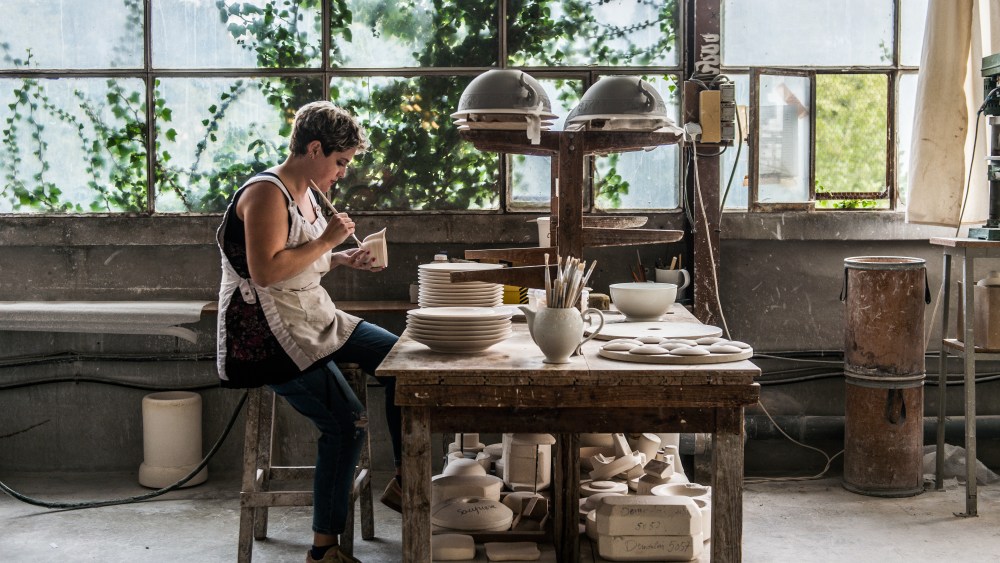
MILAN — The European Commission took a key step toward safeguarding iconic goods like Bohemian glass, Limoges porcelain, Solingen knives and Donegal tweed, whose reputation and quality stem from their place of origin. In short, they are now privy to the same geographical distinction and seal as Champagne and Parma ham.
On Monday, the European Commission announced that Europe’s glassblowers, potters, cutlers, jewelers and other makers will be eligible to register their product names under the EU’s new geographical indication (GI) plan for craft and industrial goods.
Related Articles
It’s the first time such protection, which has long been used for food and drink products, covers non-agricultural products.
You May Also Like
Ultimately, the protection will safeguard traditional skills, support local jobs and help consumers recognize genuine, high-quality European products, the commission said.
Stéphane Séjourné, the European Commission’s executive vice president for prosperity and industrial strategy, said that this step ensures these communities and companies can thrive in global markets, in addition to preserving their cultural identity.
“With the launch of the new Geographical Indications system for craft and industrial products, we are not only safeguarding the unique skills and traditions of our artisans, but also creating new opportunities for growth, jobs and many small and medium-sized enterprises,” Séjourné said.
Geographical indications are intellectual property rights that link a product’s qualities, reputation or features to its place of origin, the European Commission stated.
The GI registration process will be managed by the EU Intellectual Property Office (EUIPO). The registration procedure has two steps. Producers will first apply on a national level, and later a EU level, undergoing a process managed by the EU Intellectual Property Office.

Denmark, Finland, Lithuania, Luxembourg, Malta, the Netherlands and Sweden have obtained a derogation for the national phase and producers will exceptionally be able to apply directly to the EUIPO, which manages the whole procedure.
The regulation was first adopted in 2023, setting up a single EU title for craft and industrial geographical indications, allowing producers to stop misuse of their names and secure international protection.
On a national level, countries like France have taken measures to protect their artisan heartlands. Mobilier National (furniture) and Cité de la Céramique — Sèvres et Limoges (ceramics of Sèvres and Limoges) were united under the name Manufactures Nationales — Sèvres & Mobilier National. Under the fortified institution, they can better protect regions like Limoges, where kaolin clay, a key ingredient of France’s luxury tableware, was first discovered in the 18th century. Overall, the organization has earmarked 51 million euros to support small and medium-sized companies that represent the backbone of its design industry.